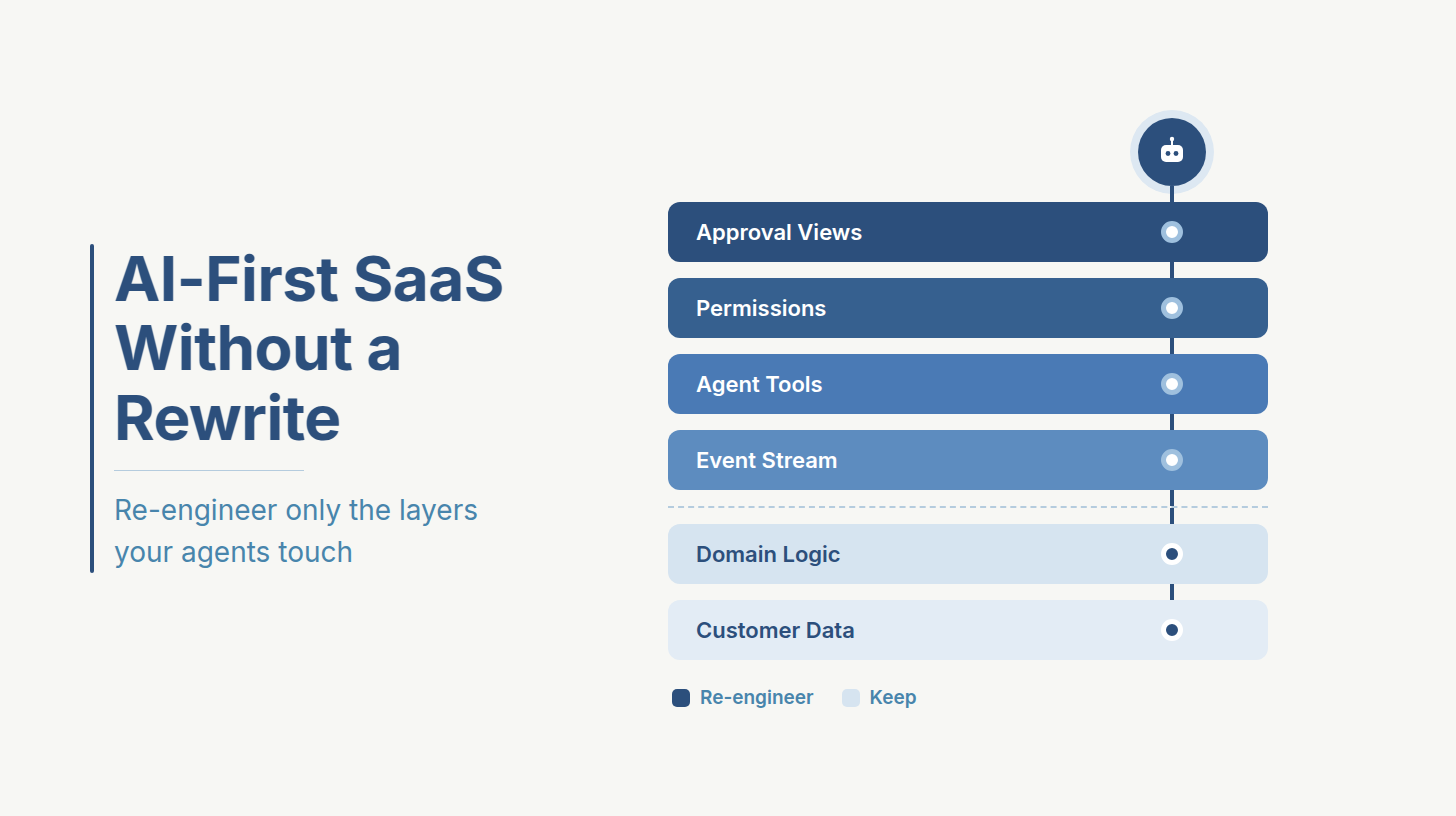

- AI is now a core part of the SDLC, not a bolt-on.
- Copilots and agents are transforming how we build, test, and deploy.
- AI shifts dev work from manual to mental—more cognition, less repetition.
- Engineers must now steer, not just code.
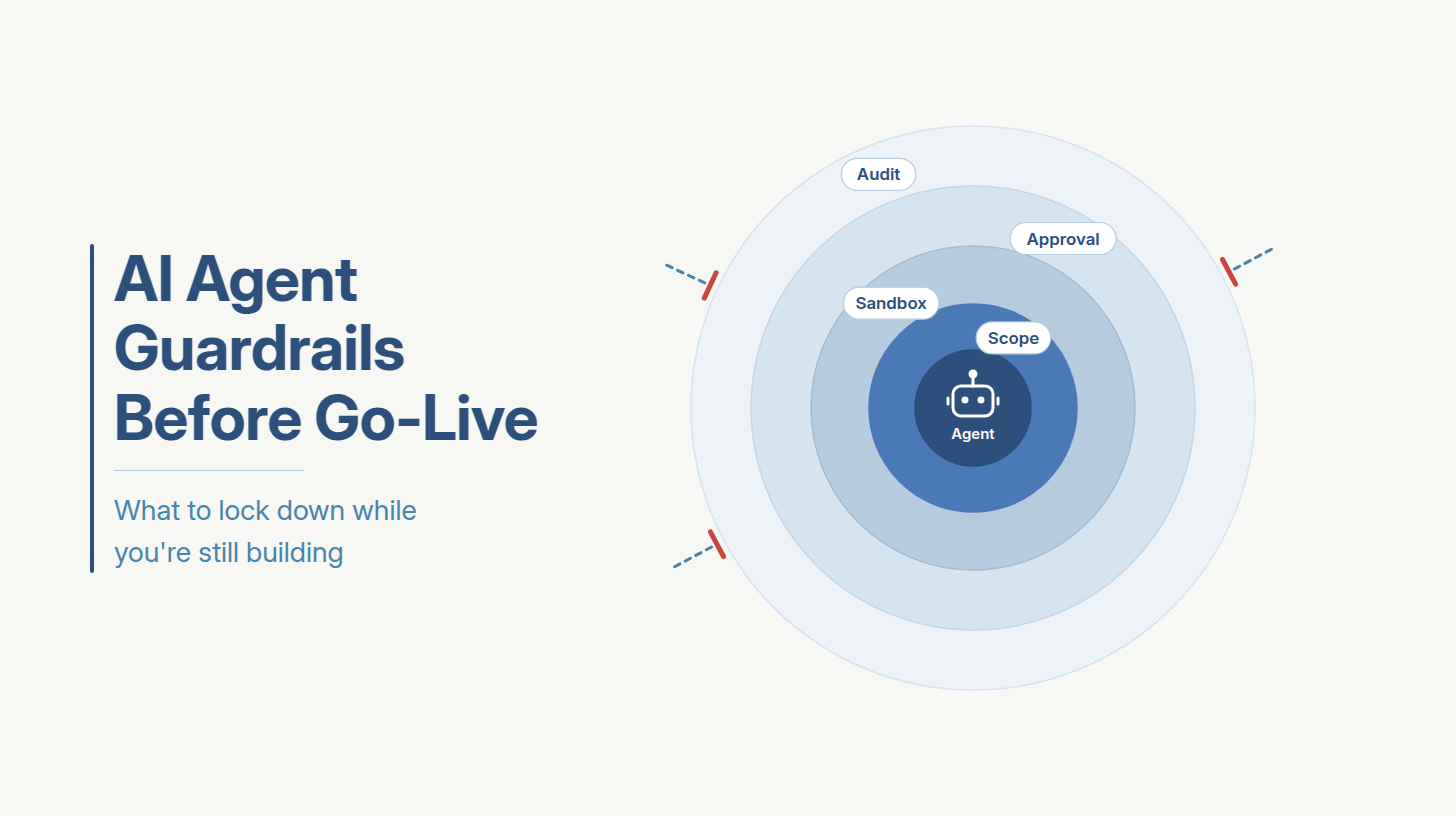
- Guardrails are critical: think security, transparency, traceability.
- Forward-looking orgs embed AI across pods, not projects.
Why Does AI in SDLC Matter for Software Engineering Today?
AI is no longer emerging. It’s rewriting the rules of software engineering. From AI copilots accelerating code generation to autonomous agents driving quality assurance and DevOps, AI is reshaping how software is designed, developed, deployed, and optimized. As per Gartner, by 2026, AI will influence 70% of all app design and development processes. This blog unpacks the evolving role of AI across the software development lifecycle (SDLC), explores top use cases, and highlights how engineering leaders can create long-term value from these innovations.
How Is AI Reshaping the Future of Software Development?
Software development is entering a new era where intelligence is woven into every phase of the lifecycle. It’s no longer just about better tools or faster execution; it’s about elevating how software is conceived, reasoned about, and evolved. The rise of generative AI and large language models marks a significant shift in how we design systems, how we write and review code, and how we translate user needs into digital experiences.
“This isn’t about retention. It’s about resilience. Most teams bolt AI onto legacy workflows. We do the opposite — rebuild the system around intelligence, from commit to deploy. We don’t rent that capability. It’s engineered into our DNA.”
— Murali Vivekanandan, Founder & CEO, Ideas2IT
Yet the real disruption lies not in speed but in intelligence.
AI has introduced a collaborative intelligence layer that can learn from patterns, adapt to contexts, and generate alternatives in real time.
Teams can now work alongside intelligent agents that debug code, simulate architecture decisions, test edge cases, and even suggest better deployment strategies.
And the numbers reflect this shift. A recent McKinsey study found that software engineering teams using AI-based tools have reported up to a 2x improvement in developer productivity, with more than 40% of their code now being AI-assisted.
Supporting this, a recent analysis indicated that developers using GitHub Copilot completed tasks 55% faster and spent 21–28% more time on coding tasks, suggesting a shift toward more complex problem-solving rather than repetitive boilerplate coding
This is not the next iteration of tooling. It’s a new model of engineering, one where knowledge is no longer confined to people or documentation but encoded in intelligent systems that learn and evolve
Where Is AI Impacting the Software Development Lifecycle Most?
AI is making its presence felt across nearly every stage of the engineering lifecycle. But more importantly, it’s changing the shape of how we solve problems. What were once handoffs between human roles (PM to dev, dev to QA, and QA to ops) are now becoming continuous loops informed by intelligent systems.
Here’s how AI is not just accelerating but fundamentally reshaping engineering workflows:
Code Generation
AI copilots are moving from novelty to necessity. While early models simply completed lines of code, today’s enterprise-grade copilots are trained on internal repositories, enforcing naming conventions, logic structures, and architectural preferences.
In practice, this means less time spent writing boilerplate and more energy focused on solving edge cases and architectural gaps.
For instance, Stripe has integrated AI tools into their development workflows, allowing engineers to streamline coding tasks and enhance focus on critical areas.
Bug Detection & Optimization
AI tools now scan codebases for anomalies, inefficiencies, and latent defects well before they manifest as production issues. They not only flag bugs but suggest fixes grounded in the surrounding logic
Meta shared that its AI-powered bug detection system ‘SapFix’ automatically generated fixes for thousands of production issues, reducing patching time from days to hours.
Testing Automation
AI-powered testing tools generate test cases from user stories, monitor changes in the UI to auto-update front-end tests, and prioritize test runs based on release risk. This keeps test coverage aligned with reality, not just requirements.
DevOps & Deployment
ML models optimize CI/CD pipelines by detecting flaky tests, suggesting safe deployment windows, and triggering rollbacks based on early anomaly signals. AI isn’t just executing releases. It’s learning how to make them smarter.
Architecture & UX
From load simulations to design-to-code generation, AI is blurring the lines between design, engineering, and delivery. It enables teams to test architecture assumptions before they ship and automatically generate front-end frameworks based on Figma or design guidelines.
These use cases show that AI isn’t bolted but embedded into the development process. And the more integrated it becomes, the more fluid and intelligent the SDLC gets.
How AI is Transforming the Software Development Lifecycle (SDLC)
AI is transforming the how of software development and reshaping the very logic that underpins the SDLC. It’s shifting us from static, sequential processes to intelligent, adaptive systems where development, operations, security, and planning continuously inform each other.
AI doesn’t retrofit your SDLC; it re-architects it. This shift calls for rethinking workflows from the ground up.
%252520How%252520AI%252520is%252520Transforming%252520the%252520Software%252520Development%252520Lifecycle%252520(SDLC).png)
1. AI in Requirements Gathering: From Noise to Insights
Traditionally, requirement gathering relies heavily on manual interviews, stakeholder meetings, and inferred customer needs, leaving room for subjectivity and gaps.
With AI:
- NLP models mine product reviews, customer support chats, and usage logs to extract pain points and unmet needs.
- LLMs convert high-level business goals into user stories, flagging inconsistencies and missing logic.
Why it matters: Product managers no longer have to guess what to build - they can mine it directly from user behavior. AI makes early-stage planning both scalable and grounded.
Learn how to incorporate AI from day one in your MVP with our complete development guide.
2. AI in Software Design: Intelligent Architecture and UX
Architectural decisions are often driven by experience and intuition, but they rarely account for dynamic scaling, system degradation, or failure patterns until it’s too late.
With AI:
- Tools simulate how proposed architectures respond to traffic, latency, and failure conditions.
- AI flags anti-patterns and suggests architectural refinements before a single line of code is written.
Why it matters: You go from “best practices” to data-backed designs. Every architectural choice is validated against real-world conditions before it’s tested in production.
3. AI in Software Development Process: Automation and Copilot
Development teams spend a significant portion of time on repetitive patterns like glue code, error handling, and scaffolding. Context switches and tech debt further reduce throughput.
With AI:
- Copilots predict the developer's next move based on the function, file, and even team history.
- Code refactoring and optimization are continuous, not one-off activities.
Why it matters: Developers move from code producers to system thinkers. The AI captures tribal knowledge and makes engineering quality scalable.
4. AI in Software Testing Lifecycle: Generative and Risk-Based Coverage
Manual test writing is time-intensive and often fails to account for edge cases or systemic risk.
With AI:
- GenAI can generate test cases from requirements or existing code logic.
- Predictive models recommend which tests to run based on recent code changes and risk profiles.
Why it matters: Testing becomes adaptive and aligned to risk, change, and business criticality.
5. AI in Security: Continuous Security and Compliance
Security has traditionally been a late-stage checkpoint, leading to high-cost fixes and compliance gaps.
With AI:
- Tools like DeepCode or Snyk scan for vulnerabilities in real time.
- AI can simulate attacks based on threat patterns and prioritize remediation.
Why it matters: Security becomes a developer ally, not a blocker. Teams get continuous visibility without sacrificing velocity.
In 2025, Microsoft reported that its Security Copilot helped analysts investigate incidents more efficiently, significantly reducing breach impact.
Discover how we apply these AI practices in custom financial software systems.
6. AI in Deployment: Smarter CI/CD and Predictive Rollouts
Even with mature CI/CD, rollouts can be risky. AI mitigates this by understanding past deployments, rollback scenarios, and environment behavior.
With AI:
- Systems choose the optimal release strategy (blue/green, canary, etc.) based on historical signals.
- Incident data trains models to avoid repeat failures.
Why it matters: Deployment becomes a controlled experiment—measured, reversible, and safe.
7. AI in Maintenance and Optimization: Self-Healing and Optimization
Traditional incident response depends on alerts, dashboards, and war rooms.
With AI:
- Anomalies are flagged before users notice them.
- AI correlates signals across logs, metrics, and traces to pinpoint root causes—and even resolve them automatically.
Why it matters: Uptime isn’t just protected; it’s proactively engineered. Engineers shift from firefighting to foresight.
Want to see what an AI-native SDLC looks like in your environment?
Let’s map your current workflows and identify where AI agents, copilots, or automation can deliver real impact, fast.
What Is the Difference Between Traditional and AI-Driven SDLC?
For many teams, the biggest shift isn’t just adopting AI. It’s rethinking how every phase of the SDLC works. The traditional, linear approach is giving way to a continuous, intelligence-led model. Here’s how the old and new paradigms compare at each step:
| Phase | Then (Manual) | Now (AI-Driven) |
|---|---|---|
| Requirements | Stakeholder interviews | NLP mining of chat logs, usage data |
| Design | Static architecture diagrams | Simulated, stress-tested blueprints |
| Development | Manual coding | Copilot-assisted logic generation |
| Testing | Regression suites | GenAI-generated, risk-prioritized test cases |
| Deployment | Scripted CI/CD | AI-triggered rollouts, auto-rollbacks |
| Maintenance | Alerts and dashboards | Predictive diagnostics, self-healing ops |
What AI Means for Software Engineers
For software engineers, AI introduces a shift not in tools but in thinking. You’re no longer just an author of code. You’re an orchestrator of cognition.
Here’s what that looks like in practice:
- More time solving hard problems: Repetitive code is delegated to copilots. Engineers focus on architecture, modeling, and outcomes.
- Human-AI pair programming: Instead of solo coding, engineers now prompt, steer, and refactor AI-generated suggestions.
- New accountability layers: Engineers must now validate, contextualize, and interpret what AI suggests and not blindly adopt it.
- Increased architectural visibility: AI surfaces cross-team patterns, code smells, and system inconsistencies that are otherwise hard to track.
AI redistributes complexity. And the best engineers are the ones who learn how to wield that shift to their advantage.
Curious what this looks like in practice?
We’ll show you how real engineers at Ideas2IT use AI day-to-day. We cover tasks ranging from copilots that accelerate problem solving to QA agents that flag issues before code even ships.
Meet your AI engineering pod →
What New Metrics Define Success in AI-Driven SDLC?
As AI reshapes how teams build and deliver software, the metrics we use to measure success must evolve too. Traditional KPIs focused on output. AI-first teams now optimize for quality of insight, adaptability, and automated resilience.
- Code coverage → Risk-weighted test coverage
- Developer productivity → Prompt quality + decision velocity
- MTTR → Time-to-detection + resolution automation rate
- Delivery velocity → Value-validated releases
Benefits of AI in Software Development
AI is not about doing the same work faster. It’s about doing better work that is more aligned with user needs, more maintainable, and more scalable.
Here’s where it creates tangible engineering and business impact:
- Automation of repetitive logic: From test scripts to deployment pipelines, AI saves time on what was never value-adding in the first place.
- Context-aware acceleration: AI integrates historical commits, bug trends, and system architecture to suggest not just code, but the right code.
- Better decisions at every level: Engineers, PMs, and architects operate with more clarity because AI fills in the blind spots.
- Faster iteration cycles: Teams respond to user needs quicker and with greater confidence, without being bottlenecked by internal processes.
- More inclusive development: Low-code + AI allows subject matter experts and non-devs to contribute prototypes or data logic, reducing handoff loss.
Learn how custom software combined with AI drives smarter business growth.
What Are the Risks of AI in Software Development and How to Mitigate Them?
AI doesn't just accelerate workflows, it compounds both precision and error. Without the right guardrails, teams risk moving faster in the wrong direction. The risks are real, but they’re manageable when approached with intentional design.
Here's how to frame them:
| Risk | What Happens | Mitigation |
|---|---|---|
| Hallucinations | AI generates incorrect code confidently | Confidence scoring, human checkpoints |
| Insecure code | Vulnerabilities bypass static checks | SAST/DAST integrations |
| Traceability gaps | Who's accountable for bugs? | PR tagging, audit trails |
| IP leakage | Proprietary logic leaks to models | On-prem LLMs, RBAC |
Want to stress test your AI systems before they fail you?
We’ll help you identify blind spots, build in guardrails, and turn risk into resilience.
How Should Tech Leaders Adopt AI in Software Development
Adopting AI isn’t a tooling decision, it’s a strategic shift. Here’s how forward-looking tech leaders are driving it:
- Think pods, not pilots: Move beyond isolated experiments. Embed AI into cross-functional pods where it can deliver systemic value.
- Invest in human-AI interaction skills: Train teams to challenge, iterate on, and validate AI and not just consume it.
- Build AI fluency across roles: From design to QA to compliance, everyone needs to know how AI affects their workflows.
- Shift metrics from output to outcome: Measure time-to-value, user satisfaction, and production resiliency, not just lines of code.
- Make culture your multiplier: Encourage experimentation, shared learning, and agent-led retrospectives.
AI isn’t a silver bullet, but it is a force multiplier. The leaders who integrate it thoughtfully into their systems, structures, and culture will shape the next era of software delivery.
Read what to consider when budgeting for an AI-enabled MVP.
What Are AI Agents and How Do They Fit Into the Software Development
AI in software development is no longer just a behind-the-scenes optimizer. It’s an active participant in the team. Purpose-built agents are now performing roles that once took multiple engineers and cycles to execute.
%252520AI%252520Agents%252520as%252520the%252520New%252520Team%252520Members.png)
These aren’t generic assistants but specialized, domain-trained collaborators:
- Dev Agent: Auto-suggests logic paths, enforces code conventions, flags risky merges
- QA Agent: Generates tests from epics, reconfigures them with each UI change, tracks test coverage
- Infra Agent: Predicts deployment risk, manages configuration drift, flags SLO violations
These agents are not replacements for engineers. They’re strategic enablers. At Ideas2IT, we use them inside delivery pods to not only reduce manual effort but to expose patterns and risks that human teams alone might miss.
Think beyond copilots.
See how our domain-trained agents operate as core members of the team—from writing tests to predicting production risks.
A New Engineering Culture
This shift isn’t hypothetical, we’ve already started living it. During a recent event on AI-powered coding with Cursor, our teams showcased how these AI-native practices, from agent-led coding to embedded QA bots, are already part of our delivery DNA.
The moment you embed AI in the SDLC, everything else changes: workflows, rituals, review processes, and even what “quality” means.
- Sprint reviews now include agent metrics.
- Code reviews may be initiated by AI quality flags.
- Retrospectives discuss human-AI handoffs.
This evolution goes beyond tools. It rewires the cognitive and collaborative fabric of engineering teams. It shifts engineering culture from what you know to how well you learn and adapt. Organizations that foster this adaptive mindset will unlock more from their talent and their tech.
AI Case Studies in Software: Lessons from Industry Leaders
SAP AI Copilots in ERP Development
- What happened: In 2025, SAP announced its roadmap to embed 400 AI use cases across its cloud portfolio, integrating copilots like Joule into ERP workflows within SAP S/4HANA Cloud and related modules. Customers reported a 20–25% reduction in release cycle times (coding and testing) and improved accuracy in finance, procurement, supply chain, and IT development through AI-assisted automation and smart insights.
- Why it matters: This demonstrates how enterprise-grade AI copilots can streamline regulated business processes by reducing manual tasks such as supplier checks, service ticket classification, and journal uploads. By accelerating release cycles and improving accuracy, SAP shows how AI copilots drive measurable efficiency and compliance in critical financial and operational domains.
JP Morgan’s COiN Platform
- What happened: The Contract Intelligence (COiN) platform applied natural language processing (NLP) to review 12,000 commercial credit agreements in seconds. This reduced their manual review time by over 360,000 hours.
- Why it matters: COiN proves that AI can handle complex legal text with accuracy and scale, not just speed. This kind of transformation shows how AI democratizes access to expert-level analysis, freeing up legal and compliance teams for strategic focus.
Palantir x Mount Sinai & Cleveland Clinic
- What happened: Palantir collaborated with healthcare systems to unify siloed clinical, operational, and financial data using AI-powered data integration platforms. This enabled predictive analytics for hospital staffing, patient throughput, and treatment outcomes.
- Why it matters: The healthcare industry is a blueprint for how AI can deliver clarity in highly fragmented, high-stakes environments. When done right, AI becomes a decision support engine, not just a data wrangler.
Siemens Predictive Maintenance
- What happened: Siemens applied AI and IoT to predict failures across industrial machinery, using anomaly detection on sensor data to schedule preventive maintenance.
- Why it matters: This case is a reminder that AI’s greatest strength may be in invisible outcomes. Avoiding failure, reducing downtime, and extending asset life isn’t glamorous, but it’s where AI delivers measurable, bottom-line value.
AI Case Study Highlights at a Glance
| Company | AI Use Case | Outcome Achieved |
|---|---|---|
| JP Morgan | NLP for legal document analysis | 12,000 contracts reviewed in seconds, saving 360,000+ hours |
| Palantir + Mount Sinai | Unified siloed data for predictive insights | Improved hospital staffing, patient throughput, and care outcomes |
| Siemens | AI + IoT for predictive maintenance | Reduced equipment downtime and extended asset lifespan |
Pro Tip:
Even non-tech sectors like legal, healthcare, and industrial ops are leveraging AI for massive efficiency gains. If they can embed AI, your engineering org can too.
See how leading healthcare software companies are using AI to drive real-world outcomes.
How AI Will Change Software Development by 2028?
Adoption is accelerating, but so are the stakes. The next three years will reset how teams plan, build, test, secure, and operate software. Use the milestones below to set targets for skills, tooling, governance, and budget.
- Software development is moving toward an AI-native SDLC where copilots and agents are embedded into every stage from requirements to operations.
- In the future, agentic roles will take over repetitive tasks in QA, infrastructure, and code optimization, while engineers focus on higher-order architecture and strategy.
- Generative design and development will automate large parts of UX and scaffolding, with humans guiding creativity and constraints. Teams will operate in a state of continuous intelligence, as systems learn from every commit, release, and incident to enable self-healing and predictive operations.
- Success will depend on developer experience, with optimized toolchains, prompts, and governance ensuring safe acceleration. And underlying it all, governance and trust frameworks, guardrails, evaluation packs, and security layers will determine which organizations capture AI’s speed without compounding risk.
What to do next
- Set year-by-year targets. 2026: production-grade copilots, eval packs, RBAC for model access. 2027: 2–3 agent patterns in CI/CD, QA, or FinOps with hard KPIs. 2028: agent orchestration, model lifecycle governance, and end-to-end AI observability
- Measure outcomes. Track risk-weighted test coverage, resolution automation rate, time-to-detection, and value-validated releases. Back improvements with developer surveys and DORA metrics.
Mind the trust and security gap. Adoption is high, trust varies. Use confidence scoring, PR tagging, SAST/DAST, and on-prem or VPC-isolated models for sensitive work.
How Does Ideas2IT Apply AI in the SDLC?
At Ideas2IT, AI is deeply embedded into every stage of the SDLC. Our top 1% engineering talent, carefully selected and trained in-house, harnesses proprietary AI agents to power software development delivery at scale, delivering 10X better outcomes at every step.
We don’t just use AI tools, we build intelligence systems tailored to your environment. From AI copilots integrated into your repo to autonomous testing agents trained on domain logic, we create agentic engineering ecosystems that accelerate delivery without compromising quality.
Here’s how we make it real:
- Our domain-trained agents are embedded into delivery pods, enabling faster onboarding, smarter decisions, and higher reliability.
- We focus on intelligence-first development, where feedback loops, traceability, and continuous optimization are built in.
- We align every AI implementation to tangible KPIs: reduced cycle time, faster recovery from incidents, and lower regression rates.
Our pods don’t just “use” AI they’re structured around it. QA bots review every pull request. Our infra agents preempt deployment risks before teams are even aware.
It’s not about fewer engineers, it’s about augmented ones.
Closing the Loop: From Software Delivery to Engineering Intelligence
The next phase of software development isn’t just faster, it’s smarter. For tech leaders, the question is no longer whether to adopt AI. It’s how fast they can create learning systems that adapt, scale, and improve with every deployment.
The winners? They won’t just build software. They’ll build engineering intelligence.
Ready to Build AI-Native Software?
At Ideas2IT, we’ve helped forward-thinking engineering leaders move from AI experiments to intelligence-driven development. Whether you're scaling AI adoption across pods, evaluating domain-trained agents, or looking to build adaptive systems that improve with every release, we can help.
AI is your competitive edge today.
The question isn’t if you adopt it. It’s how fast you embed it into your engineering culture.
Talk to us about your SDLC goals and explore what an AI-native delivery model could look like for your org.
These risks can be mitigated through human oversight, secure AI platforms, and responsible implementation practices.
Reference: