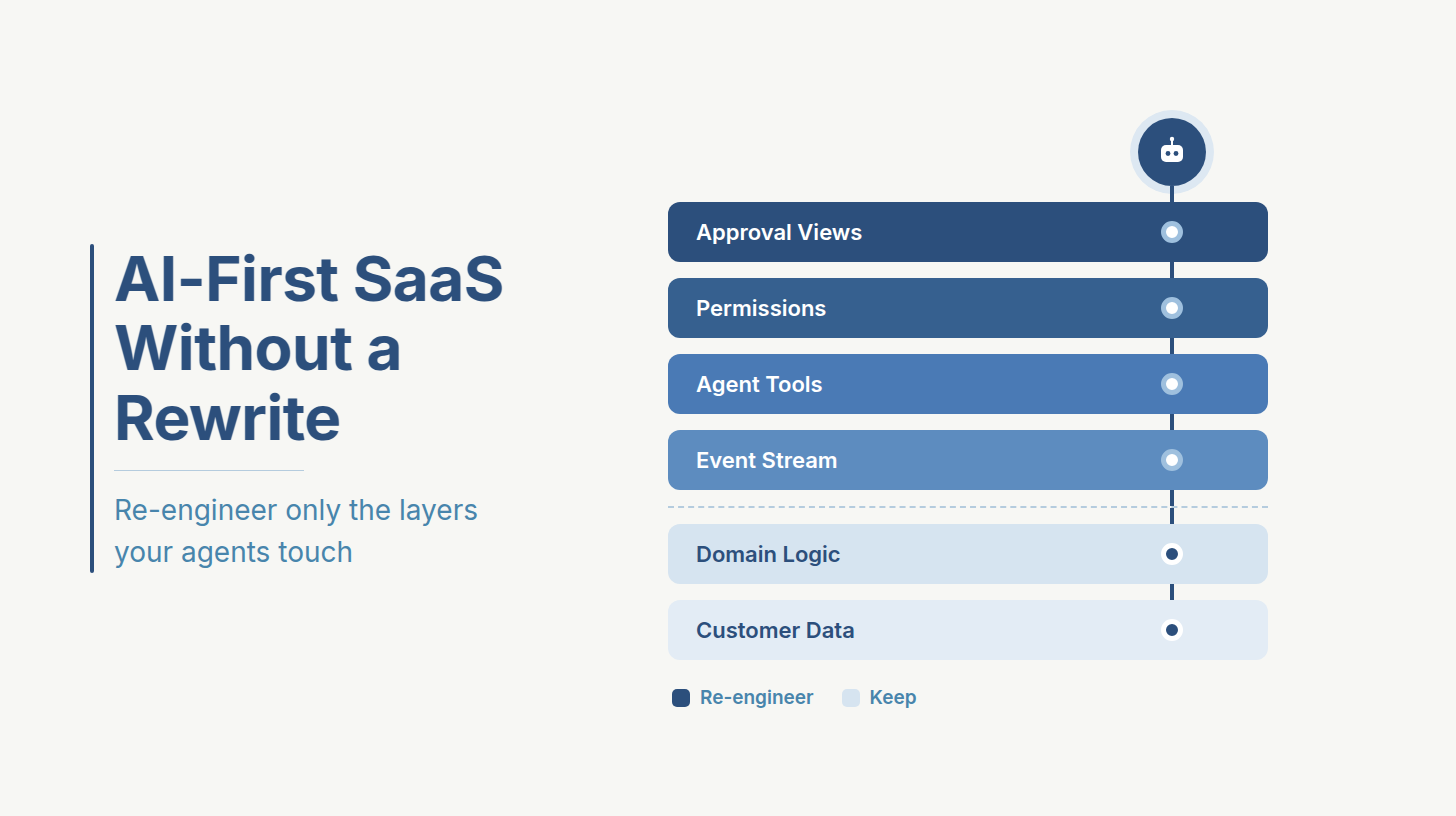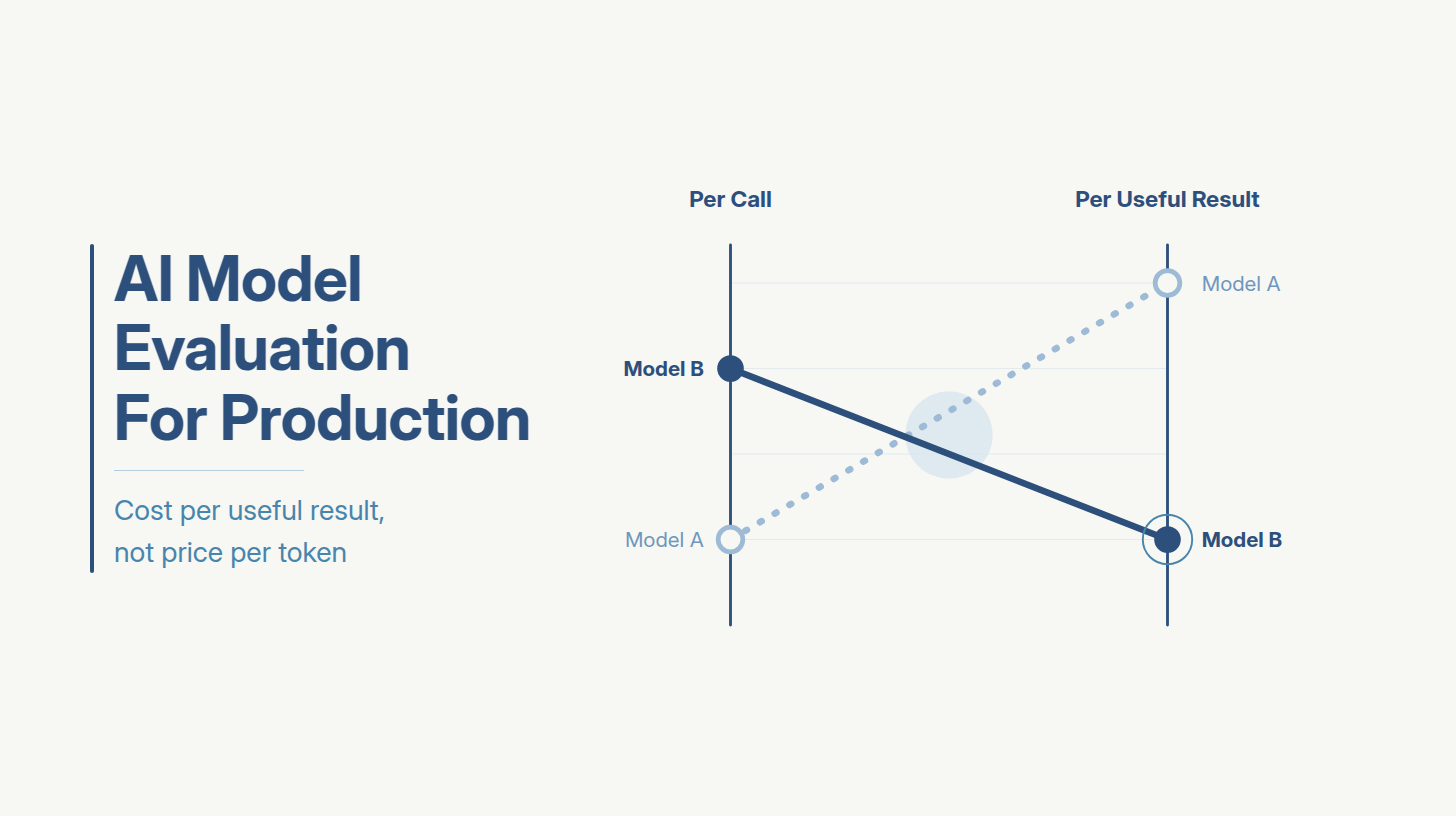

- The new vendor's rate card is the smallest number in your replacement budget. Overlap and knowledge transfer cost the most, and both grow with how much your current team knows that was never written down.
- Measure that knowledge before you budget: run a runbook-only deployment, find the modules only one engineer understands, and check if recent incident fixes are written down.
- Payback period is transition cost divided by monthly saving. The size of the incoming team moves that number far more than its rate.
- Test the new team on real sprints before you give notice, and write a 30-day baseline and outcome-based terms into the new contract.
Your vendor says its engineers use AI now, but the invoice and the release calendar haven't moved. You're planning an outsourced engineering team replacement, and your CFO wants to know what the switch will cost before anyone signs.
Rate cards only tell you what you'll pay once the new software development partner is running. This piece prices the months in between, line by line, so you can put real transition costs and an engineering team transition plan in front of your CFO. If you're still weighing the decision itself, our guide on how to replace an outsourced SDLC vendor with an AI-native team covers it. Here, we start with the budget.
Why Does Replacing an Engineering Vendor Cost More Than the New Contract?
The new contract shows your steady-state cost. The software development vendor transition is a one-time cost that neither vendor's proposal shows: two vendors on the payroll for a while, weeks of your own leadership's time, and a dip in delivery while knowledge changes hands.
That cost is worth paying only if the new run rate earns it back. If the incoming team carries your scope with fewer engineers, the transition has a short payback. If it carries the same scope with the same headcount at a lower rate, it can take a year to recover. So the number that matters is the payback period, and the shakier half of it is usually the saving, because most comparisons assume a team of the same size.
To test that assumption early, Ideas2IT will build a role-by-role team plan against your current scope, showing every seat and its cost before you sign.
Get your team plan
With the saving side in view, the next step is the one-time cost.
Where Does the Transition Budget Actually Go?
The one-time cost splits into six areas. Most budgets cover the first two and find the rest mid-transition.
Exiting your current vendor
You pay through the notice period regardless. Check the MSA's exit clause against each SOW's notice terms, since they often differ, and look for exit fees or minimum commitments. Also ask for a list of every cloud account, tool licence and domain held in the vendor's name. Moving those is a real cost, and it usually surfaces in the last week.
Onboarding the new team
Repository access, credentials and security sign-off come before any production code. In regulated environments this approval chain is often the longest item on the plan, so start it before you give notice.
Running both teams at once
The cost is the incoming team's monthly cost multiplied by the overlap. The overlap length depends on how much undocumented knowledge has to move, which the next section helps you measure.
Knowledge transfer
You'll need walkthroughs and question time from outgoing engineers whose contract is ending. Book the critical sessions early and write knowledge transfer commitments into the notice terms.
Documentation gaps
Whatever wasn't documented gets rebuilt from code, tickets and production behaviour. This is the most underestimated line, because nobody knows its size until someone looks.
Your own team's time
Engineering, product and security will spend real hours on approvals, questions and release reviews. Price them at a loaded rate.
The documentation gap drives most of the other five, so it's the one to size first.
How Much of Your Engineering Knowledge Will Leave With the Vendor?
Undocumented knowledge sets the length of your overlap and the size of your knowledge transfer budget. It usually sits in the same places:
- Business rules buried in code, such as pricing exceptions or customer-specific logic.
- Old architecture decisions that still limit what can safely change.
- Deployments that depend on one engineer's scripts or a manual sequence.
- Test suites that pass on coverage but only exercise the expected path.
- Integration failure modes recorded only in incident tickets and chat threads.
You can size it in a week while the incumbent is still fully engaged. Have the outgoing team deploy to staging from the written runbook and count every question answered from memory. List the modules where one named engineer answers everything, since each needs its own overlap. Then check if the root cause and fix for five recent incidents are written anywhere a new team could find them.
How the knowledge moves matters too. Walkthroughs leave it with whoever was in the room. A structured context built from your code, tickets, docs and delivery history stays with you and can be queried by any engineer or agent. It's strongest when validated against live delivery while the incumbent still owns the roadmap, so gaps surface while someone can still fill them.
Those gaps also slow delivery while they're open, which is the next cost to plan for.
What Happens to Your Roadmap While the New Team Takes Over?
Some delivery cost is already in your budget: overlap fees, onboarding and internal hours, plus a planned throughput dip in the first sprints. The rest is risk, such as a slipped release, a growing defect backlog or a slow incident fix after the engineer who knew the answer has left.
To price that risk, list every roadmap item with a business date attached, like a customer commitment, renewal or regulatory deadline. Estimate the cost of a two-week slip and a six-week slip for each. Your CFO gets a defined exposure, and you get the list of releases the plan has to protect.
That risk stays small when the new team takes over against an agreed baseline. In a real Ideas2IT engagement, an IoT platform company replaced its incumbent IT services vendor and kept its release cadence through the switch. Lead time from ticket to release fell from 17.9 days to 2, about 9 times faster. Remediation commits dropped 72%, rework within 30 days dropped 42% and defects found after release dropped 43%.
You can see that kind of evidence on your own codebase before giving notice.
Ideas2IT will run your next two sprints alongside your current vendor and show you the difference in delivery velocity, engineering effort, quality and AI productivity. We'll respond within one business day to scope them.
Request a two-sprint shadow
How much risk you carry at any one time also depends on how much you hand over at once.
Should You Replace the Team All at Once or in Phases?
A full cutover and a phased replacement carry the same cost lines. The difference is when you pay them and how much risk sits in any one window.
Shared dependencies usually decide it. If two areas share a database or a pipeline, splitting them between vendors adds a handoff to every release, and a cutover may be safer. Access rules that can't accommodate two vendors also push you toward a cutover. Your release calendar and your knowledge concentration then set where the window falls and how long each phase overlaps.
If you phase, start with an area that has a near-term release and no single point of knowledge, so the new team proves itself on real work. Leave the area one engineer holds in their head until the structured context is in place.
With the approach settled, every input for the cost model is in hand.
What Should Your Engineering Vendor Replacement Cost Model Include?
The model pulls the earlier sections into two formulas. The first is the one-time cost:
Total transition cost = vendor exit + incoming-team setup + knowledge transfer + overlap + internal effort + stabilization
Delivery disruption stays outside the total as a separate exposure figure, so your CFO sees it as an estimate.
The second is the payback period:
Payback period in months = total transition cost ÷ monthly run-rate saving
The saving in that second formula comes almost entirely from the incoming team's size, so that's the next thing to pin down.
How Much Faster Can a Smaller Team Pay Back the Transition Cost?
Team size is the lever, and a real Ideas2IT engagement shows how far it can move. A US healthcare company came to Ideas2IT with an outsourced engineering team, a growing backlog, poor quality and no meaningful gains from AI. After the switch, headcount went from 11 to 6 for the same scope, with delivery velocity unchanged.
The cut isn't even across roles. In a sample plan for a 10-person outsourced team, Ideas2IT staffs the same scope with 5.5 people: backend engineers drop from 4 to 1.75, QA from 2 to 0.75 and frontend from 1.5 to 1, while architect, tech lead and security seats stay.
This hypothetical scenario uses the healthcare team sizes in engineer-months, assuming equal per-engineer cost and notice running during the overlap.
Savings start when the old team leaves. At 5 engineer-months saved per month, the transition pays back in about two and a half months, roughly four months from kickoff. At a made-up $8,000 per engineer-month, that's a $101,600 transition against $40,000 a month in savings. Double the overlap and payback still lands under four months.
Swap in a conventional 10-engineer team at a 5% lower rate and the picture changes. The bigger team pushes the transition to about 18.7 engineer-months while saving only 1.5 a month, so breakeven takes around 12 months.
That payback holds only if the new engagement doesn't drift back into the old one's problems.
How Do You Avoid Paying a New Vendor to Repeat the Same Mistakes?
Most outsourced engagements fail on ownership, visibility or knowledge silos, and underneath sits a contract that pays for capacity. Under time and materials, AI productivity goes into the vendor's margin while your invoice stays flat. Buyers are pushing on this: Deloitte's 2024 Global Outsourcing Survey of more than 500 executives found that 80% plan to maintain or increase outsourcing investment, with a growing emphasis on value-based relationships.
Put these into the new contract:
- A baseline of velocity, defect rate and lead time in the first 30 days, reported against weekly.
- One accountable vendor owner per product area.
- Project knowledge kept in a system you own, current as code ships.
- Standards, architecture rules and security checks enforced in the pipeline, including on AI-generated code.
- Commercial terms partly tied to outcomes, such as a velocity guarantee.
When proposals arrive, ask each vendor four things. How is the work priced? Who pays if the overlap runs long? Who owns the knowledge base built during handover? What happens commercially if velocity falls below baseline? For a fuller vetting list, see our guide to choosing an AI-powered development partner.
Once those terms are agreed, the remaining question is when the old contract can safely end.
What Must Be Ready Before Your Current Vendor Exits?
Sequence matters as much as the checklist. Secure repository admin rights and confirm your IP position first, while the relationship is still normal. Start access approvals and collect the vendor's account list next, then run the shadow sprints. Give notice last, because your leverage and the outgoing team's goodwill both shrink from that day.
Sign off every line below before the notice period ends:
How Does Ideas2IT Manage the Transition Without Losing Delivery Momentum?
Ideas2IT runs each transition on Anticlock, the platform behind its AI-native SDLC, starting with knowledge capture. Anticlock turns your codebase, documentation, tickets and delivery history into a persistent Engineering Brain, and Ideas2IT validates it against live delivery while your incumbent still owns the roadmap. The knowledge then stays in a system you own.
Quality controls are built into the same platform, which is what lets a smaller team carry the same scope. A separate checker verifies every agent's output, coverage gates block weak work at workflow, push and CI, and nothing merges without evidence and human sign-off. Anticlock works with Claude Code, Codex, Cursor and Copilot, and can run inside your infrastructure.
Ideas2IT has worked on generative AI with Meta since 2017, including Llama. Every engineer it deploys is certified through Ideas2IT Academy on real code, and its delivery standards are published as Prompt to Production, a 19-chapter playbook.
The engagement starts with the two-sprint shadow. If the numbers hold, Ideas2IT's custom software development team in Dallas builds your transition plan, which is this article's cost model filled in with your contracts, systems and release dates. It comes with a guarantee: the same or better release velocity with 50% fewer people, cost and effort within 90 days, or your money back.
That plan starts with the two numbers this whole article turns on.
What Will It Take to Replace Your Engineering Team Without Disrupting Delivery?
It comes down to how much knowledge has to move and how small the new team can be, and neither is knowable until someone looks at your codebase and contract.
The Ideas2IT proposal gives you both, along with your transition cost model, your payback period and a phased plan built around the releases you can't miss.
Get your proposal
References
- Ideas2IT. "How to Replace an Outsourced SDLC Vendor with an AI-Native Team." https://www.ideas2it.com/blogs/replace-outsourced-sdlc-vendor-ai-native-team
- Ideas2IT. "Replace your IT services vendor" landing page. Client case data for the IoT platform and US healthcare engagements, sample team plan and guarantee terms.
- Deloitte. "Global Outsourcing Survey 2024." https://www.deloitte.com/global/en/issues/work/global-outsourcing-survey.html