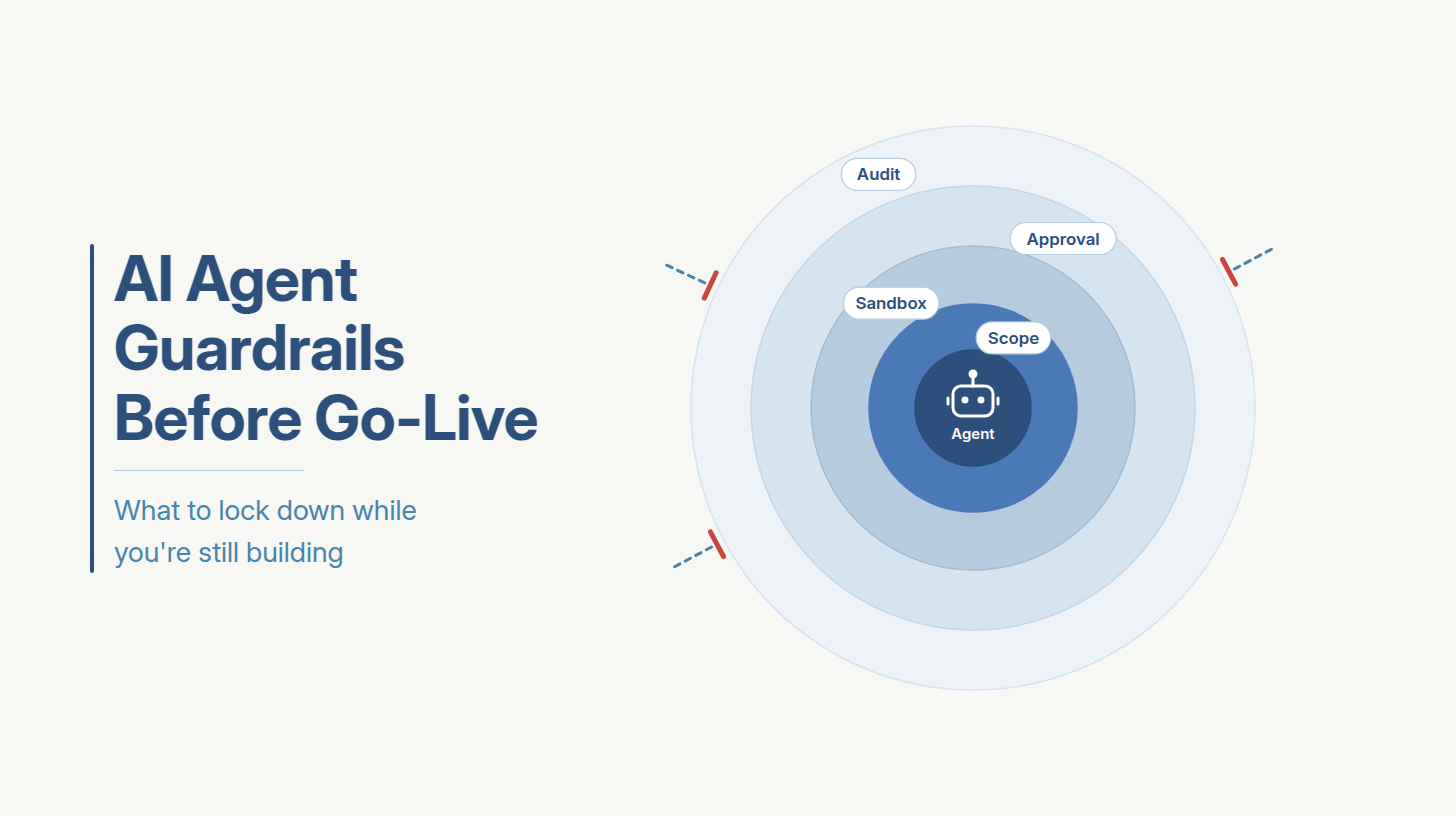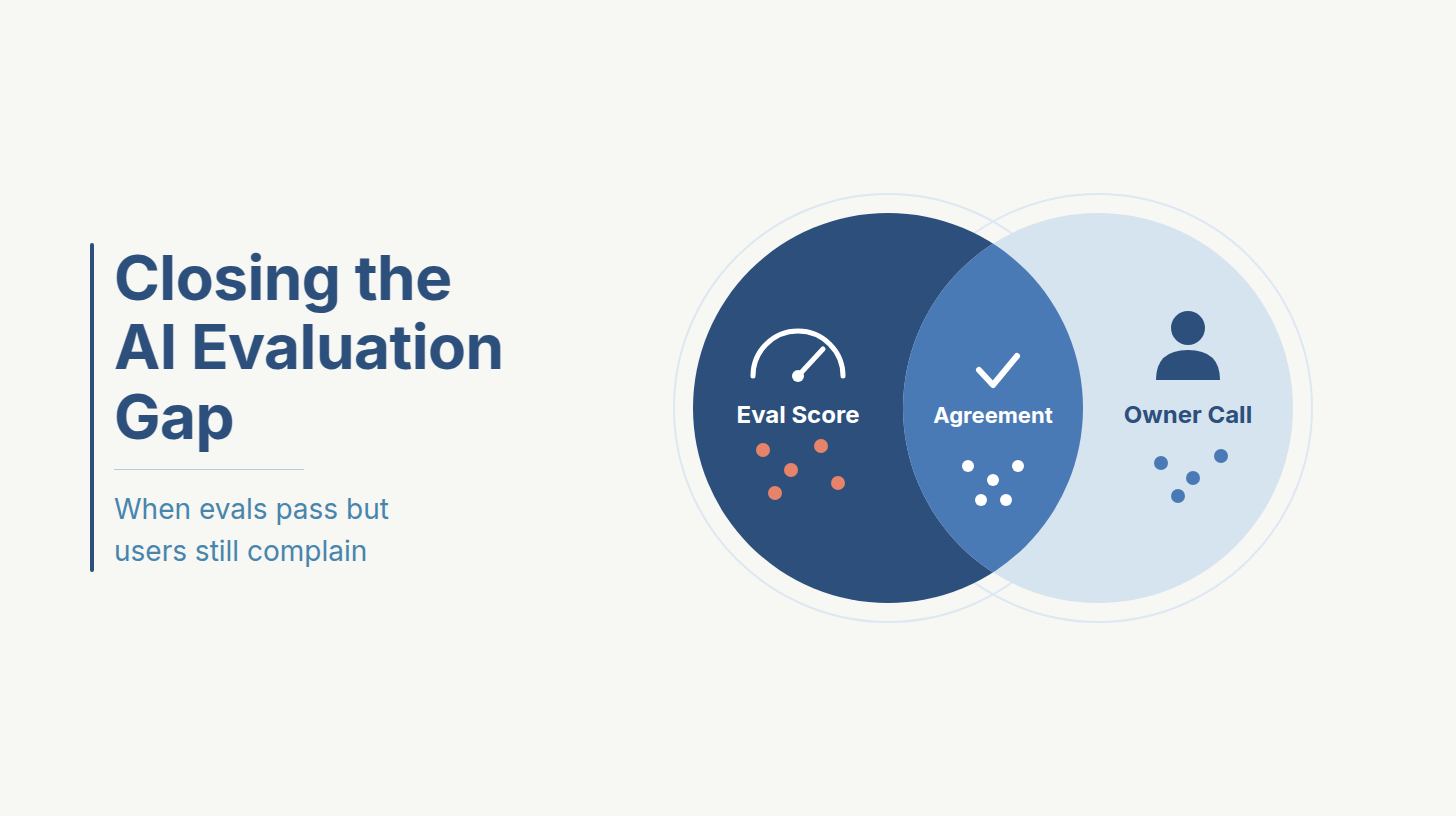

- Judge any PE portfolio technology assessment by one output: a ranked order of work your Operating Partner can sign off on before the next value creation review.
- Make sure the scope covers data across acquired systems, AI readiness, team capacity, technical debt and software spend, because the right order of work depends on how these areas affect each other.
- Ask every provider how they'll collect evidence. Interviews and documents can describe your problems, but only a read of your code and data flows shows which problem is holding up the rest.
- Insist on a 90-day roadmap your own team can execute, so the assessment turns into work that moves EBITDA inside the hold period.
If you run technology at a PE-backed company, you probably already know you need a PE portfolio technology assessment. Your Operating Partner wants an AI plan, the next value creation review is on the calendar, and you know the portfolio company IT problems sitting underneath the AI request. The open question is who should run the assessment and what you should get back from it.
That choice matters more than it looks. At events like AEA's CIO Summit, and in conversations with portfolio company CIOs in the months since, we heard the same problems described in very concrete terms. One distribution business runs 32 different ERP schemas and has to reconcile them before any number reaches its BI tools. Another has no in-house data team, yet its CIO is still expected to deliver a data strategy.
Every one of those CIOs could list their problems without help. What they wanted was a clear order of work, and most PE technology assessments aren't set up to give them one. That gap is where technology value creation plans start to slip.
What the Assessment Has to Cover
Five areas came up again and again in those conversations. If an assessment leaves one out, the ranking you get back will have a hole in it.
Why Software Spend Belongs in Scope
Software spend is the part of portfolio company IT that most assessments skip, and it's the one CIOs see least. Zylo's 2026 SaaS Management Index found that IT teams oversee only 15% of overall SaaS spend. The rest sits with business units and individual buyers that IT rarely sees, so you end up answering for spend that someone else bought.
Spend also changes the order of the data work, which is easy to miss. We met one company moving off Power BI onto Tableau and another moving the opposite way. A healthcare services group told us it pays about $150 per connection each month for an analytics connector that still syncs late. Each of those choices shapes what your data team can do next, so contracts belong inside the assessment. For AI seats in particular, our guide to auditing AI license spend across a portfolio covers how to score them.
Why a Narrow Assessment Gets the Order Wrong
These five areas feed each other. A team that spends its week keeping systems running has no room to pay down technical debt, and undocumented code slows down every integration. When data was never reconciled after an acquisition, AI pilots tend to stall as soon as they try to scale. Meanwhile, nobody has time to clean up software spend, so it keeps growing in the background.
Gartner has put numbers on one part of this. In February 2025, Gartner predicted that through 2026, organizations will abandon 60% of AI projects that aren't supported by AI-ready data. Its survey also found that 63% of organizations either don't have the right data management practices for AI or aren't sure if they do.
This is why a deep review of a single area can leave you worse off than a broader one. A data audit can confirm your data is messy, and a code review can put a size on your debt, but neither will show you that your team can't start the data work until something else comes off its plate. Our guide to the first 100 days of post-merger IT integration shows how that order of work plays out after close.
Scope your assessment before you choose who runs it
A short conversation with our PE team will help you work out which of the five areas matter most in your company and what evidence each one needs.
Talk to our AI for PE team
What Each Assessment Option Can See in Your Systems
Once the scope is set, the real choice is where the evidence comes from. The work can stay with your own team or go to an outside group, and outside groups split by method. Some work mainly from interviews and documents, while others work inside your systems.
Your own team can handle this if it has spare capacity and well-documented systems. An interview-led review may be enough if the question is mostly about the investment story. The gap appears when the risk sits in code nobody documented, or in data that never lined up after an acquisition. That kind of evidence only shows up when someone reads the systems.
If you're comparing outside firms more broadly, our overview of AI transformation partner types for private equity explains how the main models differ.
Seven Questions to Ask Before You Sign
Ask these in the first conversation. The answers will tell you more than any capabilities deck.
- Will you read our code and trace our data, or work from interviews? A good answer names the repositories and systems the team needs in week one.
- How do you rank findings across all five areas? Listen for a method that scores dependencies and deadlines as well as size, since a list of findings sorted by area isn't a ranking.
- What will we have at the end of the first week? Expect specific outputs, like quantified debt and a draft roadmap, and push back on "initial observations."
- How will you account for our team's capacity? A roadmap that assumes engineers you don't have will be out of date by your first review.
- Do you review software and platform contracts? Renewal dates and recent migrations change the order of the data work, so they need to be in scope.
- Can we carry out the roadmap without you? The roadmap and documentation should be yours to keep and clear enough for your team to work from.
- Can you show us a ranked output from a PE-backed company after an acquisition? An anonymized example is fine, and a provider that has done this before will have one ready.
If a provider can't answer the first two clearly, you'll likely get a description of your problems without an order to fix them in.
See what a ranked read of your data looks like
A free Data Modernization Assessment audits data quality and integration gaps across your acquired systems and scores AI readiness across your data assets, with results in two weeks.
Request your free Data Modernization Assessment
What You Should Walk Away With
Whoever runs the assessment, hold them to an output you can take straight into your value creation review. At a minimum, you should get:
- Technical debt quantified in time and cost for each application
- A map of how data moves across your acquired systems and where it breaks
- AI use cases filtered by what your data supports today, each with a one-page ROI estimate
- A 90-day roadmap your team can start working on
- Notes on capacity gaps and software contracts that change the order of the work
The timeline matters as much as the content. Bain's 2026 Global Private Equity Report puts the new math directly: firms now need roughly 12% annual EBITDA growth to produce the returns that 5% used to deliver. When the growth target is that steep, a roadmap that slips a quarter costs more than it did a few years ago. To see how a roadmap like this becomes an IC-ready backlog, our piece on turning a value creation plan into engineering execution walks through the process.
How the Ranking Should Work
The ranking should come from a scoring method you can see and question. A simple version scores each area on five factors.
After scoring, each area goes into one of three groups. Items with high dependency and a deadline get fixed now. Items with high cost but few dependents get scheduled, with a quarter and a named owner. Items that score low on both get deferred, and the reason is written down so the same debate doesn't come back at every review.
At the companies we spoke with, data reconciliation and team capacity usually ended up in the fix-now group, while AI tended to land in the scheduled one. That's an awkward talk with an Operating Partner who wants the AI story, which is why the evidence behind the scores has to stand up. A ranking your Operating Partner trusts is what turns an assessment into technology value creation.
How Reading the Systems Found Two Problems the Architecture Diagram Missed
Here's what reading the systems directly can surface that an interview might not. We worked with a PE-backed marketplace platform that was folding in a business it had just acquired. On paper, the data stack looked modern, with Snowflake and dbt in the warehouse and Prefect running the pipelines.
Once our engineers were inside those pipelines, two problems stood out. Feeds from partners kept changing format without warning, and bad records were flowing into reports before anyone caught them. The pricing and underwriting models were also stuck behind a single engineer, who was the only person able to push a new version into production.
Neither issue showed up on the architecture diagram. The data layer and the one-person dependency went to the top of the list, and the team fixed both without rebuilding the warehouse. Broken partner records are now held aside so the rest of each batch keeps flowing, and any engineer on the team can retrain and release a model through a standard pipeline. You can read the full story in this post-merger data platform case study.
How Ideas2IT Runs PE Portfolio Technology Assessments
Ideas2IT runs these assessments with Forward Deployed Engineers who join your team from day one, working in your stack and toward your OKRs. They work inside your systems, so they can gather evidence across all five areas. The ranking then reflects how your systems really behave.
The engineers work with Ideas2IT's platform-led suite, where each platform handles one layer of the assessment. That way, the findings come from analysis of your actual code and data rather than from interviews alone.
For the technical debt read, Ideas2IT uses Legacyleap, an agentic modernization platform that analyzes code and dependencies and writes documentation for systems that have none. An assessment that takes six to eight weeks by hand runs in about one week, and you receive costed technical debt and a modernization roadmap.
For data spread across acquired systems, Ideas2IT uses MigratiX, which automates schema analysis and transformation code so that 80% of the heavy lifting is done before any data moves. You get an integration gap analysis and a consolidation plan that keeps your current systems running.
Ideas2IT is SOC 2 Type II and ISO 27001 certified and an AWS GenAI Specialist Partner. The entry point is a one-week Portco Assessment, and the roadmap it produces is yours to execute with or without us.
Book your free Portco Assessment
In one week, you get technical debt quantified in dollars, a modernization roadmap with cost estimates where you need one, AI use cases tied to your investment thesis with one-page ROI estimates, and a 90-day roadmap your team can start on.
Book your free Portco Assessment
References
- Bain & Company. "Private Equity Resurgence Gathers Steam as New Era Challenges Firms to Enhance Value Creation." Press release. February 23, 2026. https://www.bain.com/about/media-center/press-releases/2026/private-equity-resurgence-gathers-steam-as-new-era-challenges-firms-to-enhance-value-creationbain--company-global-pe-report/
- Gartner. "Lack of AI-Ready Data Puts AI Projects at Risk." Press release. February 26, 2025. https://www.gartner.com/en/newsroom/press-releases/2025-02-26-lack-of-ai-ready-data-puts-ai-projects-at-risk
- Zylo. "Zylo Joins FinOps Foundation to Help Address the SaaS and Cloud Gap for ITAM and FinOps Teams as AI Spend Accelerates." Press release citing the 2026 SaaS Management Index. March 5, 2026. https://zylo.com/news/zylo-joins-finops-foundation