
- Agentic AI is already delivering production-scale value in claims operations, from FNOL triage and document processing to fraud detection and coverage decisions.
- The biggest barrier to AI-driven claims automation is the ability of core insurance systems to provide accurate, real-time data.
- Industry-wide claims STP remains below 10%, while top-performing carriers achieve 70–90% only after modernizing core systems and integration architecture.
- Explainability, governance, and adjuster override capabilities are now regulatory requirements.
- Before selecting an AI platform, carriers should assess whether their existing policy administration and claims systems can realistically support AI-driven workflows and automation goals.
Your adjusters are spending more time gathering information than making decisions. Your FNOL queue backs up every Monday morning. Your fraud team finds patterns two weeks into case handling, after reserves are set and the adjuster relationship with the claimant is established. Your last AI pilot worked in staging and broke in production.
None of these are random operational problems. They share the same root cause: your claims workflow was designed around human review at every step, and adding an AI layer on top of it does not fix that design. It exposes it.
This article covers what agentic AI actually does in insurance claims processing, where the real implementation risk sits, what the build-versus-buy-versus-partner decision requires, and what separates carriers succeeding with claims AI from those still running pilots two years after they started.
What Agentic AI Actually Does in Claims Processing
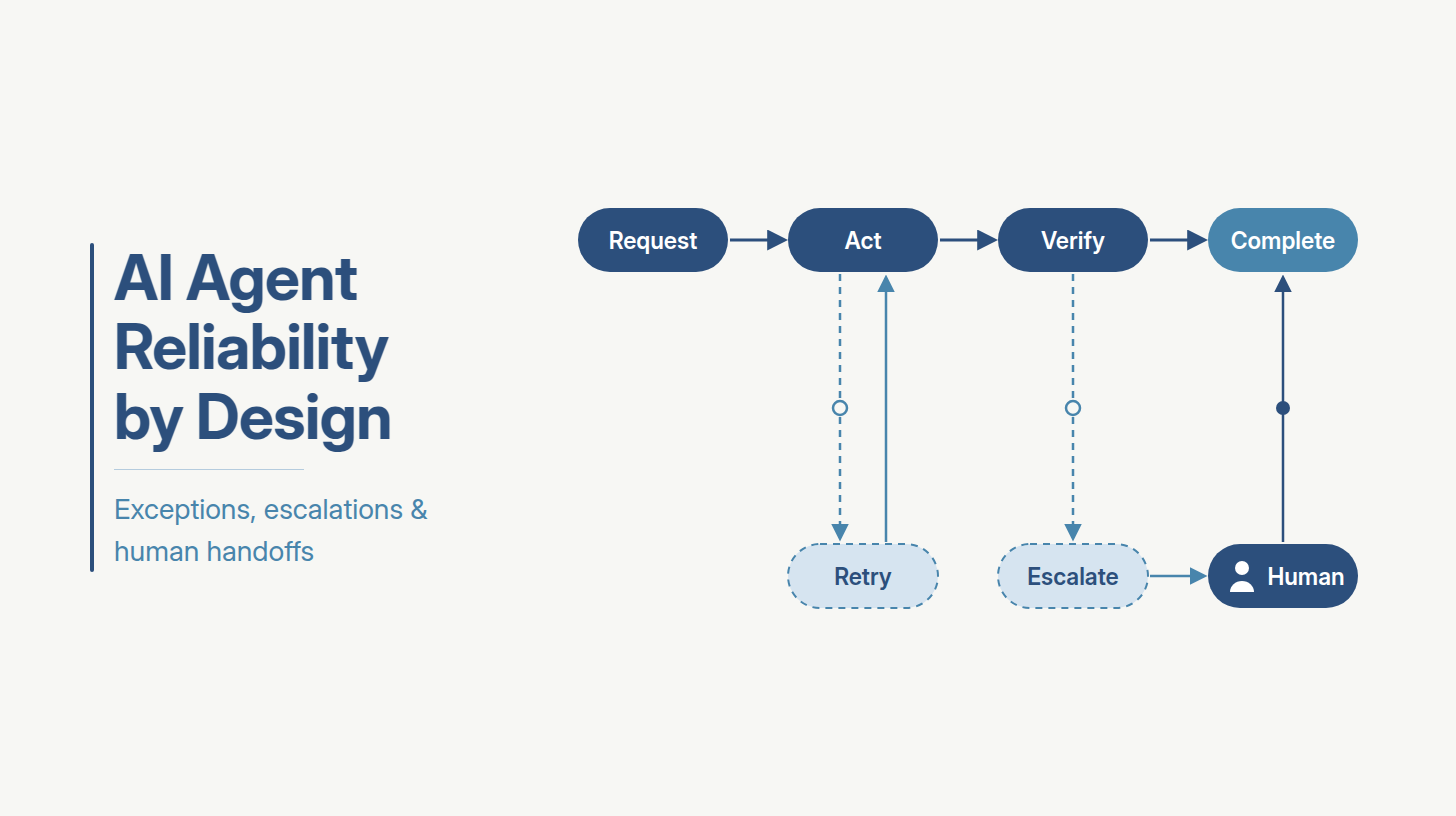
Agentic AI is not a smarter chatbot or a better rules engine. An agentic system receives a goal, breaks it into steps, takes actions across tools and systems to complete those steps, and surfaces results for human review. In a claims context, that means the system moves the claim forward autonomously until it hits a decision that requires human judgment.
Here is what that looks like across the claims lifecycle.
FNOL Intake
A claim arrives by email, mobile app, web portal, or phone. The agentic system ingests all of it: the text description, attached photos, PDF claim form (including handwritten sections), and channel metadata. It normalizes everything into structured format and opens the claim record without an adjuster touching it.
What previously took a CSR four to six minutes of data entry now takes under thirty seconds.
Document Intelligence
Every attachment is processed in parallel. PDFs are parsed for structured claim data. Photos are analyzed for damage type, severity, and authenticity signals. Medical records, repair estimates, and legal correspondence are read by LLM-based extraction that pulls structured values from unstructured text. Policy documents are retrieved and read for applicable T&Cs, exclusions, and coverage dates.
No adjuster opens the file until this layer is complete.
Fraud Scoring at First Notice
Before an adjuster sees the claim, it is scored against external databases (NICB ForeWarn, ISO ClaimSearch), internal fraud patterns, and rules codified by your SIU team. The score and the specific signals that triggered it are attached to the claim record. The adjuster sees them on screen one.
Insurance fraud costs the US P&C industry an estimated $45 billion annually, according to the Coalition Against Insurance Fraud. Catching signals at FNOL rather than week two is the difference between prevention and recovery.
Triage and Routing
The claim is classified by complexity, line of business, potential value, and fraud risk.
- Simple claims meeting STP criteria continue without human intervention.
- Standard and complex claims route to the appropriate adjuster queue with a pre-populated decision screen: extracted data, fraud score, policy language, reserve recommendation, and similar historical claims, all assembled before the adjuster opens the file.
Coverage Determination and Reserve Recommendation
For STP-eligible claims, the system produces a coverage analysis, applies the relevant policy clauses, and either approves or denies. For adjuster-reviewed claims, it presents the same analysis as decision support.
Reserve recommendations are generated from historical claims data and presented with a confidence interval. Where confidence is high, the adjuster accepts and moves on. Where it is low, the claim flags for senior review.
The adjuster is deciding, not researching.
Audit Trail and Governance
Every AI-supported determination is logged with the specific policy language that applied, the evidence reviewed, the fraud signals assessed, and the reasoning that produced the outcome.
This is an architectural requirement, not a feature. The NAIC Model Bulletin on the Use of AI Systems by Insurers, adopted December 2023 and now in effect in 24 US jurisdictions as of August 2025, requires carriers to implement a written AI Systems Program and maintain documentation that state insurance departments can request during market conduct examinations.
Retrofitting explainability onto a system that was not built for it produces weaker documentation than regulators expect, and costs significantly more than designing it in from day one.
The Operational Problems Claims AI Actually Solves
Understanding what AI does is step one. The more useful question is which of your current operational problems it addresses, and which ones it does not.
The FNOL Backlog
When intake requires CSR data entry at every contact point, volume spikes overwhelm capacity. A CAT event increases claim volume and breaks the workflow for five or six days.
Agentic intake removes the human-touch requirement from standard FNOL for lines that fit a defined intake pattern. The CAT spike still happens. The queue does not.
The Adjuster Documentation Burden
McKinsey's research on insurance productivity found that 30–40% of underwriter time goes to administrative tasks like rekeying data and manually executing analyses. Claims adjusters face a comparable burden.
Pre-populated decision screens, AI-generated case summaries, and automated documentation drafts compress that time significantly. Your best adjusters spend their time on complex claims and judgment calls, not assembling the information they need to make them.
The Fraud Timing Problem
Traditional fraud detection runs after an adjuster has worked a claim for days or weeks. By then, reserves are set, the customer relationship is established, and reversing course is expensive.
Fraud scoring at FNOL changes the economics. Signals are visible before the adjuster opens the file. SIU referrals happen at intake, not week three.
Deloitte projects that P&C insurers implementing AI-driven fraud detection across the claims lifecycle could save between $80 billion and $160 billion in fraudulent claims by 2032.
The STP Gap
The gap between the industry average and the vendor benchmark is not an AI problem. It is a data surfacing problem, and that distinction matters for everything that follows.
The Cycle Time Problem
According to J.D. Power's 2026 U.S. Property Claims Satisfaction Study, the average cycle time from FNOL to final payment has reached 40.7 days, among the longest since J.D. Power began tracking.
Customers whose claims resolve within ten days report satisfaction scores dramatically higher than those whose repairs take more than thirty-one days. Cycle time is both an operational metric and a retention driver. AI compresses the intake, triage, and documentation steps that currently consume the first week or more of most claims.
Why Most AI Claims Implementations Fail Before They Start
Here is what vendors presenting STP benchmarks rarely say out loud: those numbers are achieved on modern, well-structured policy administration cores.
Systems where FNOL data arrives via event trigger, policy data surfaces through a documented API, and reserve fields contain single, predictable values.
A 70–90% STP rate for simple personal auto is real. It is real on those cores.
Most mid-size US P&C carriers are not running those cores. They are running policy administration systems that accumulated fifteen years of business rule customizations on top of a base never designed to surface data in real time:
- Batch-only exports with no event triggers
- Undocumented field mappings changed across multiple system updates
- Reserve amounts split across three or more tables
- Coverage codes repurposed two updates ago, now containing mixed values
When you connect an AI agent to that environment, it routes to human review every time it hits an ambiguous field. In a heavily customized legacy core, that is constantly. Your STP rate is not 70%. It is closer to 22%, and it will not move until the data surface is fixed.
The AI needs real-time, clean, schema-consistent data at each decision point. If the integration layer underneath cannot provide that, no model tuning closes the gap.
The integration work has four distinct components:
Carriers on Guidewire or Duck Creek already have most of this. Carriers on older, customized cores go through all four. The work is estimable, plannable, and it is what every SaaS AI platform skips in the vendor presentation and finds in month three of implementation.
Build, Buy, or Partner: Choosing the Right Path
If you are past general awareness and into evaluation, this decision determines everything downstream. Here is what each path actually requires.
SaaS Platform
Right when: your core is Guidewire, Duck Creek, or Majesco, and your claims mix is standard personal lines.
Pre-built connectors exist, configuration covers most use cases, and 60–70% STP on simple personal auto is achievable without custom integration work.
The honest limit: STP ceilings for complex lines, workers' compensation, general liability, specialty commercial, will be lower than the benchmarks in vendor presentations. And when your core is not Guidewire, the integration layer the platform assumes you have does not exist. The SaaS vendor will discover this in month three. You will pay for the discovery.
Internal Build
Right when: your engineering organization has deep insurance domain knowledge, an API layer already exists on your core, and your timeline allows 12–18 months before production.
Internal scoping typically surfaces a data project that has to come first, field mapping, API wrappers, pipeline architecture, adding 6–12 months before AI layer development can even begin.
For most mid-size carriers with a near-term deadline, the math does not work.
Custom Engineering Partner
Right when: your core is legacy and heavily customized, your claims mix includes lines requiring judgment beyond simple personal auto, and your engineering organization does not have the insurance domain depth to build the integration layer from scratch.
A custom partner embeds engineers in your claims environment from day one, not consultants who hand over a document, and builds the integration work the SaaS platform skips on your actual production system, with your actual data, alongside your actual adjuster team.
The critical question for evaluating any custom partner: do they start with the integration architecture, or with the AI model? Any partner who leads with the AI model and treats integration as a phase two deliverable is telling you exactly how your implementation will fail.
What to Ask Before You Sign Anything
The pitch deck is not the signal. These five questions separate vendors who ship production value from vendors who sell impressive demos.
1. Can they show you a denied claim with a full audit trail?
Not a mockup. A real output from a production system showing the specific policy clause that applied, the evidence reviewed, and the reasoning that produced the denial. This is what the NAIC Model Bulletin expects regulators to be able to see. If they cannot show you before signing, they will not produce it after.
2. What is their specific integration experience with your core system?
Guidewire and Duck Creek are common. If your core is neither, ask for a specific carrier reference where they completed integration on a comparable system. If they do not have one, the integration learning happens on your contract.
3. What is the go-live milestone, stated as a specific month?
Vague timelines, "we will be in production within the year", are how 18-month projects become permanent. Get a named milestone in writing and put it in the contract.
4. How are adjusters involved in building the system?
Deloitte's December 2025 research with seventeen chief claims officers at leading P&C insurers found that adjuster skill gaps and change management, not technology availability, are the primary constraints on AI claims deployment.
Ask specifically: how are adjusters involved in building the override logic and the decision surfaces they will use? Vendors that hand off a trained model and expect adoption to follow have not solved the problem.
5. What does a pilot look like, and are you locked in after it?
Any vendor confident in their production performance will run a scoped pilot without a multi-year commitment attached. If they will not, they are not confident.
What to Expect After Go-Live
One expectation to set explicitly: your STP rate at go-live will not match the vendor benchmark. That is normal and not a failure signal.
At go-live, the integration layer is new. Confidence thresholds are being calibrated against real production claims data for the first time. The system starts conservative, routing more to human review than it ultimately will, because it has not yet accumulated enough claims history to push more into the STP pathway confidently.
The typical trajectory:
According to McKinsey's published case study, Aviva deployed more than 80 AI models across its motor claims operation, cutting complex liability assessment time by 23 days, improving routing accuracy by 30%, reducing customer complaints by 65%, and saving more than £60 million in 2024.
The relevant lesson for a mid-size US carrier is the sequence: data architecture and integration work completed before the AI models were deployed at scale.
Why Ideas2IT
Ideas2IT does not sell a SaaS claims platform. There is no pre-built product to configure. What Ideas2IT deploys is Forward Deployed Engineers: engineers who embed in your claims environment from day one, working in your stack, in your standups, against your OKRs. The integration work that SaaS platforms skip is where FDE teams start.
For carriers with an undocumented legacy core:
Ideas2IT's Explayn.ai platform applies code intelligence to legacy policy administration systems, mapping undocumented field relationships, surfacing data dependencies not in any schema document, and producing the data dictionary that API wrapper development is built on. The integration work still has to be done. Explayn.ai means the scoping is accurate and the timeline is credible before a line of integration code is written.
For the build phase that follows:
Ideas2IT's Anticlock platform addresses the engineering consistency problem that custom AI builds face when multiple engineers work on a shared codebase. Individual engineers make different decisions about API interaction patterns and apply different standards to the integration layer. Anticlock standardizes those decisions across the team, tool selection, API interaction patterns, compliance constraints, so the integration and orchestration layers are built consistently rather than assembled in isolation.
What makes the engagement model different:
The override logic that determines when AI agents route to human review is not shipped as a configuration parameter. It is built with your senior adjusters, calibrated against your actual claims mix, and adjusted based on what production data reveals in the first weeks after go-live. That is the difference between a system your adjuster team trusts and one they work around.
Ideas2IT holds SOC 2 Type II certification and ISO 27001 accreditation, the baseline certifications a VP of Claims Operations uses when evaluating an engineering partner who will be inside a live claims environment with policyholder data.
The entry point is an architecture working session scoped to your specific environment. It produces a written assessment covering:
- Integration readiness for your core system
- A realistic STP trajectory based on your claims mix and data architecture
- A scoped integration timeline
- A compliance posture map against NAIC requirements in the states where you operate
It is the analysis that tells you whether custom software development for regulated industries is the right path before you make a commitment.
If you have read this far, you are past the awareness stage. You know what agentic AI does in claims, where the real implementation risk sits, and what the decision criteria are for choosing a path.
The remaining question is specific to your environment: what can your core system support, and what does the integration work require to get your STP rate moving?
An architecture working session answers that in writing, scoped to your stack.
Book an Architecture Working Session
References
J.D. Power. "2026 U.S. Property Claims Satisfaction Study." March 2026. https://www.jdpower.com/business/press-releases/2026-us-property-claims-satisfaction-study
J.D. Power. "2025 U.S. Auto Claims Satisfaction Study." October 2025. https://www.jdpower.com/business/press-releases/2025-us-auto-claims-satisfaction-study
McKinsey & Company. "The Future of AI for the Insurance Industry." July 2025. https://www.mckinsey.com/industries/financial-services/our-insights/the-future-of-ai-in-the-insurance-industry
McKinsey & Company. "Aviva: Rewiring the Insurance Claims Journey with AI." 2025. https://www.mckinsey.com/capabilities/tech-and-ai/how-we-help-clients/rewired-in-action/aviva-rewiring-the-insurance-claims-journey-with-ai
National Association of Insurance Commissioners. "Model Bulletin: Use of Artificial Intelligence Systems by Insurers." December 2023. https://content.naic.org/sites/default/files/cmte-h-big-data-artificial-intelligence-wg-ai-model-bulletin.pdf.pdf
National Association of Insurance Commissioners. "Artificial Intelligence: Insurance Topics." https://content.naic.org/insurance-topics/artificial-intelligence
Deloitte. "As Insurance Execs Eye AI for Fraud Detection, Deloitte Predicts Billions in Savings." June 2025. https://www.insurancejournal.com/news/national/2025/06/05/821619.htm
Deloitte Insights. "Soft skills solve claims management shortage crisis." December 2025. https://www2.deloitte.com/us/en/insights/industry/financial-services/insurance-claims-management-transformation.html
Coalition Against Insurance Fraud. "The Impact of Insurance Fraud on the U.S. Economy." https://insurancefraud.org/fraud-stats/