
- Every agentic AI vendor pitch to private equity claims coverage across the full deal lifecycle. Most of that claim depends on data conditions and governance your portfolio probably doesn't have in place yet.
- The seven lifecycle stages, deal sourcing, due diligence, portfolio monitoring, IC memo prep, LP reporting, value creation, and exit readiness, each fail for a specific, different reason when the data underneath isn't ready, and none of those failures trace back to model quality.
- A pilot that works at one portfolio company answers whether the agent works. It doesn't answer whether the rest of the portfolio can support it, and most rollouts only ever answer the first question.
- What determines ROI at each stage is execution discipline: data readiness, governance, and honest measurement. Which platform gets picked matters far less than whether the delivery model behind it can hold up across a portfolio.
You have a board mandate to show an AI story this year and a budget line to fund it. You also have six vendor decks on your desk, and every one of them claims coverage across sourcing, diligence, monitoring, IC memo prep, LP reporting, and value creation. None of them tell you which of those claims survive contact with your actual portfolio.
That's the gap this piece is written to close. Not another list of agent types, but a working map of what agentic AI actually does at each stage of the deal lifecycle, where it earns its keep, and where the pitch quietly assumes a data foundation your portfolio companies don't have yet. Where a specific stage already has deeper coverage elsewhere, this piece points you there rather than repeating it. What it argues on its own, and the thread that runs through every section, is that the difference between a working pilot and a working portfolio is rarely the model.
Why Agentic AI Changes How Private Equity Teams Work
The word "agentic" gets attached to almost anything with a chat interface right now, so it's worth being precise about what it actually means before mapping it to the deal lifecycle. Three distinct levels get sold under the same word, and the difference between them is exactly where a vendor's claim tends to fall apart.
Anthropic's engineering team, describing how they built their own multi-agent research system, found that a multi-agent architecture with a lead agent coordinating specialized subagents outperformed a single-agent approach by 90.2 percent on their internal research evaluations. The same team was direct about the limits: some domains that require heavy coordination between agents or shared context are not a good fit for multi-agent architecture today, and early versions of their system made basic coordination errors, like spawning dozens of subagents for a query that needed one.
That combination, real performance gains alongside real coordination limits, is the honest starting point for evaluating any agentic AI claim in a PE context. If a vendor pitch doesn't distinguish between the three levels above, or claims full autonomy across every stage of your deal lifecycle, that's the first thing worth pressing on.
How Agentic AI Improves Deal Sourcing and Screening
At the sourcing stage, an agent's job is continuous evaluation. It monitors company databases, filings, and market signals, then scores each opportunity against your fund's specific investment thesis instead of only logging it in a pipeline.
The condition that determines whether this works has nothing to do with the vendor. It's whether your fund's investment criteria are specific enough to score against. A thesis written as "lower-middle-market industrials with strong margins" gives an agent almost nothing to filter on, and the output will read as noise. A thesis written with a defined revenue band, margin threshold, and sector scope gives the agent something it can actually reason against, and the output becomes a usable, ranked pipeline instead of a longer list of names you already had.
This is also the stage where the gap between a demo and daily use shows up fastest. A vendor demo runs against a clean, well-defined thesis prepared for the pitch. Your actual thesis, refined across partners and updated after every IC discussion, is messier. An agent that performed well in the demo can produce noticeably weaker results once it's scoring against the thesis your fund actually uses.
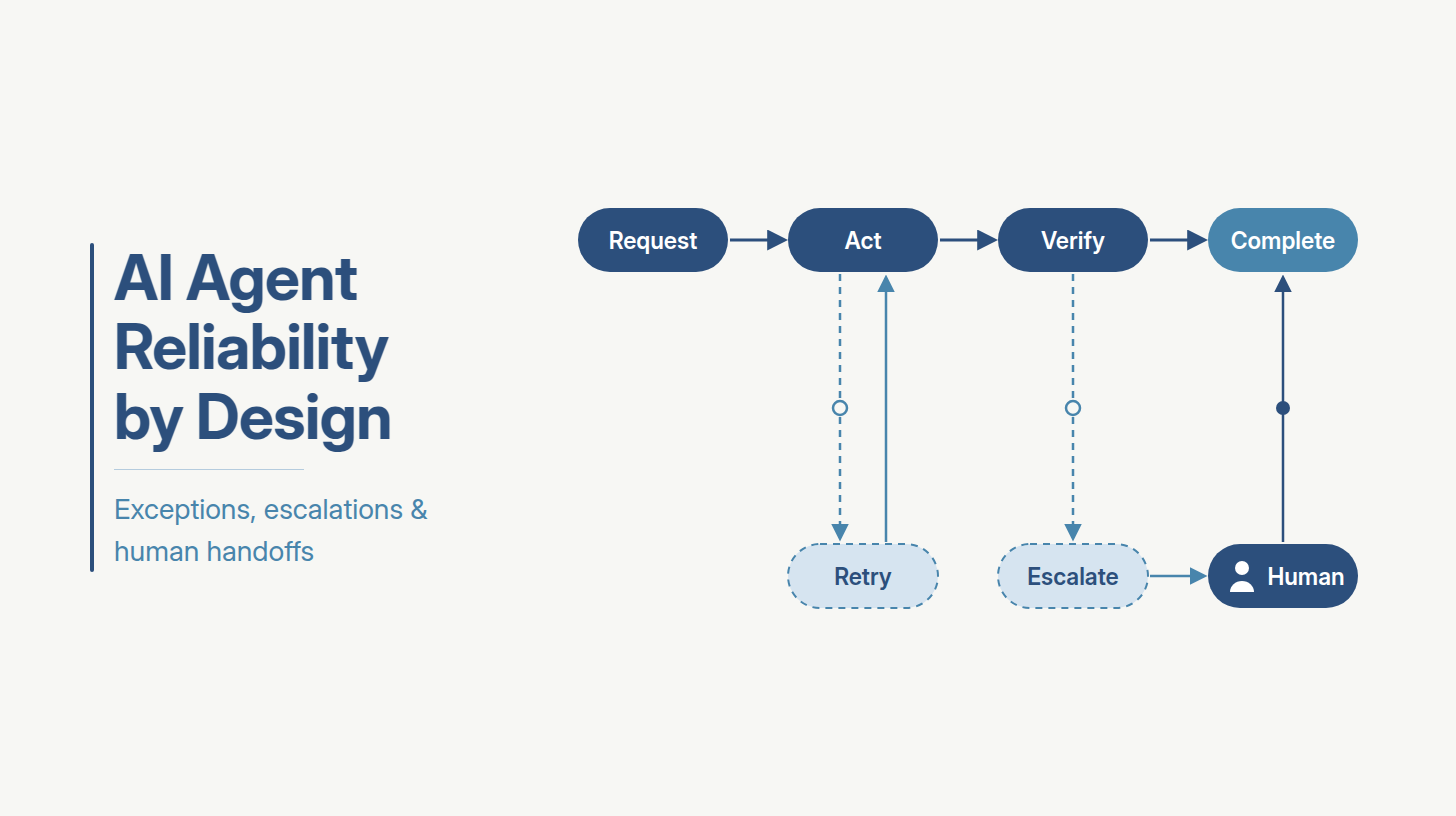
The agent's output here is a ranked list. A human still owns every outreach call and every prioritization choice before a target moves forward, and an agent that's allowed to skip that review has moved from screening into a role nobody signed up to give it.
How Agentic AI Accelerates Due Diligence Without Replacing Judgment
Diligence is where agentic AI saves the most time and creates the most risk if deployed without the right checks, often in the same engagement.
An agent at this stage reads data room documents, financial statements, and contracts, then produces a structured first-pass synthesis: financial trends, customer concentration, red flags with source references, and open questions for management calls. What it doesn't replace is the investment director's judgment about whether to proceed and how to price the deal.
The risk concentrates in one place: whether every claim in that synthesis traces back to a specific source document. An agent that extracts an EBITDA figure with full confidence but pulled it from the wrong table in the CIM is not a hypothetical failure mode. It's one of the most commonly cited risks in production agent deployments, because a confidently wrong output looks identical to a confidently correct one until someone checks the source.
Anthropic's research on cascading errors in multi-agent systems found that an error introduced early in a workflow propagates to every downstream step that consumes it, and that cross-verification checkpoints reduce this risk without eliminating it entirely.
In a fiduciary context, that means the deliverable your diligence team should actually evaluate isn't the summary itself. It's whether every line in that summary can be traced back to a page number in under thirty seconds. The investment director still owns whether to proceed and how to price the deal. The agent only shortens the distance to that decision, and only if the trail holds up.
How Agentic AI Speeds Up Investment Committee Decisions
Once a deal closes, the same agentic capability shifts from evaluation to observation. An agent at this stage pulls operating KPIs from portfolio company systems and flags deviations, margin compression, customer concentration shifts, or covenant trajectory, before they show up in a quarterly board pack.
This is also the stage where data readiness stops being an abstract concern and becomes the entire story. Most portfolios are still running this cycle on spreadsheets emailed by portco CFOs on inconsistent schedules, in inconsistent formats, using KPI definitions that were never standardized across companies. An anomaly-detection agent sitting on top of that intake process has nothing reliable to detect anomalies in.
The engineering work required to fix this, normalized ingestion, standardized intake, and a queryable data layer beneath the monitoring tool, is covered in full in what actually breaks first in AI portfolio monitoring, including what a working data layer requires before any monitoring agent produces trustworthy output. The agent's job here ends at the flag. Deciding whether a margin trend justifies a management conversation stays with the operating partner every time.
How Agentic AI Turns Portfolio Monitoring Into Continuous Intelligence
The investment committee memo compresses weeks of diligence work into a document the deal team will defend under direct questioning. An agent at this stage doesn't write that memo from scratch. It assembles a structured first draft from work that already exists: diligence findings populate the risk section, the financial model populates the returns analysis, and expert call notes populate the management assessment.
The comparison that matters isn't "memo written by AI" against "memo written by a person." It's a deal team editing a structured first draft against a deal team starting from a blank page. The first produces a better memo in less time, because the hours go into judgment calls rather than formatting and first-draft assembly.
The specific risk here is trust, not accuracy in isolation. The first time an IC member asks where a specific figure came from and the answer is a shrug rather than a page number, the agent stops being used for that purpose, and rightly so. Every claim that reaches an IC memo through an agent needs the same source-citation discipline argued in the diligence section above, because the memo is the document an investment committee will hold the deal team accountable to. No draft reaches the committee without a partner's sign-off on every section, regardless of how the draft was produced.
How Agentic AI Simplifies LP Reporting and Investor Communications
Quarterly LP reporting absorbs a disproportionate share of a fund's operating hours on data assembly rather than analysis. An agent here pulls portfolio company data, populates capital account statements, and drafts a first-pass fund-level letter, along with side-letter-aware variations for LPs with different disclosure obligations.
This is a compliance-adjacent stage, and human review before anything reaches an LP inbox isn't a nice-to-have. Side letters create different obligations to different investors. A pension fund LP and a family office LP often want different levels of narrative explanation for the same underlying number, and an agent that treats every LP identically will eventually generate a report that technically satisfies a data requirement while missing a specific disclosure obligation. The time savings at this stage are real. The review step that catches the exception before it ships is not optional.
Value Creation and Portfolio Execution
This is where the gap between a working pilot and a working portfolio shows up hardest, because a value creation plan by definition runs across every company in the fund, and every company entered that fund from a different starting point.
An agent supporting value creation tracks progress against a 100-day plan, surfaces pricing and margin data, and flags add-on candidates that match a platform's profile. That work assumes the portfolio company underneath it has usable data and a functioning operating rhythm to act on the agent's output. One portfolio company might clear that bar within weeks. Another, often one still absorbing an acquisition, might need a full data-readiness and modernization pass before an agent produces anything an operating partner can act on with confidence. The agent surfaces the pattern. The operating partner still has the conversation with management about what to do with it.
Applying the same rollout timeline to both wastes budget on the company that's ready and stalls the one that isn't, and that mismatch is exactly what a four-gate portfolio framework for sequencing AI investment across an uneven portfolio is built to solve, with a structured data-readiness read across every portfolio company before a dollar of AI budget gets allocated to a specific use case.
The execution side of that work, turning a validated use case into a sequenced, IC-ready build once a company clears that gate, is covered separately in a five-step process for PE technology value creation.
If you're at the stage of mapping each portco against this kind of readiness gate, a free data modernization assessment gives you that read, a prioritized plan with cost estimates, returned within two weeks.
Get your free data modernization assessment.
How Agentic AI Improves Exit Readiness and Sale Preparation
The last stage where agentic AI applies is the one that gets the least attention until a process is already underway. An agent here audits data room documentation against a standard structure, flags missing exhibits, surfaces quality-of-earnings adjustments and one-time items in the financials, and drafts first-pass responses to the buyer diligence questions your fund has already answered in prior processes.
The value is speed under pressure. A data room assembled over a weekend with an agent doing the first pass on completeness and consistency is a different starting point than one assembled entirely by hand under the same deadline. What doesn't change is who signs off. Every drafted response still gets reviewed against the specific buyer and the specific deal before it goes out, since a generic answer that worked in a prior process can misstate something material in this one.
Why Data Readiness Determines Whether Agentic AI Succeeds
Every section above assumes a baseline that's worth stating directly rather than implying. Deal and portfolio data is among the most sensitive information a fund handles, pre-LOI, pre-IC, pre-announcement, and the security requirements for agentic AI in this context go beyond the standard questions about encryption and SOC 2 compliance.
No session data should persist after an interaction ends. Your CIMs, IC memos, and portfolio data shouldn't enter any shared training pipeline, and any vendor should be able to describe, in specific technical terms, the complete path your data takes from input to output and what happens to it afterward. If the answer to that question is vague, treat that vagueness as the answer.
Deal data and portfolio data need role-based segregation, with access controls that prevent information from one deal or one portfolio company from surfacing in a context where it doesn't belong. Every agent decision, extraction, and output needs a full audit trail: which agent produced it, from which source, at what confidence level, and whether a human modified it. That trail is what makes an IC memo or an LP report defensible after the fact, a different bar than simply being accurate in the moment.
And a signed data processing agreement, not a privacy policy, needs to exist before a pilot starts, not after it succeeds. A privacy policy is marketing language. A data processing agreement creates legal obligations around data handling, deletion, and breach notification, and a fund evaluating any agentic AI partner should ask for one before the first document touches the system.
Underneath all seven lifecycle stages, a working setup tends to organize into the same four layers regardless of which vendor or partner built it. If a vendor can't point to something in each layer when you ask how their system is built, that's a gap worth naming before a pilot starts, not after.
Before committing budget to any of the seven stages above, it's worth scoring your own fund honestly against five questions. A fund that can't answer at least three with confidence isn't ready to scale past a single pilot yet, and that's worth knowing before the budget gets committed rather than after.
How to Measure the Business Impact of Agentic AI
The metrics that validate a pilot and the metrics that justify scaling it across a portfolio are not the same, and conflating them is one of the more common ways funds convince themselves a rollout is working before it actually is.
A time-saved number only becomes a real efficiency gain if that time gets redirected toward something that moves a deal or a portfolio company forward, and it's worth checking that redirection actually happens rather than assuming it does. Attribution in private equity is inherently complex, and AI-driven improvements are almost always a contributing factor alongside other work, not a sole cause, so measurement frameworks that claim to isolate AI's exact contribution to fund performance deserve scrutiny.
What you should actually track also shifts as a program matures, and expecting firm-wide metrics out of a pilot is a common way to kill a program before it's had a fair test.
Bain & Company's 2025 Global Private Equity Report, based on a survey of investors representing $3.2 trillion in assets under management, found that a majority of portfolio companies remained in generative AI testing and development, with nearly 20 percent having operationalized use cases and seeing concrete results. That's a useful benchmark for how much of the market is still legitimately at the pilot or functional-rollout stage rather than the firm-wide one. A fuller framework for building this out, including how to separate pilot-stage metrics from the fund-level metrics that actually justify continued investment, is covered in a full framework for AI ROI measurement in private equity.
Where Agentic AI Rollouts Actually Stall
Every stage above has its own version of the same handful of failure points, and it's worth naming them together rather than leaving them scattered.
None of these four are technology failures. They're the same execution gaps this piece has been naming stage by stage, just visible all at once when you step back far enough to see the pattern.
Why Your Delivery Model Matters More Than Your AI Platform
Every section above points to the same underlying pattern, one that shows up across the full picture of AI transformation for PE firms and portfolio companies, across every lifecycle stage rather than one isolated stage. A platform subscription gets you speed and a polished interface, but the governance assumptions and data-handling defaults are the vendor's, not yours, and you inherit them.
An internal build gets you control, but it depends on the one or two engineers who understand how it actually works, and that dependency is a form of risk that doesn't show up until someone leaves. The criteria that actually separate a partner who can execute this from one who can only present a strategy deck are laid out in a practical guide to evaluating PE technology partners, and the specific criteria for judging AI implementation partners against portfolio-wide execution across a full portfolio, rather than a single pilot, are covered in choosing an AI implementation partner for PE portfolios.
How Ideas2IT Helps PE Firms Scale Agentic AI Across the Portfolio
Ideas2IT runs every engagement described in this piece through Forward Deployed Engineers embedded directly inside your portfolio company's existing environment from day one, working within the existing stack, attending the existing standups, and aligned to the portfolio company's own OKRs rather than managed from a central delivery team sitting outside it. That embedding is what makes a modernization pattern built at one portfolio company portable to the next one, rather than re-solved from scratch every time a new company needs the same fix. It's the difference between handing a portfolio company a framework and having someone inside the system who can actually make the framework hold up against that company's specific data, systems, and team.
For portfolio companies where legacy, undocumented systems are the specific reason a data-readiness read comes back behind schedule, Legacyleap runs the assessment and modernization work, producing documentation those systems never had along the way and cutting modernization time by 50 to 70 percent while preserving full functional parity.
Ideas2IT holds SOC 2 Type II and ISO 27001 certifications and is an AWS GenAI Specialist Partner, credentials that back the data-handling argument made earlier in this piece rather than sitting apart from it. For portfolios with air-gapped or private cloud deployment requirements, that option is available within the same delivery model.
Every engagement starts with a free, no-commitment assessment scoped to where your portfolio actually stands. A free data readiness assessment maps your current data state across your portfolio companies, identifies the specific integration and readiness gaps blocking a reliable agentic AI rollout, and returns a prioritized plan with cost estimates within two weeks, yours to keep regardless of what you decide next.
Get your Free Data Readiness Assessment.
References
Anthropic. "How we built our multi-agent research system." Anthropic Engineering. June 2025. https://www.anthropic.com/engineering/multi-agent-research-system
Bain & Company. "Harnessing Generative AI in Private Equity." Global Private Equity Report 2024. March 2024. https://www.bain.com/insights/harnessing-generative-ai-global-private-equity-report-2024/
Bain & Company. "Field Notes from the Generative AI Insurgency in Private Equity." Global Private Equity Report 2025. March 2025. https://www.bain.com/insights/field-notes-from-generative-ai-insurgency-global-private-equity-report-2025/