
- AI value optimization starts by judging production AI on the business metric it was funded to move, so baseline that metric before you change anything. Usage and model scores only tell you the system runs.
- Look for lost value in the steps after the model. Manual review, weak integrations, slow responses and badly placed tools absorb most of the gains your AI produces.
- Price each AI workflow per business outcome, such as cost per resolved ticket. Token costs on their own can hide a workflow that is getting more expensive every month.
- Rank fixes by how much they move the business metric and how soon, then re-measure against the same baseline after every change.
Pull up the deck from your last AI steering review. The technical story probably holds up: adoption is climbing, the models clear their evaluation thresholds, uptime is fine and two more workflows went live this quarter. Then your CFO asks which line on the P&L moved because of any of it, and nobody in the room can answer with a number. That's the gap AI value optimization is built to close.
The work traces what an AI system costs against the business result it produces, then finds and fixes the places where value leaks out between the two.
You're far from alone here. McKinsey's 2025 State of AI survey found that only 39 percent of organizations report any enterprise-level EBIT impact from AI, and most of that group attributes less than 5 percent of EBIT to it. BCG's 2025 research found that 60 percent of companies report minimal revenue and cost gains despite substantial investment.
The usual response is a better model or a bigger adoption push. Both raise activity, and neither tells you where the value is going. What helps is a way to measure AI business value on a workflow you already run and to find where AI value leakage hides. AI ROI measurement and AI cost optimization both feed that work, but neither one replaces it.
AI Investment and AI Value Are Two Different Numbers
Most AI reporting blends two numbers that behave very differently. Investment is what you spend: licenses, inference, retrieval infrastructure, the engineers who maintain the system and the people who still check its output. Realized value is the change in a business metric that wouldn't have happened without the system, measured against a baseline.
Finance already tracks investment, so it's easy to see. Realized value is harder, because nobody instrumented it at launch. The pilot was approved on a projected benefit. Over time that projection quietly became the assumption, and nothing checks it against what happens downstream.
The two numbers also move on their own. You can double usage of a document extraction model while the process it feeds runs no faster, because the real bottleneck is an approval step the model never touches. Spend goes up and value stays put. When usage growth stands in for value, your AI program grows every year and gets no easier to defend.
So the useful question for each production system is a simple one. How much of the value it could produce is reaching the business, and where is the rest going?
Find Out Where One AI Workflow Is Losing Value.
If one of your live AI workflows already sits in this gap, an AI Value Optimization Review with Ideas2IT starts with that single workflow. You leave with a baseline for the outcome it was meant to change and a first read on where its value is going, scoped to one system so it doesn't turn into another program.
Start with one AI workflow
Where AI Value Leaks Between the System and the Outcome
Value rarely disappears inside the model. It disappears in the steps between the model's output and the business result. Those steps belong to different teams, which is why no single dashboard shows the loss.
Seven points are worth checking in any production AI workflow:
Workflow design deserves a closer look. In the same McKinsey survey, the roughly 6 percent of organizations classed as AI high performers were nearly three times as likely as others to have fundamentally redesigned their workflows.
These leakage points also feed each other. Weak output quality creates review work. Review work slows the workflow, and a slow workflow pushes people back to the old process. Fix one point and you'll often expose the next, so the diagnostic has to cover the whole workflow before you commit engineering time.
None of these leaks can be sized, though, until you know what the workflow was supposed to change.
Measure the Outcome the AI Was Supposed to Change
Most AI programs report activity: prompts, active users, model calls and deployments. Those numbers describe how busy the system is. They don't describe what it changed, and boards that have sat through two years of activity charts have started to discount them.
Every production AI system was funded to change one operational or business metric. A claims triage model was meant to cut the time to a first decision. A support assistant was meant to lower the cost of each resolved ticket. That's the number to baseline if you want to measure AI business value, and it's the starting point for any AI ROI measurement your CFO will accept.
Start with the metric and the unit of work behind it, such as hours from claim receipt to first decision. Then find its value before the AI went live. If there's no clean pre-launch record, use a slice of the same work the AI doesn't handle as your comparison.
Ownership matters too. The baseline should sit with the business owner of the process, because a team that measures its own system tends to pick the metrics that system improves.
Without a baseline, optimization has no target. Teams tune what they can see, usually accuracy or latency, and report gains that never reach the business number.
Model Performance vs. Business Performance
A better model doesn't automatically produce a better business result. An accuracy gain only matters if it changes what happens next. If reviewers still check every output because they can't tell which ones to trust, a more accurate model saves nobody any time. The same goes for speed and price. A faster model helps only when latency was the constraint, and a cheaper one helps only when its errors don't push work back to people.
Here's a hypothetical example of how the two drift apart. An invoice processing team spends a quarter raising extraction accuracy by four points, and the model is clearly better. But finance policy still sends every invoice above a dollar threshold to manual approval, and that threshold covers most of the dollar volume. Days-to-pay barely moves. Had the team spent that quarter on confidence scoring, so high-confidence invoices could skip review, the business metric would have moved.
The fix is to tie every model or workflow change to the outcome baseline before the work starts. Each change is then judged by what it does to the business metric. Your model evaluation process for production still matters, but it answers a different question from the one your CFO is asking.
The Work AI Still Leaves for Humans
Every AI workflow in production leaves some human work behind: review, correction, escalation and rework. A large share of the projected value ends up there.
Workday's January 2026 research, a global survey of 3,200 respondents, found that nearly 40 percent of the time people save with AI goes into fixing low-quality output. The same thing happens inside your workflows, only less visibly. Your AI team reports time saved per task, while the operations team absorbs the review load with no line item for it. The gap between those two numbers never shows up on either dashboard.
To shrink that leftover work, find where people step in and why. Each cause needs a different fix:
- Outputs are unreliable in one category of case, which points to a model or retrieval problem.
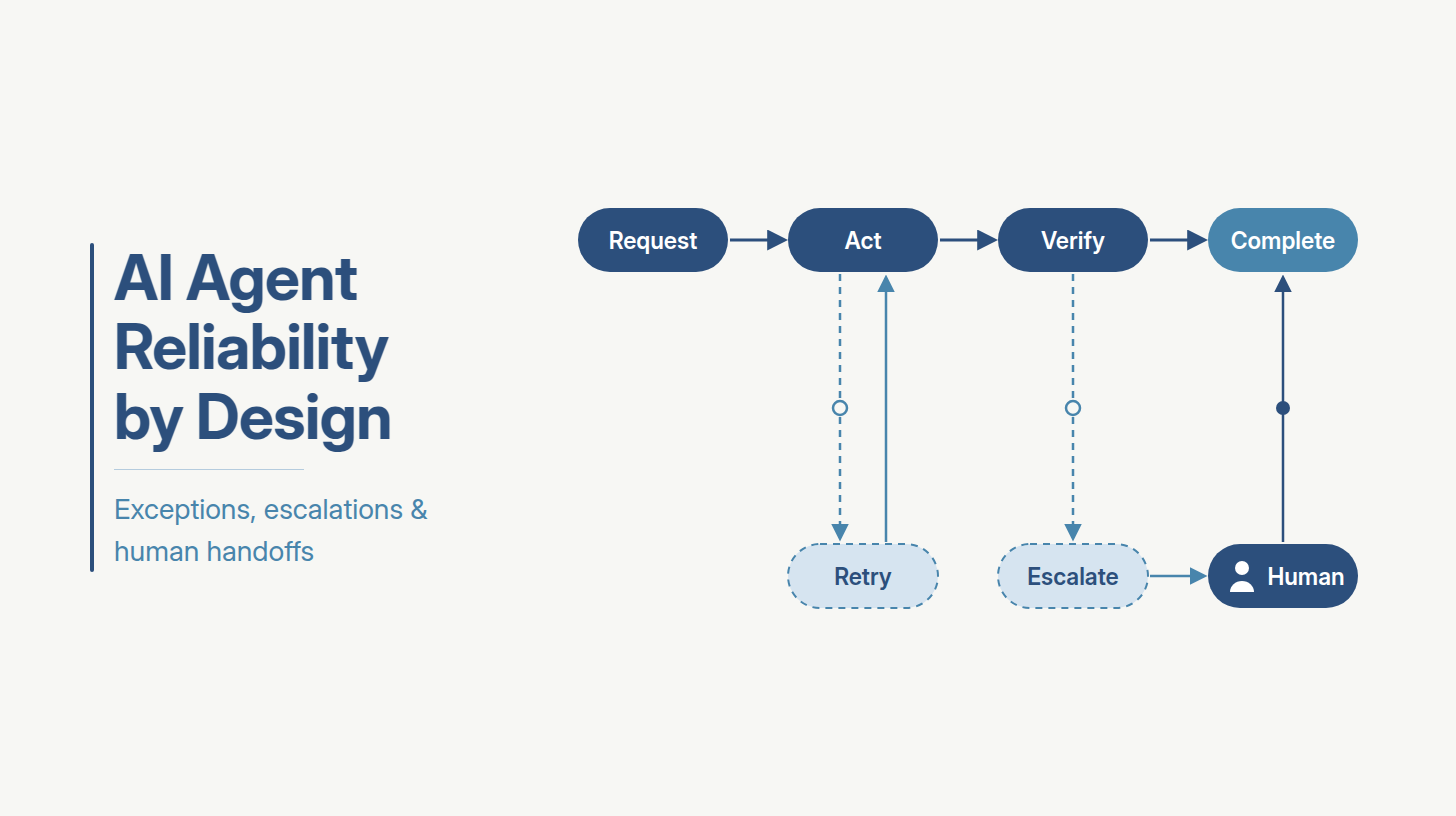
- Nobody trusts the system enough to remove a control, which calls for confidence scoring and an audit trail.
- Escalation rules were set at launch and never revisited, which our guide to AI agent reliability beyond the happy path covers from the engineering side.
- Regulation requires a human decision, so the job is to make that review faster.
Redesigning the line between human and AI work only pays off once you know which cause you're dealing with.
Measure the Human Work Your AI Leaves Behind. If nobody has measured the review load on one of your AI workflows, start there. The review quantifies that work and traces each type back to a cause you can fix, with an expected return attached to each fix.
Book an AI Value Optimization Review
The Cost Inside Every AI-Driven Outcome
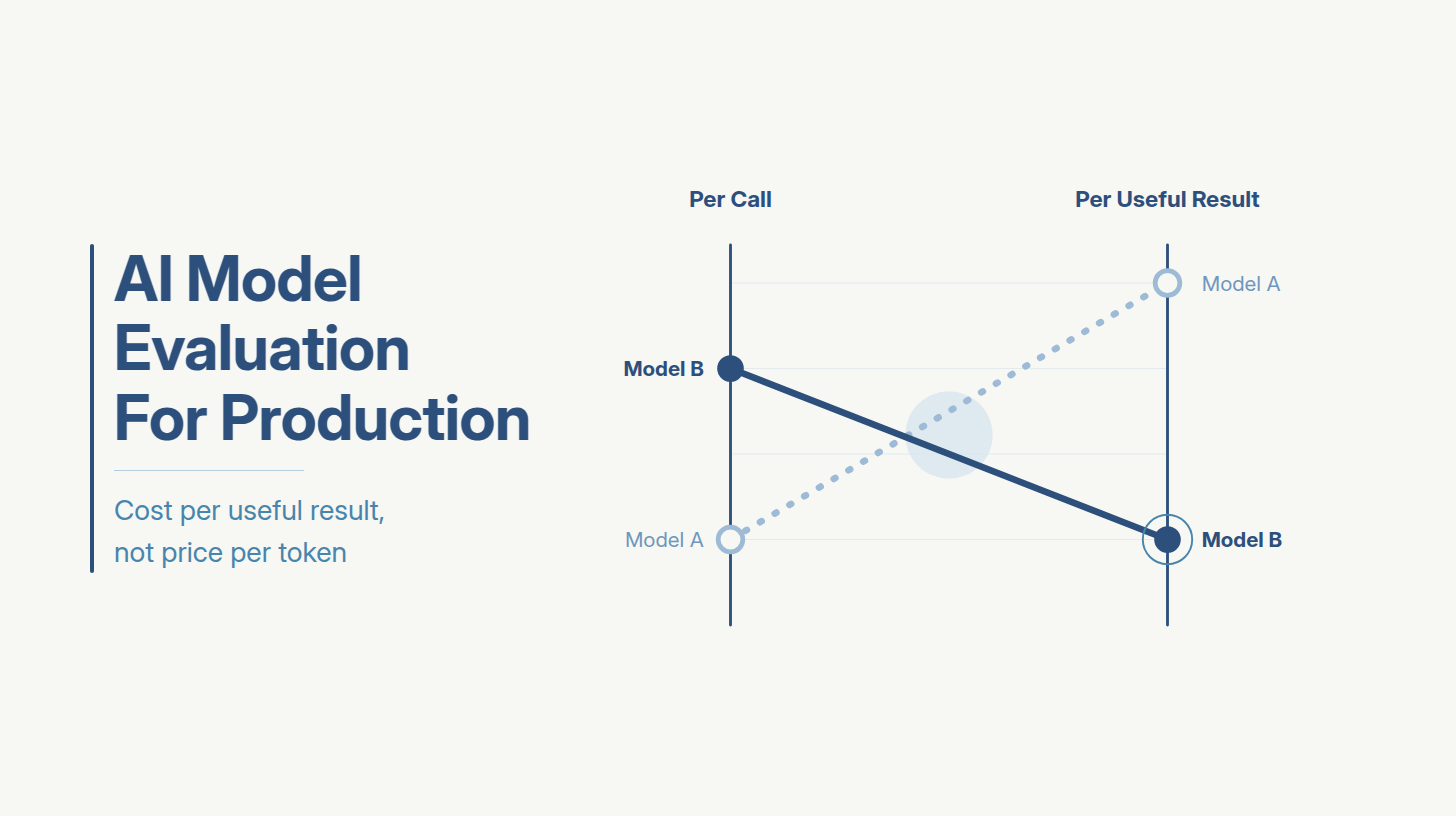
Token dashboards tell you what a system costs to run. AI cost optimization needs a different number: what it costs to produce one unit of the business outcome, such as one resolved ticket or one approved claim.
That number covers inference, retrieval, tool calls, orchestration and infrastructure. It also covers the human review attached to each transaction and the failed attempts, like an agent run that loops or a case that escalates after the AI has already spent compute on it.
Cutting tokens in isolation can make each outcome more expensive. Say you route work to a smaller model. Inference spend drops, but if its errors double the escalation rate, the cost per resolved case goes up. The outcome is the only safe unit to optimize against.
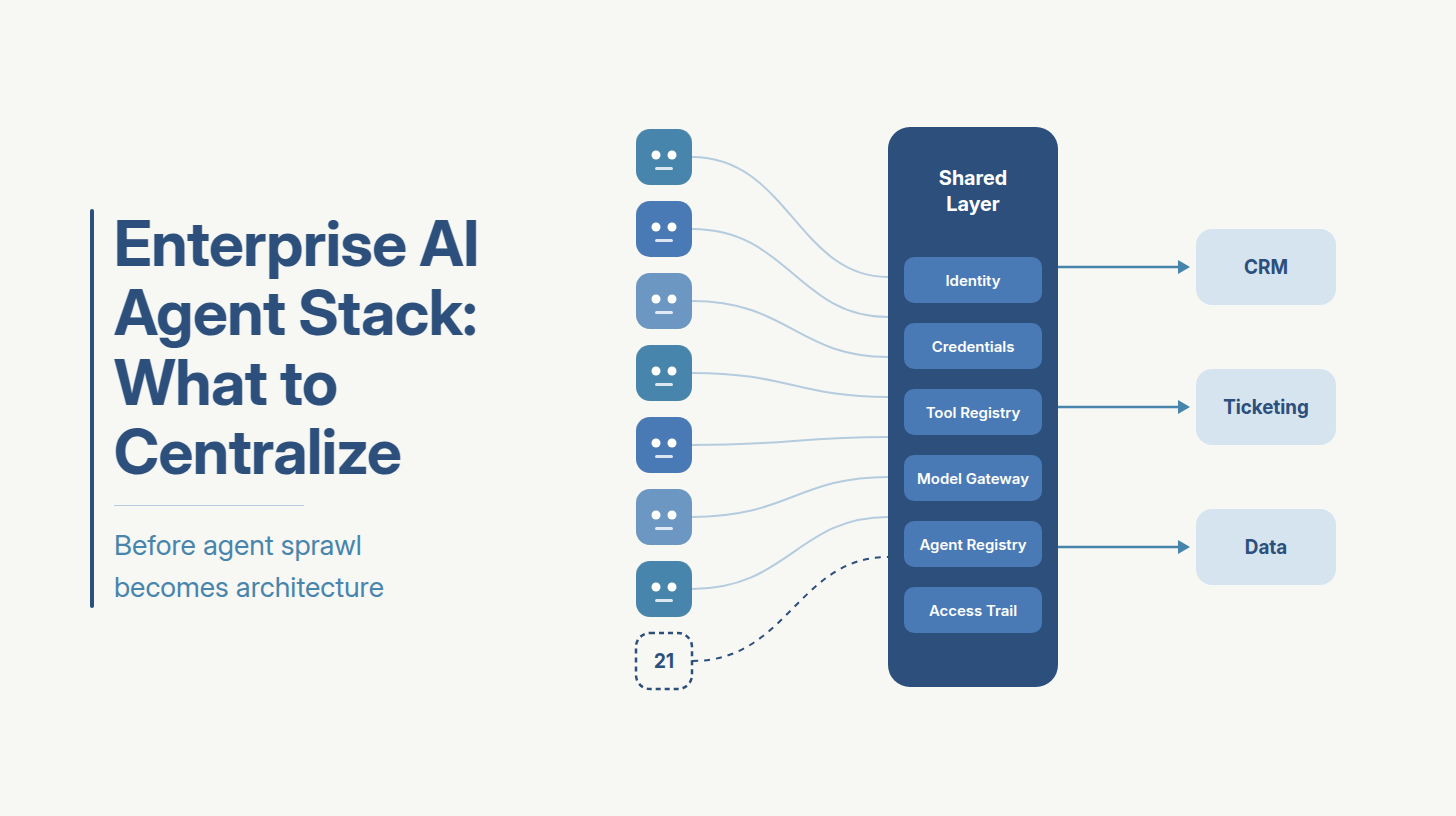
Once cost per outcome is visible, choices that looked like engineering preferences turn into business decisions. Which model tier handles which case becomes a pricing question, and so does the point where a human review step is cheaper than a better model. If AI coding tools are a big part of your bill, our enterprise AI spend management guide covers that side in detail.
Underused AI Capabilities Are Value You Already Paid For
Some lost value comes from capabilities you've already built that aren't reaching the work. A summarization service built for one team could cut handling time for several others. A retrieval layer was wired into the web app but never into the CRM screen where your sales team actually works.
Adoption can also land in the wrong place. The people who picked up a tool fastest are often the ones whose work it improves least. Meanwhile, the people handling your highest-value cases never had it placed inside their workflow.
Raising utilization here is integration and product work. You put the capability in the screen and step where the decision happens, and you offer it to nearby workflows as a shared service. This is often the cheapest value on the leakage map, because you've already paid to build the capability. The wider mechanics of scaling AI adoption across the enterprise apply here too, just at the level of one capability.
Prioritize the Changes That Increase Realized Value
A full diagnostic will surface more fixes than your team can ship. The common mistake is turning that list into a 40-item backlog with no order. It then competes with new feature work, and it loses.
Rank each fix against three questions instead:
A strong first wave pairs a quick workflow or threshold change with one deeper engineering fix. The quick change shows movement in the business metric within weeks. That early movement buys the credibility to fund the deeper fix, and it's what keeps an AI optimization strategy alive through the next budget cycle.
This ranking happens inside a single workflow. Deciding which AI use cases deserve funding across your whole estate is a separate exercise, covered in our guide to AI portfolio management for enterprises.
Make AI Value Optimization a Continuous Engineering Loop
A one-time review gives you a one-time gain. Usage patterns shift, model versions change, upstream data drifts and teams invent new workarounds. The leakage map you draw this quarter will be partly wrong two quarters from now.
Most AI optimization work stops at the model, while the value loss sits downstream of it. The loop that holds value in place runs on your outcome baseline instead. Measure the outcome and find the biggest current leak. Change the system or the workflow to close it, then check the result against the baseline and start again.
Validation is the step that usually gets skipped. A change ships and a dashboard improves, but nobody checks that the business metric moved. Holding every change to the baseline keeps the loop honest. It also means the loop needs engineers who can ship a change and roll it back when the metric doesn't respond.
This is where assessment-only engagements fall short. A report that names the leaks hands your team a backlog. Shipping the fixes and running the loop for the next two quarters is what turns a diagnosis into realized value.
What an AI Value Optimization Review Should Give You
Whoever runs it, a review of a production AI workflow should leave you with five things you can act on:
- A value baseline that names the outcome metric the workflow was funded to move, with its current value and a defined comparison.
- A leakage map showing where value is lost across the seven points above, sized in units of the outcome.
- A set of opportunities across model, workflow, integration and product changes, each tied to a specific leak.
- A ranked list of interventions with the first wave defined.
- The expected impact of each intervention on the business metric and on cost per outcome, written so you can check it later.
If a review can't give you the fifth item, it hasn't done enough work on the first four.
How Ideas2IT Optimizes the Value of Your Existing AI
Ideas2IT runs AI value optimization through Forward Deployed Engineers who embed in your environment from day one, working in your stack and sharing your OKRs. That matters because the leaks sit between teams. An engineer inside your operations review sees the queue your AI dashboard misses, and can then ship the fix and own its validation against your baseline.
In most value reviews, the first surprise is the review queue. The AI system is running well and the operations team is processing everything, but nobody has counted how many minutes each reviewed output adds to cycle time, or compared that with the cycle time the business case assumed. That gap is usually where the largest fix lives.
Ideas2IT is a platform-led engineering company. Its engineers work with platforms Ideas2IT builds and maintains itself, so the fixes from a value review ship through tooling the same team owns. For changes that span several teams, they use Anticlock, Ideas2IT's platform for AI-native software delivery, which applies the same guardrails and deployment standards to every cycle and is built to deliver 50 percent higher per-developer productivity.
After the review, the same engineers can deliver the first wave of fixes and run the measurement loop with your team. Ideas2IT is an AWS GenAI Specialist Partner with SOC 2 Type II certification, which matters when a review touches production data.
Run an AI Value Optimization Review. Pick the AI workflow your CFO asks about most often.
Ideas2IT's engineers will build its outcome baseline and leakage map, with every fix ranked by expected impact, so you have a measured answer to what the business gets from that system today and what it would take to get more.
Run an AI Value Optimization Review
Frequently Asked Questions
[FAQ BLOCK - AI Value Optimization: Insert Code Embed Here]
References
- McKinsey & Company, QuantumBlack. The state of AI in 2025: Agents, innovation, and transformation. November 2025. https://www.mckinsey.com/capabilities/quantumblack/our-insights/the-state-of-ai
- Boston Consulting Group. The Widening AI Value Gap: Build for the Future 2025. 2025. https://media-publications.bcg.com/The-Widening-AI-Value-Gap-October-2025.pdf
- Workday, Inc. New Workday Research: Companies Are Leaving AI Gains on the Table. January 14, 2026. https://newsroom.workday.com/2026-01-14-New-Workday-Research-Companies-Are-Leaving-AI-Gains-on-the-Table