
Blogs
Hard-won perspectives from 15 years of high-stakes enterprise delivery.
All blogs


Custom EHR and EMR Software Development in 2026: A Decision Guide for Healthcare Leaders
A hospital can spend millions on an Electronic Health Record (EHR) and still ask nurses to copy information between screens. A specialty clinic can have excellent clinical software but a billing team that still maintains separate spreadsheets. A health system can exchange records with another provider but still struggle to place that information into the right workflow.
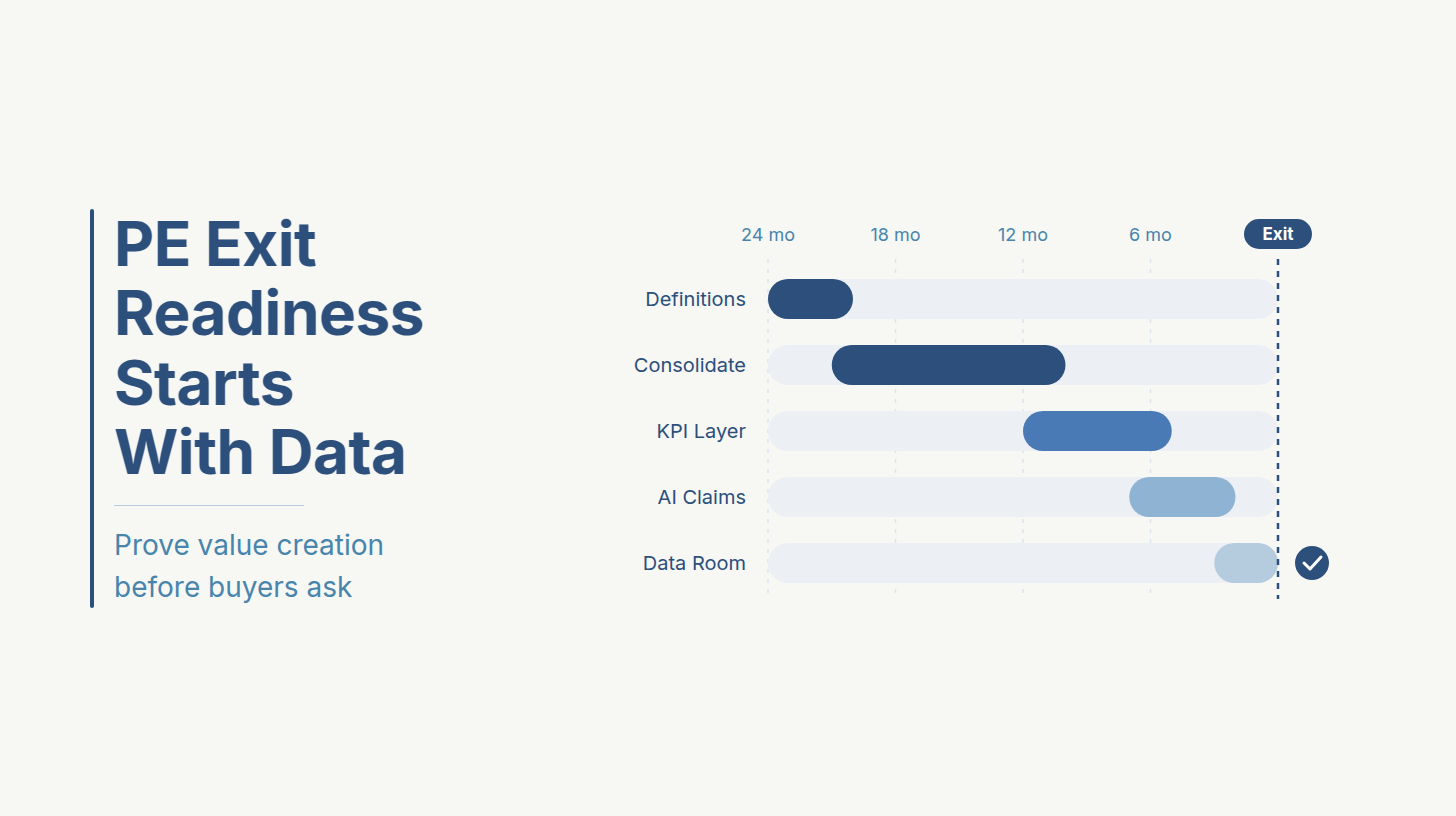
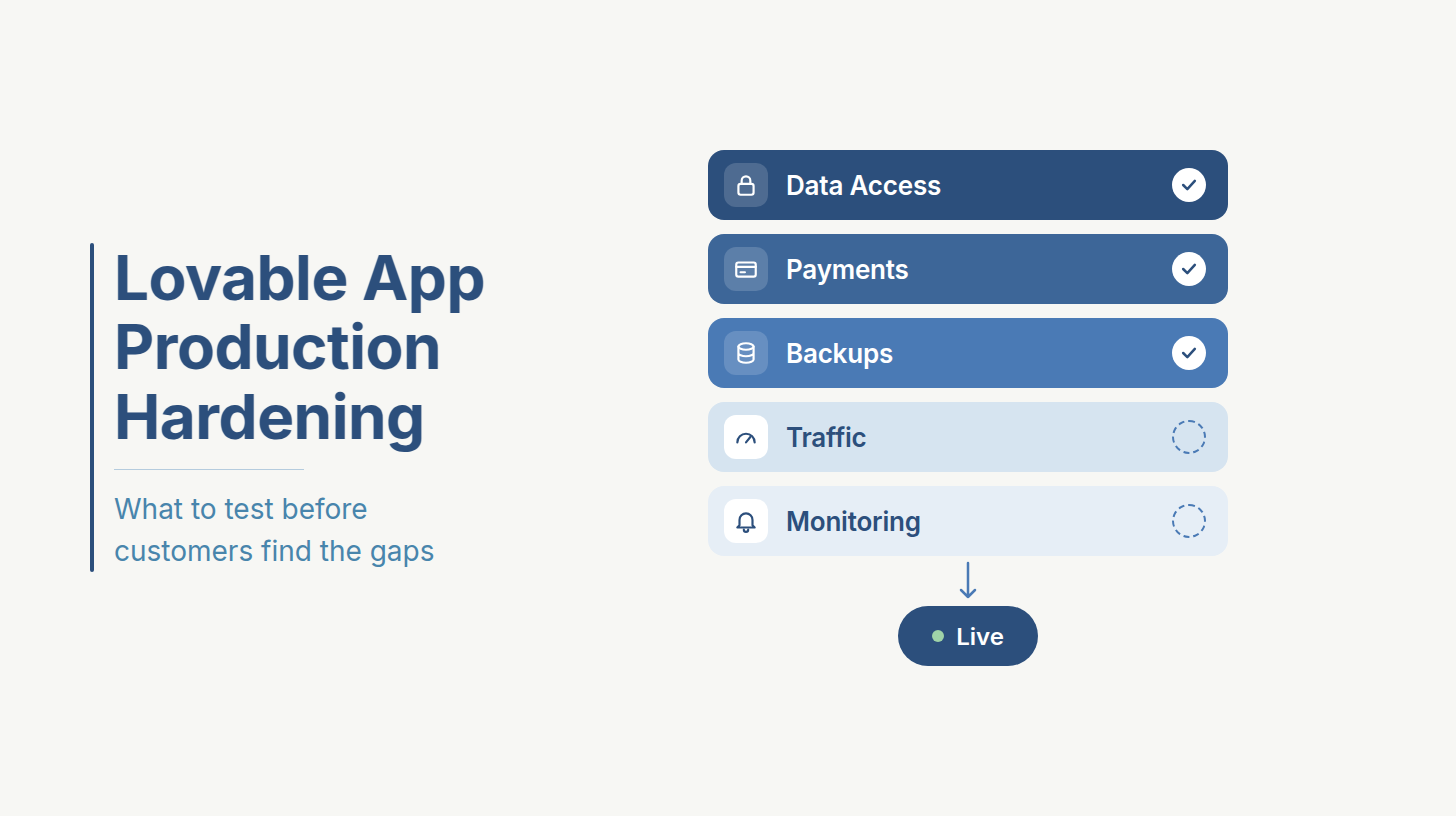
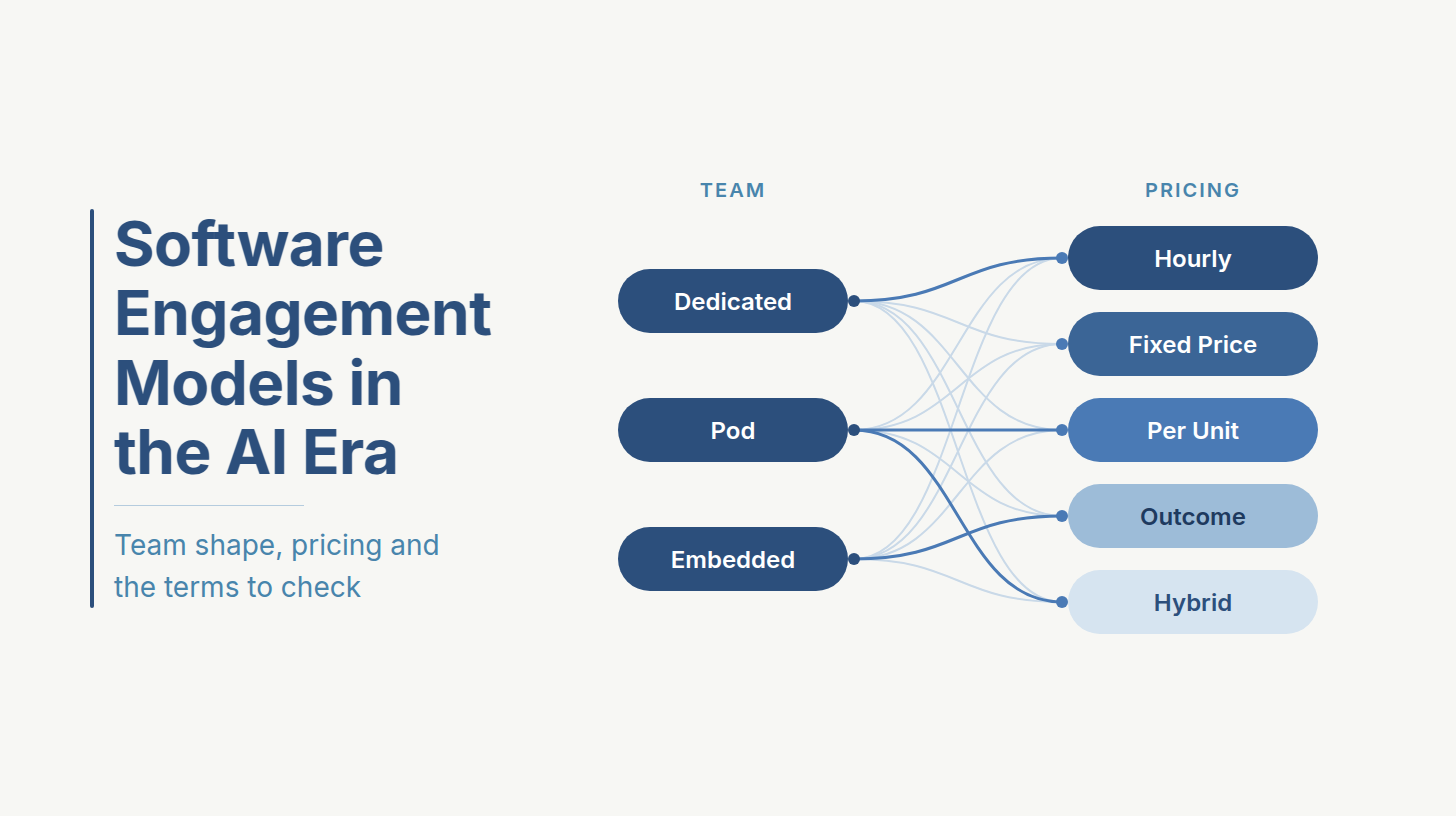
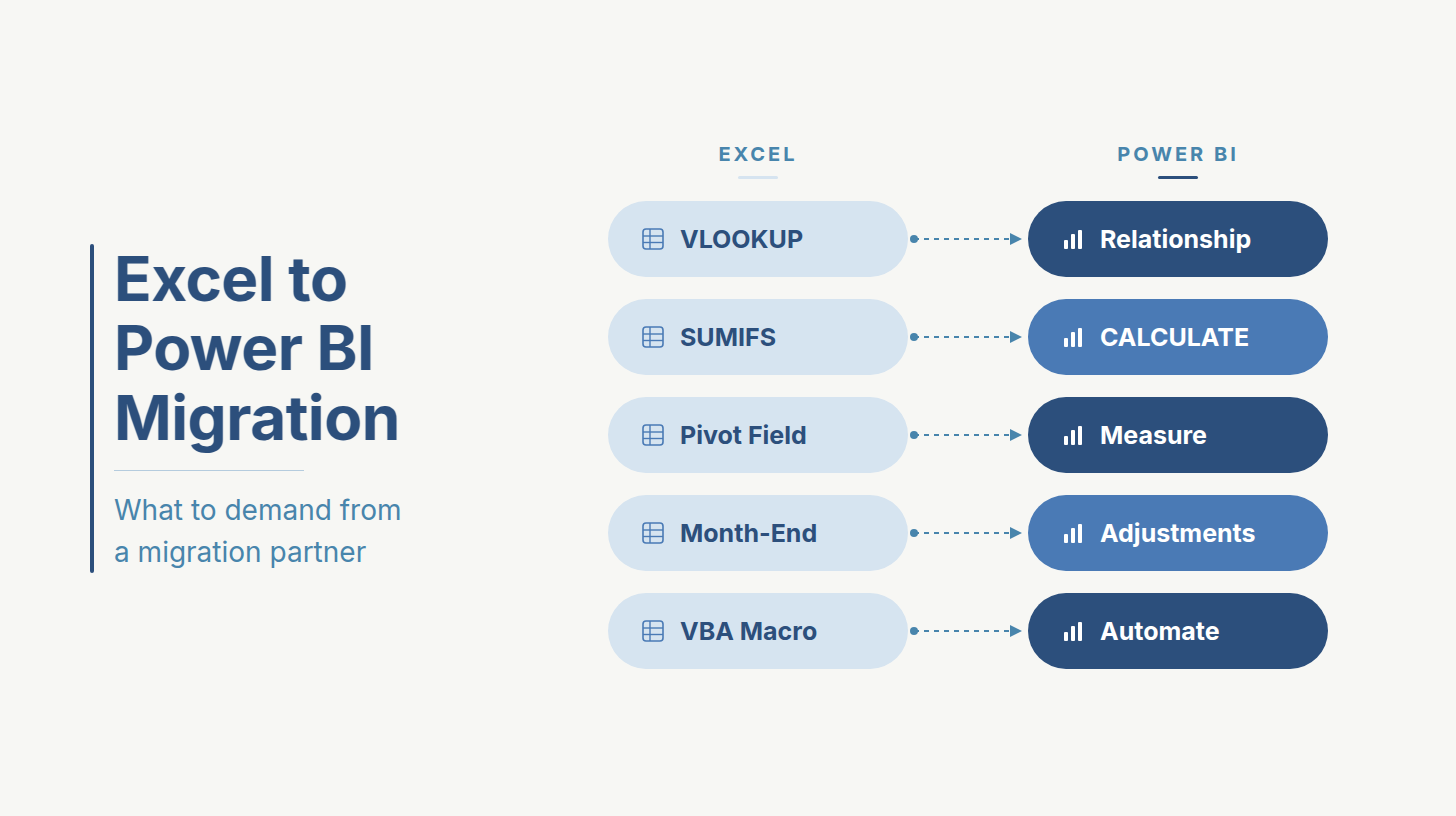

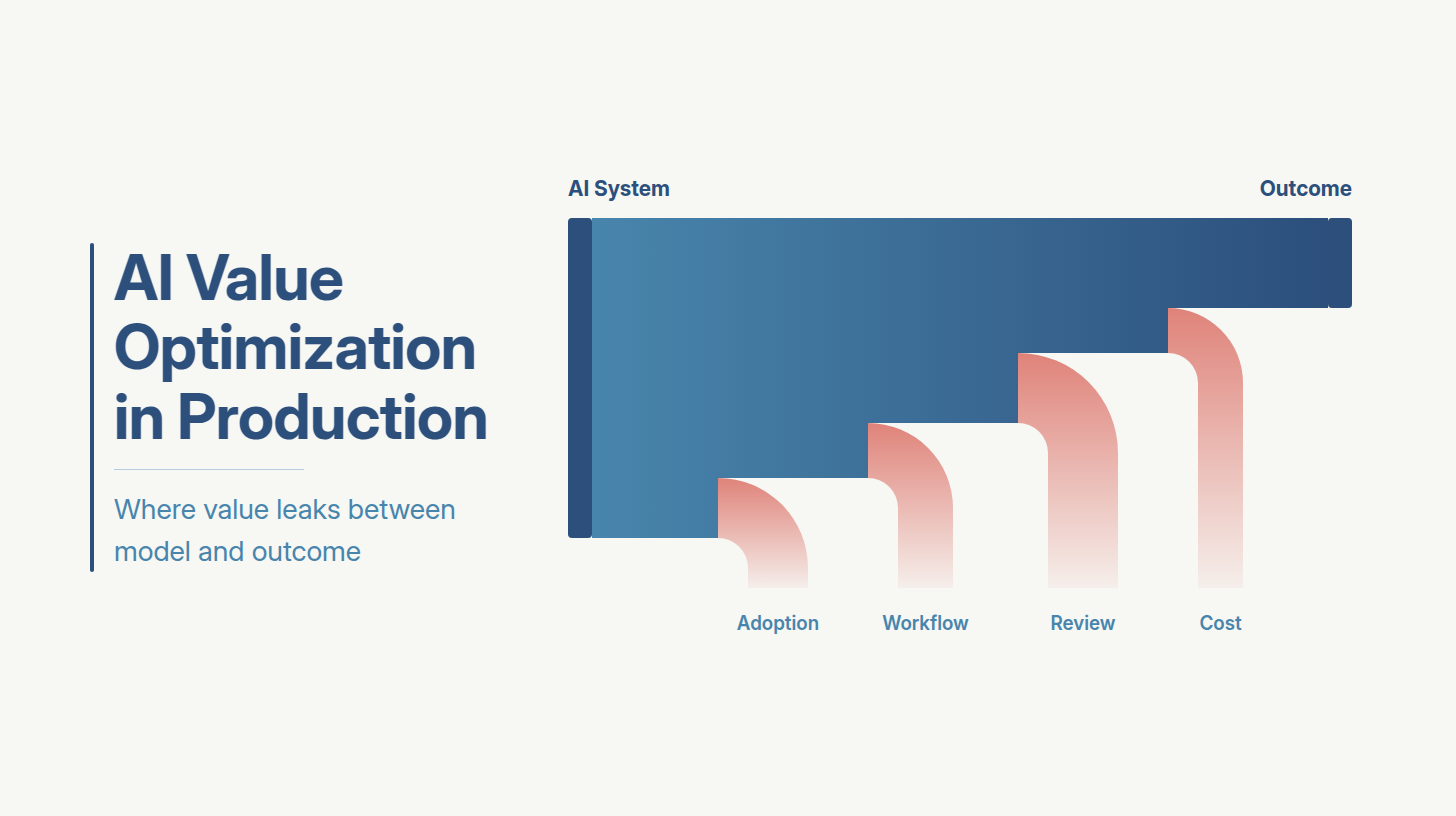
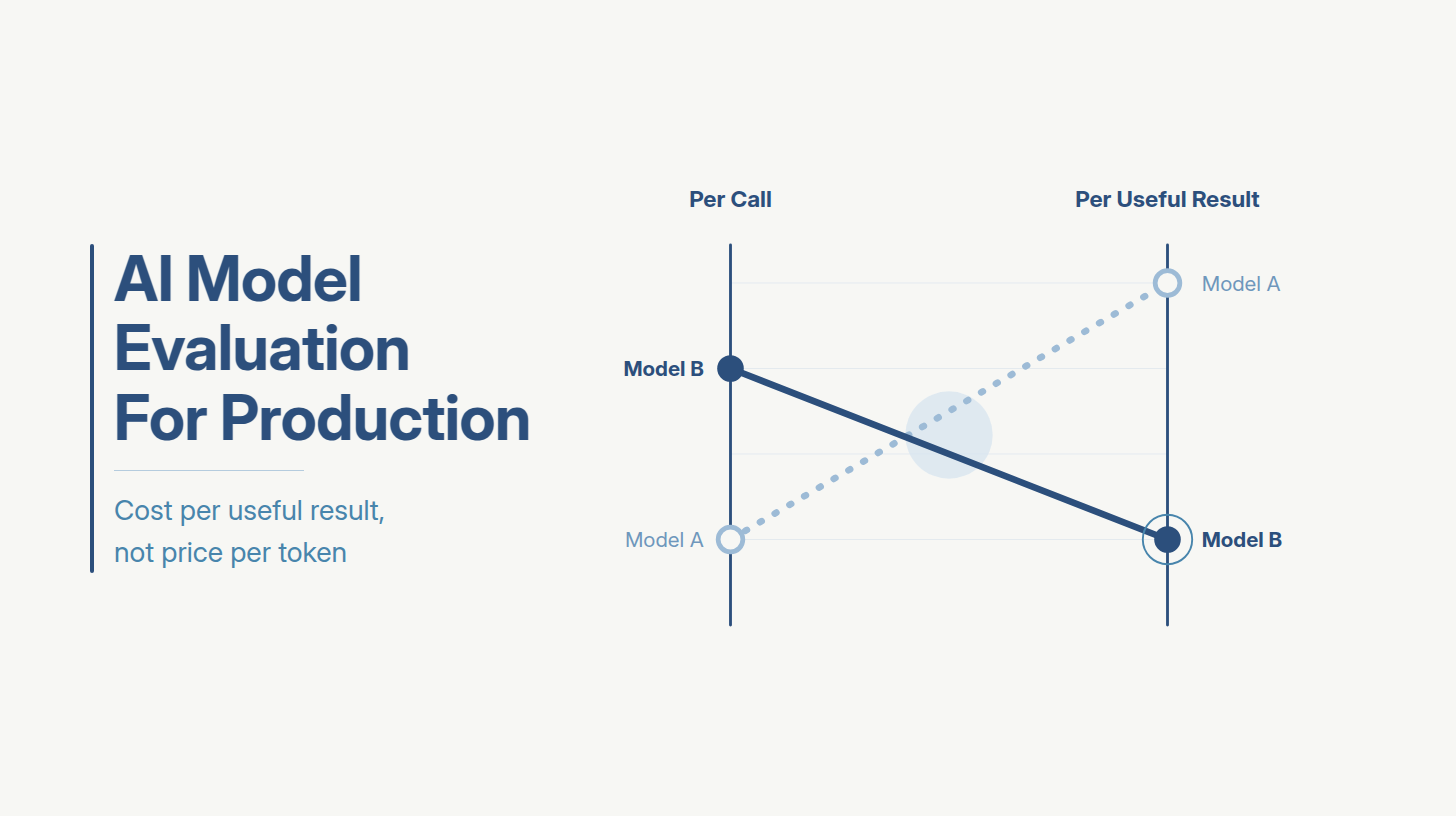
AI Model Evaluation: What It Actually Takes to Choose a Model for Production
AI model evaluation usually ends the day a workload goes live. This guide works through the questions you have to answer before you commit a model to production. It shows how to evaluate AI models on your own workload and what each useful result costs at your expected volume, so your enterprise AI model selection rests on evidence you gathered yourself.
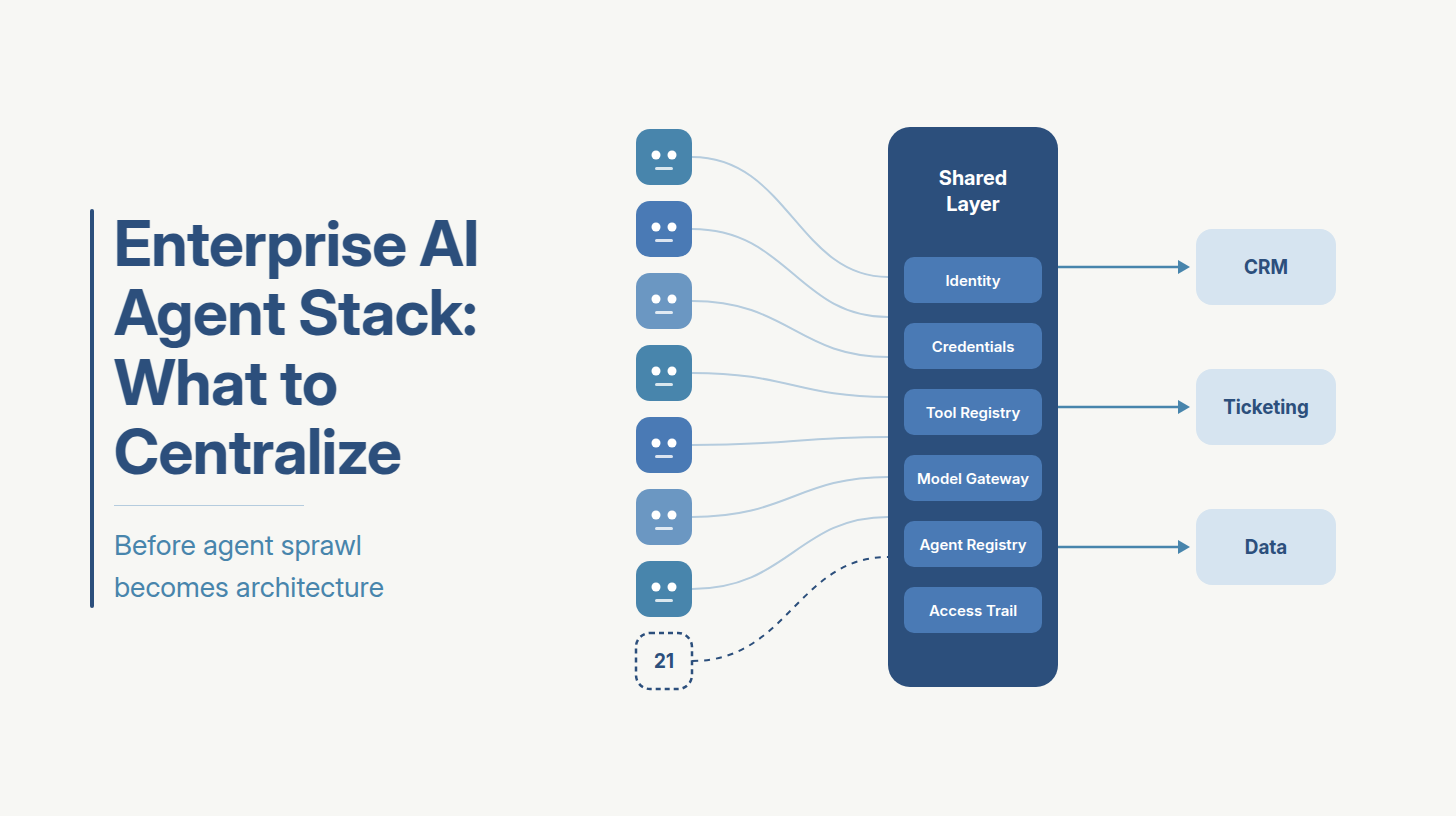
AI Agent Stack: One Shared Layer Before Agents Become an Architecture Risk
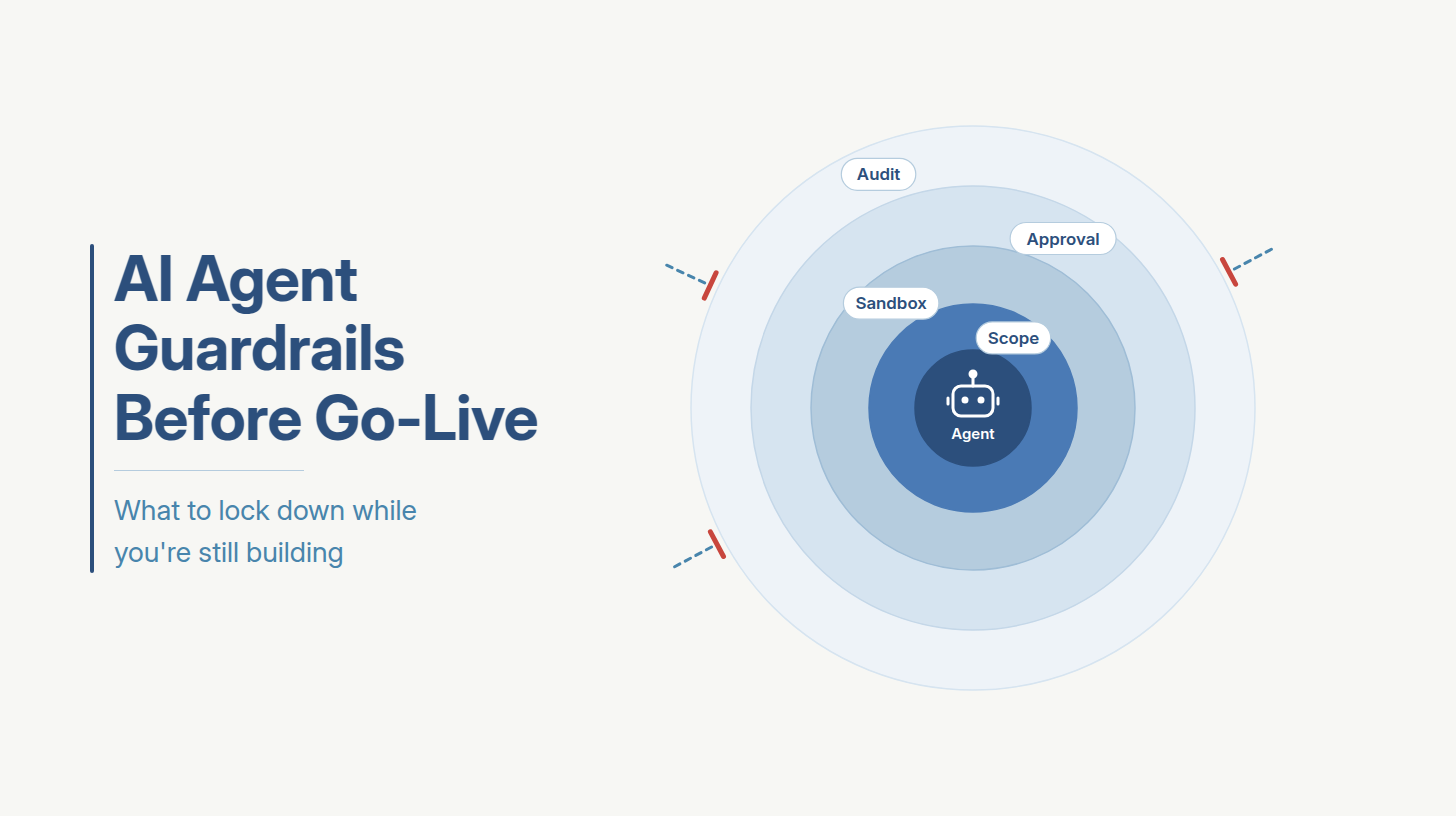
An enterprise AI agent stack is only as governable as the shared layer underneath its agents. When 20 teams build agents separately, you get 20 paths into your systems, each with its own credentials and tool connections. Controlling agent sprawl comes down to deciding what moves into that shared layer and what stays with the teams building agents.
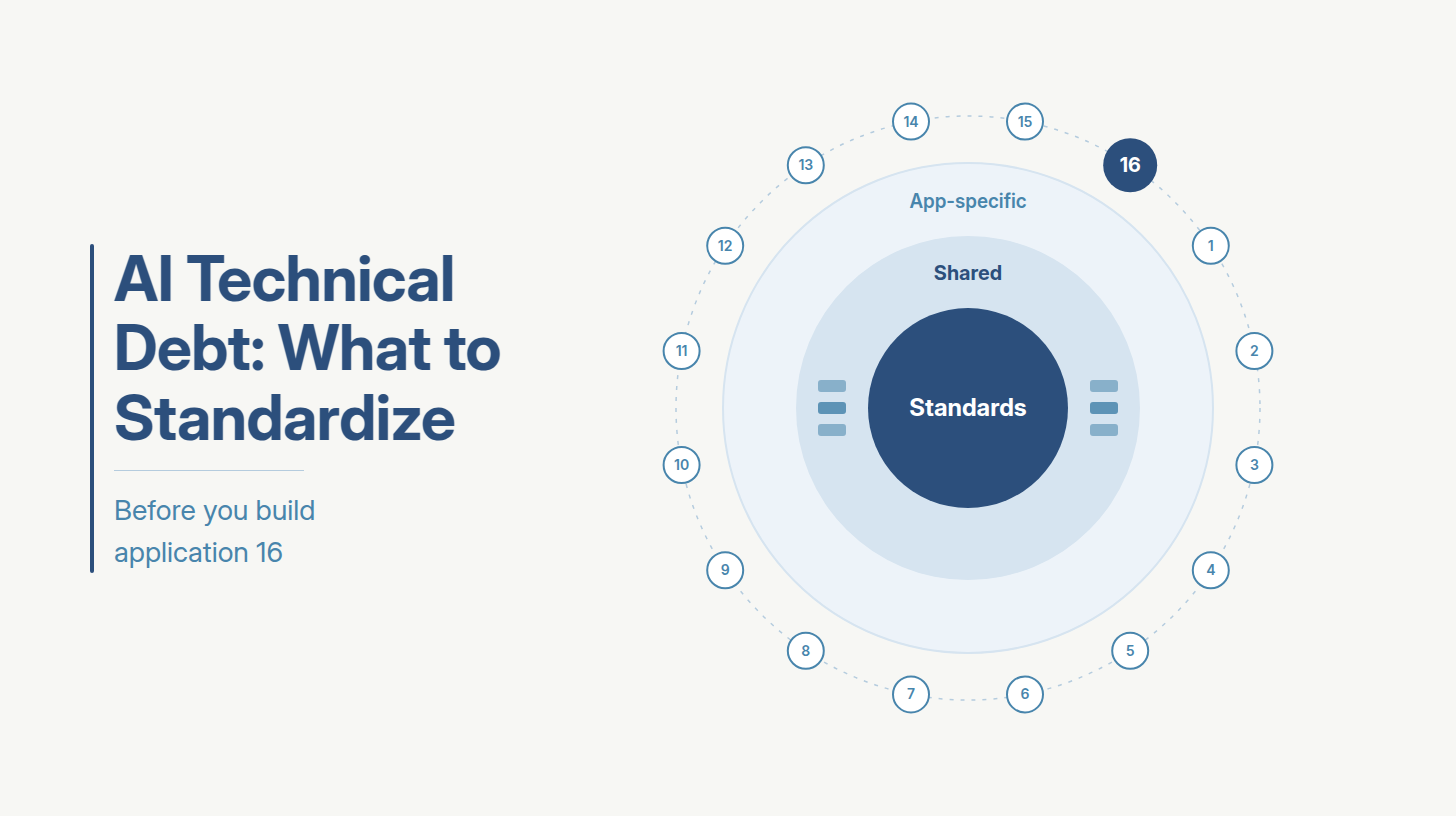
AI Technical Debt: How to Standardize, Share & Rationalize Before Your Next Build
This is what AI technical debt looks like in an enterprise with 15 applications in production. The code in each application may be clean. The debt comes from building the same capability many times, in different ways, by different teams. Now each version has to be maintained on its own.
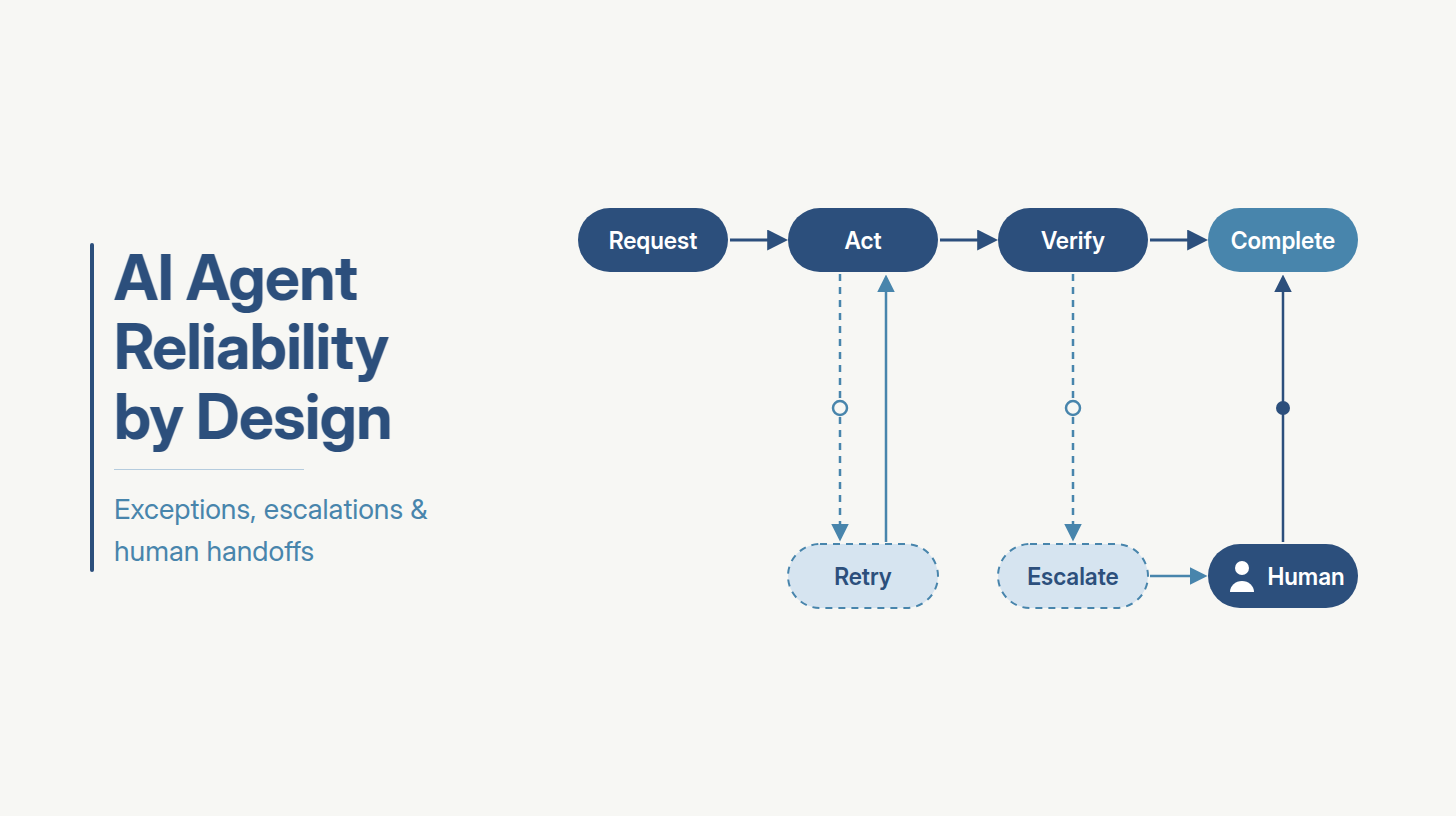
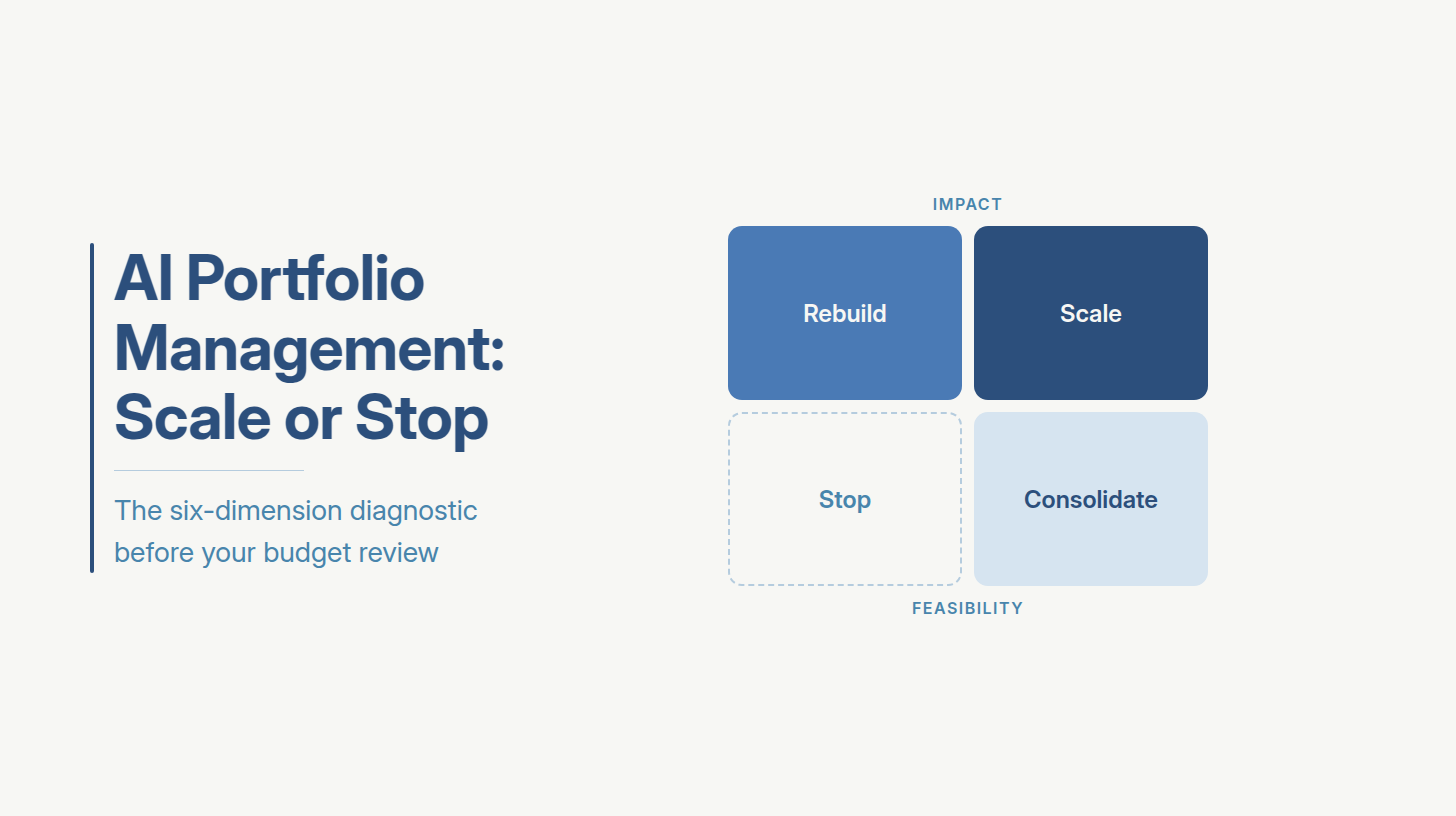
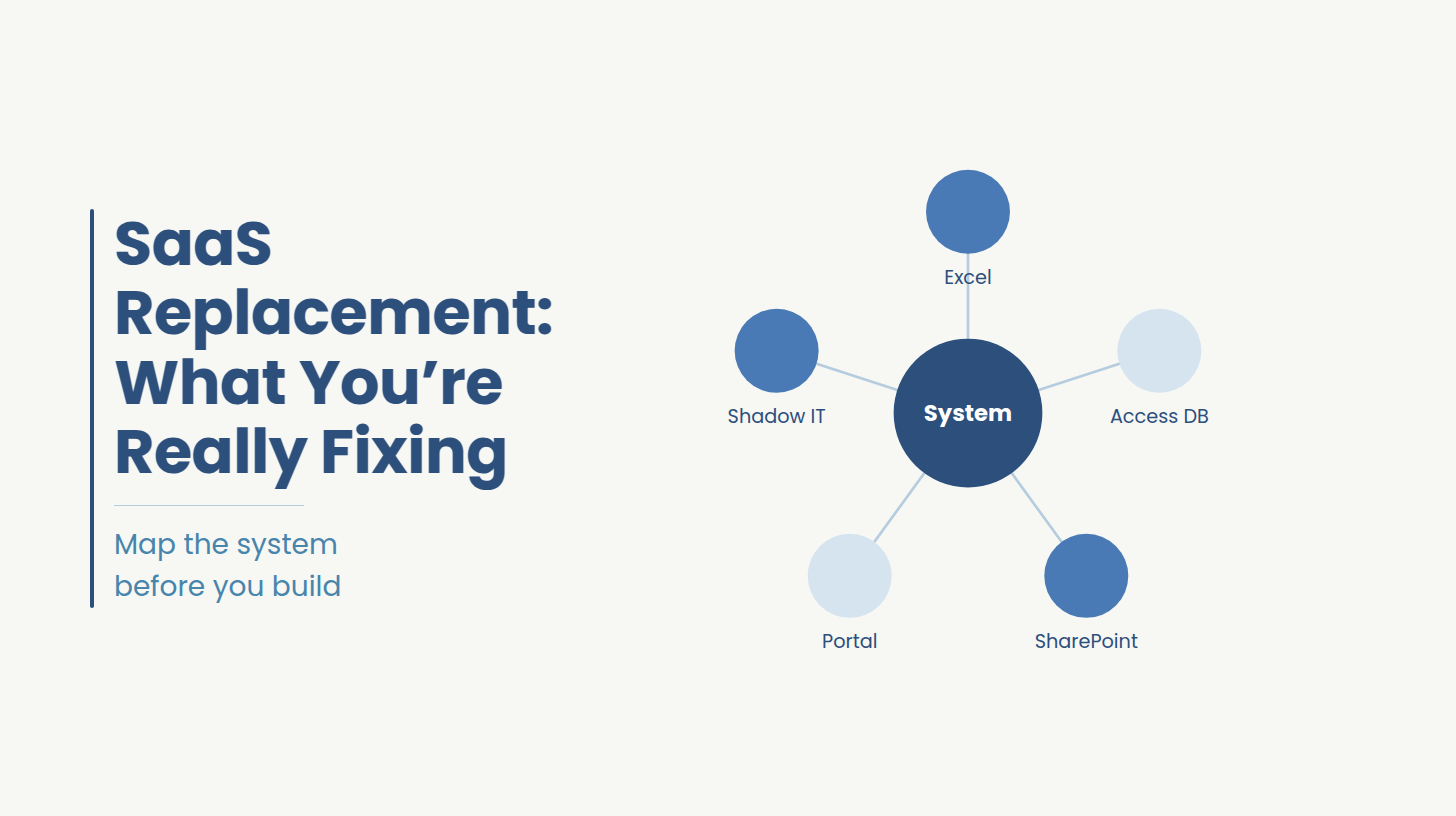
The Enterprise Guide to SaaS Replacement: What kinds of software do enterprises actually replace?
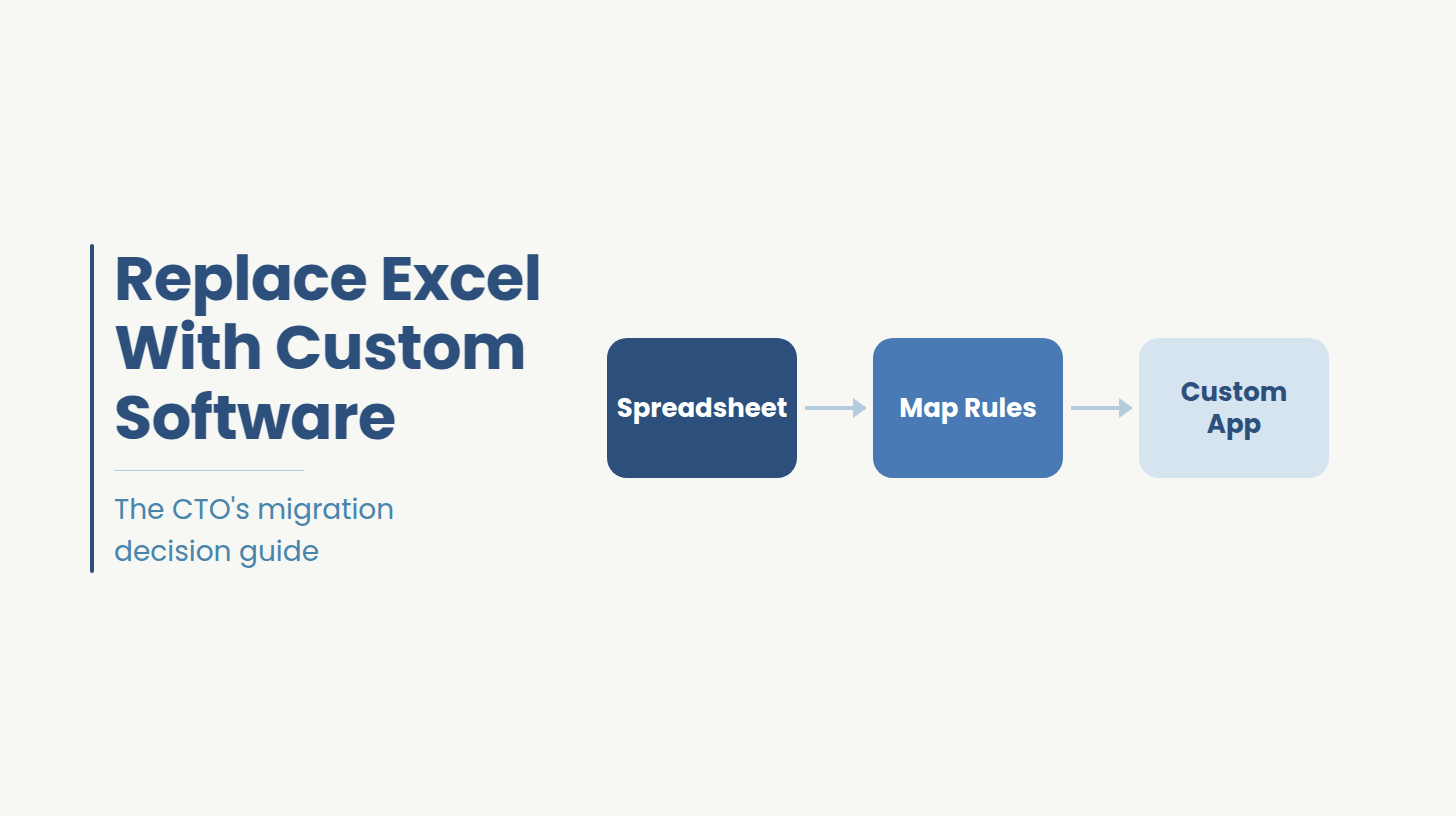
When a CTO says "we need to replace our SaaS stack," the conversation usually starts in the wrong place: which vendor, what price, which integrations. That framing assumes the thing being replaced is itself a SaaS product with a comparable substitute sitting in a G2 category page.
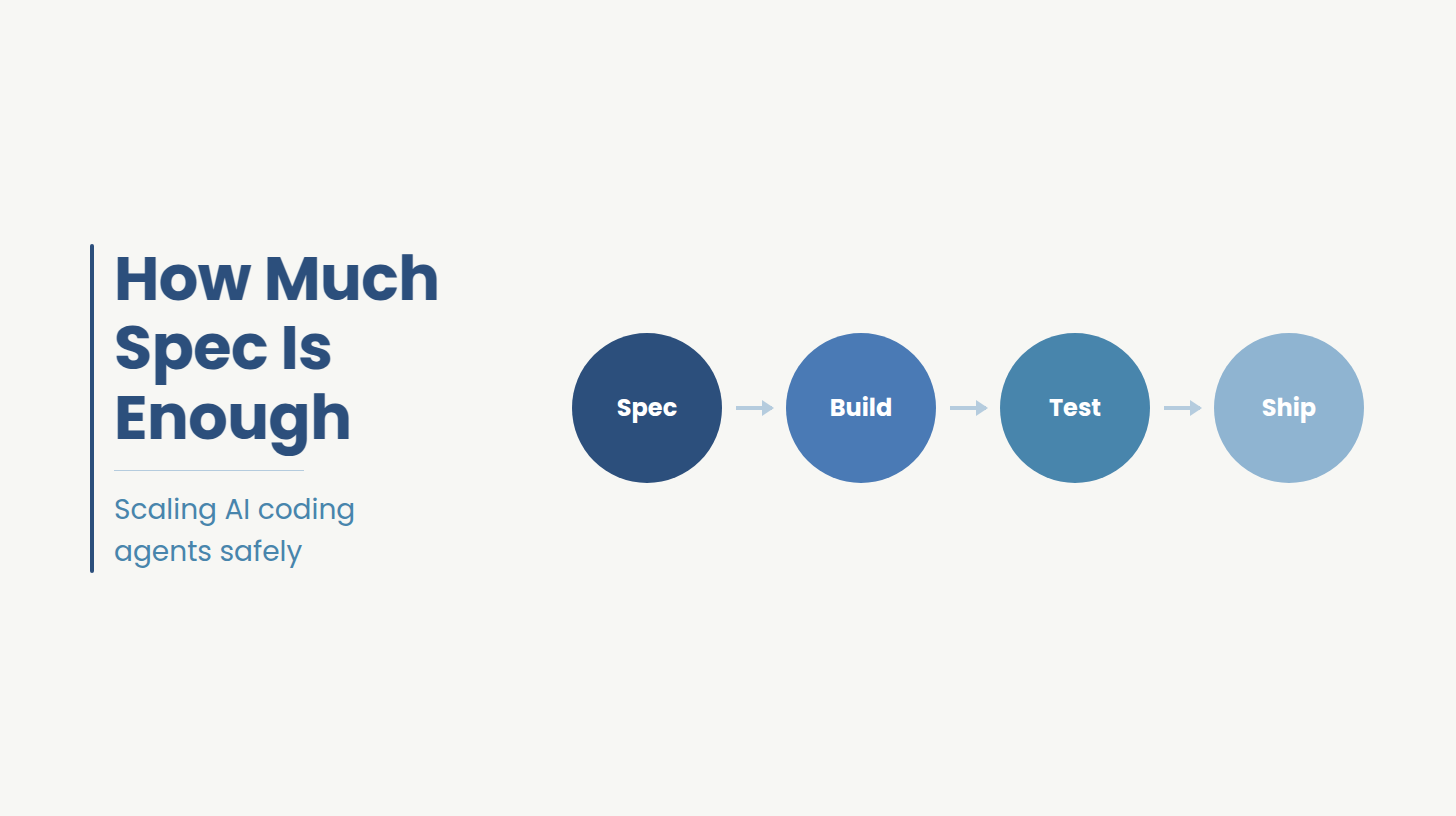
Spec-Driven Development for Enterprises: How to Implement It at Scale
Most enterprise engineering organizations are not deciding whether to adopt AI coding agents anymore. That decision is already behind them. What they are actually deciding, often without realizing it, is whether the velocity those agents produced in the first two quarters holds up once the codebase, the team count, and the audit scrutiny all grow at the same time. This piece walks through what has to be true for that velocity to hold, section by section, starting with where specification actually belongs in your delivery lifecycle.
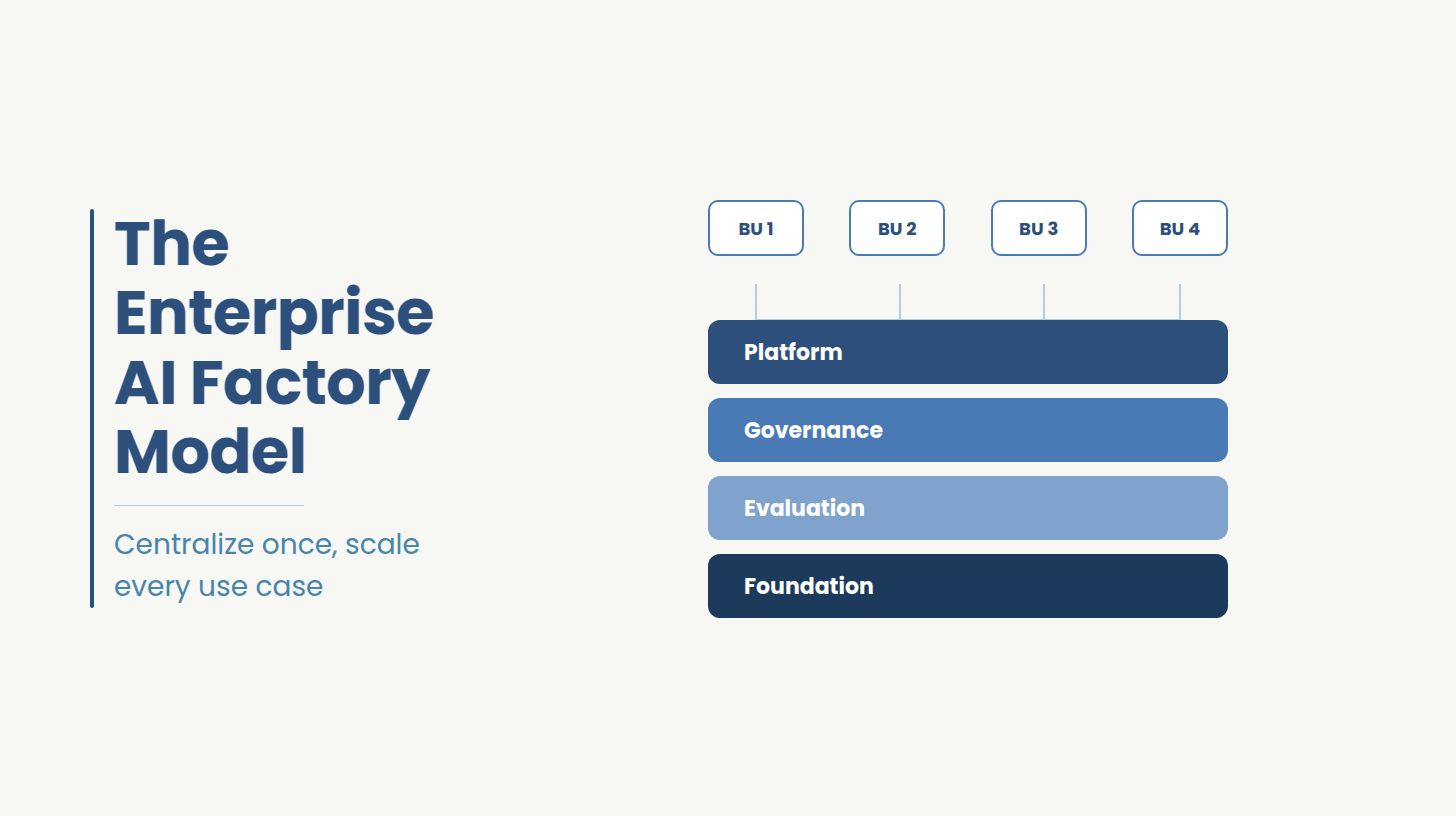
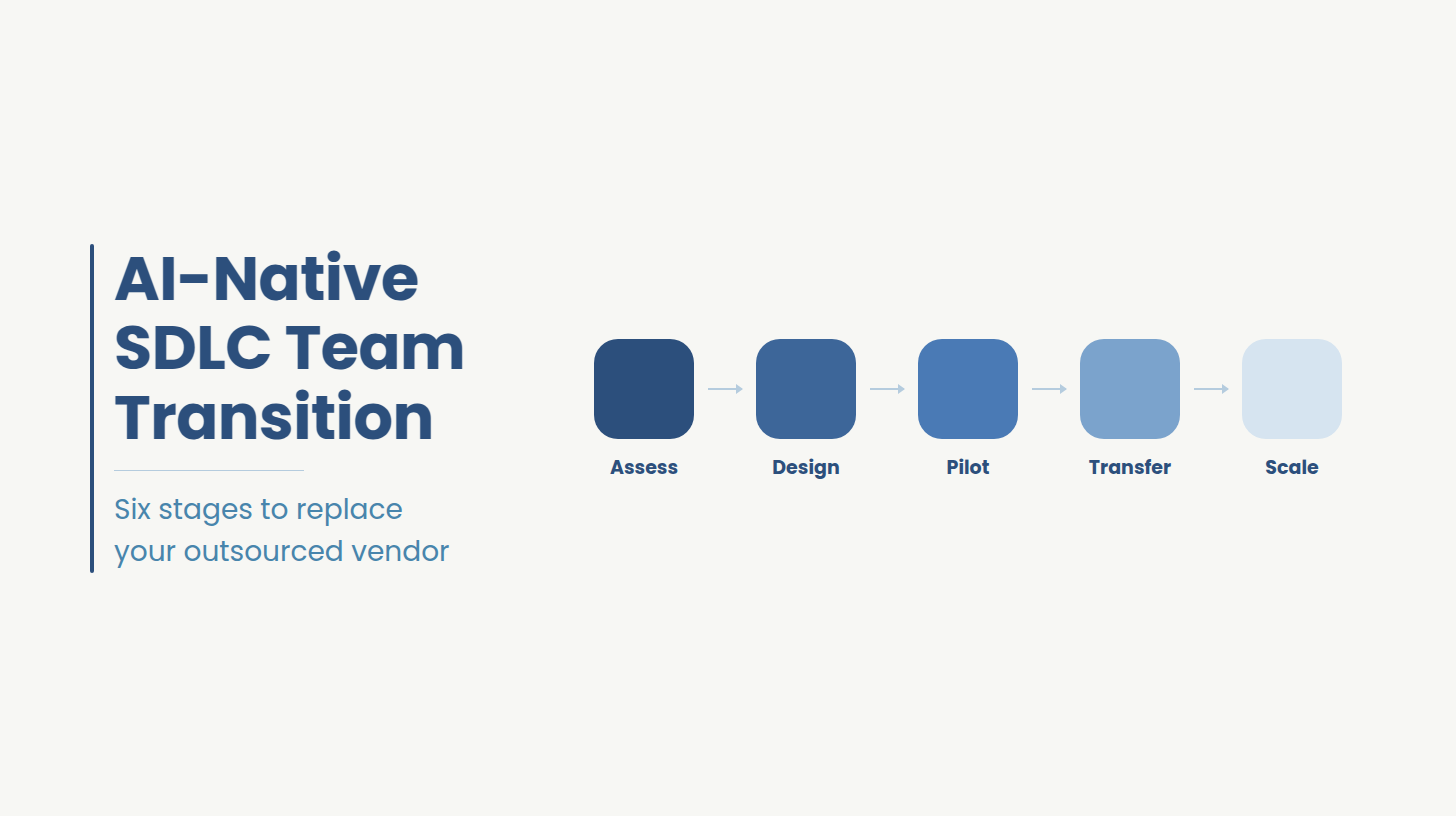
What Is an AI-Native SDLC and How to Transform Your Engineering Organization
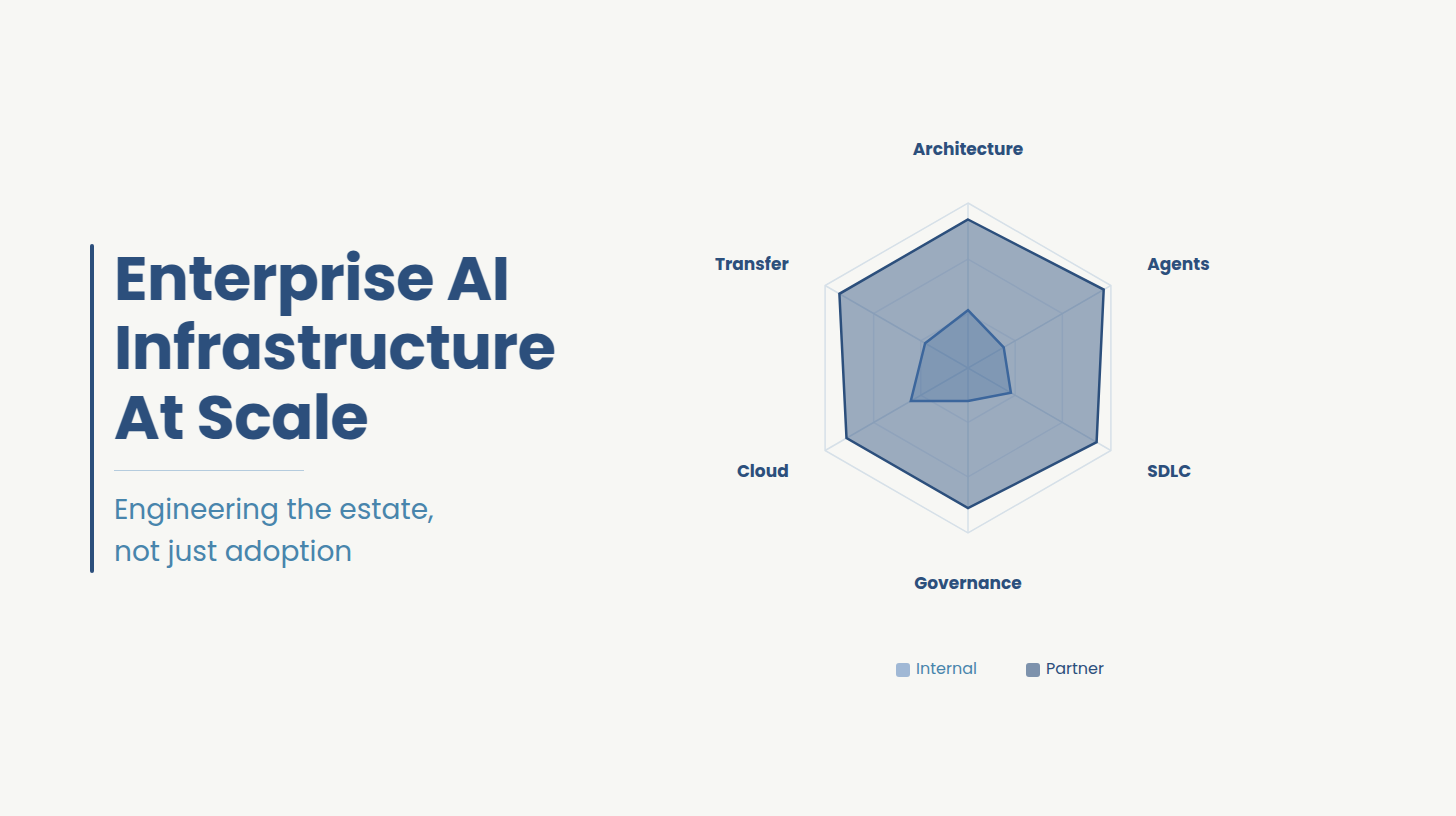
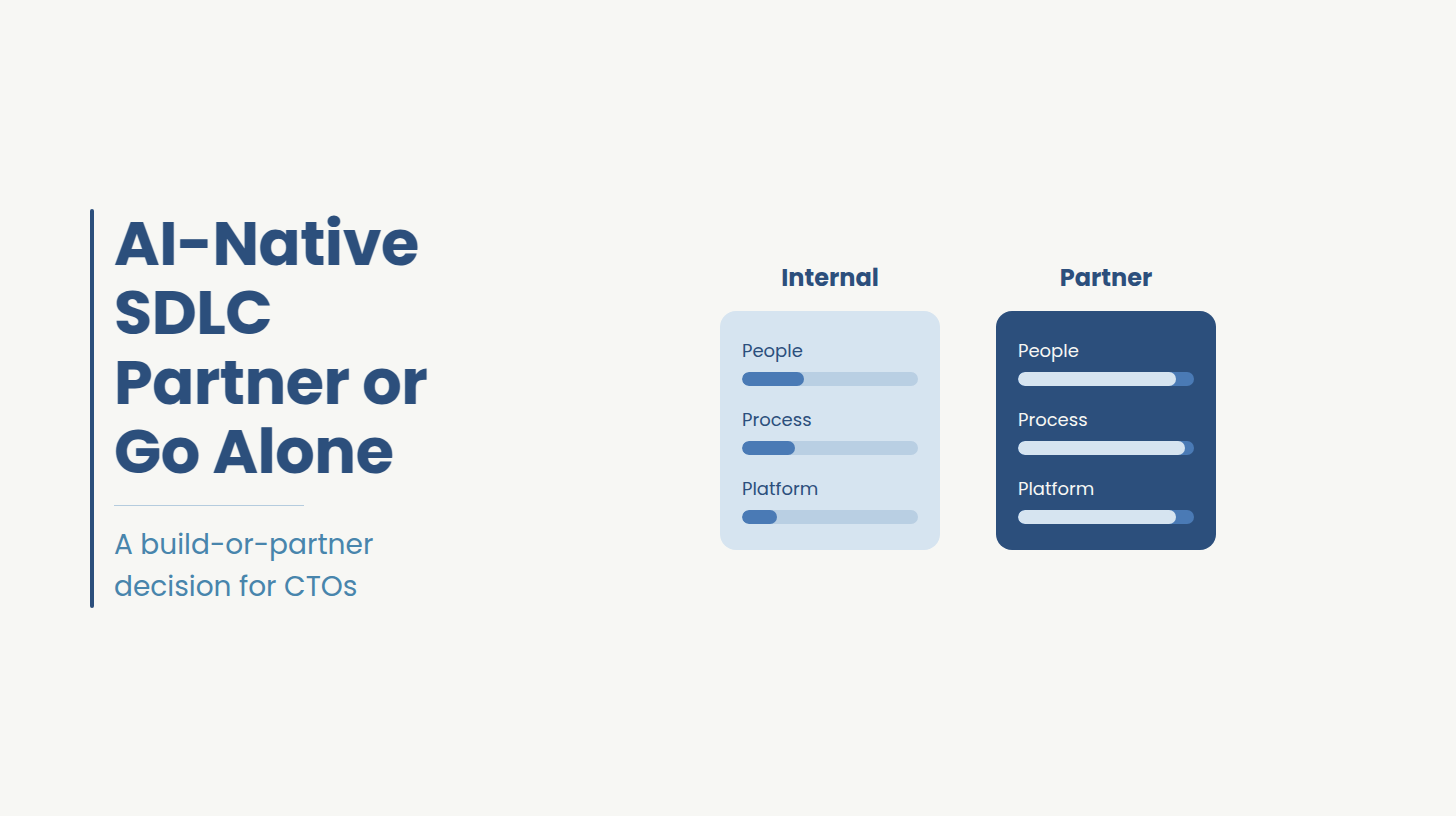
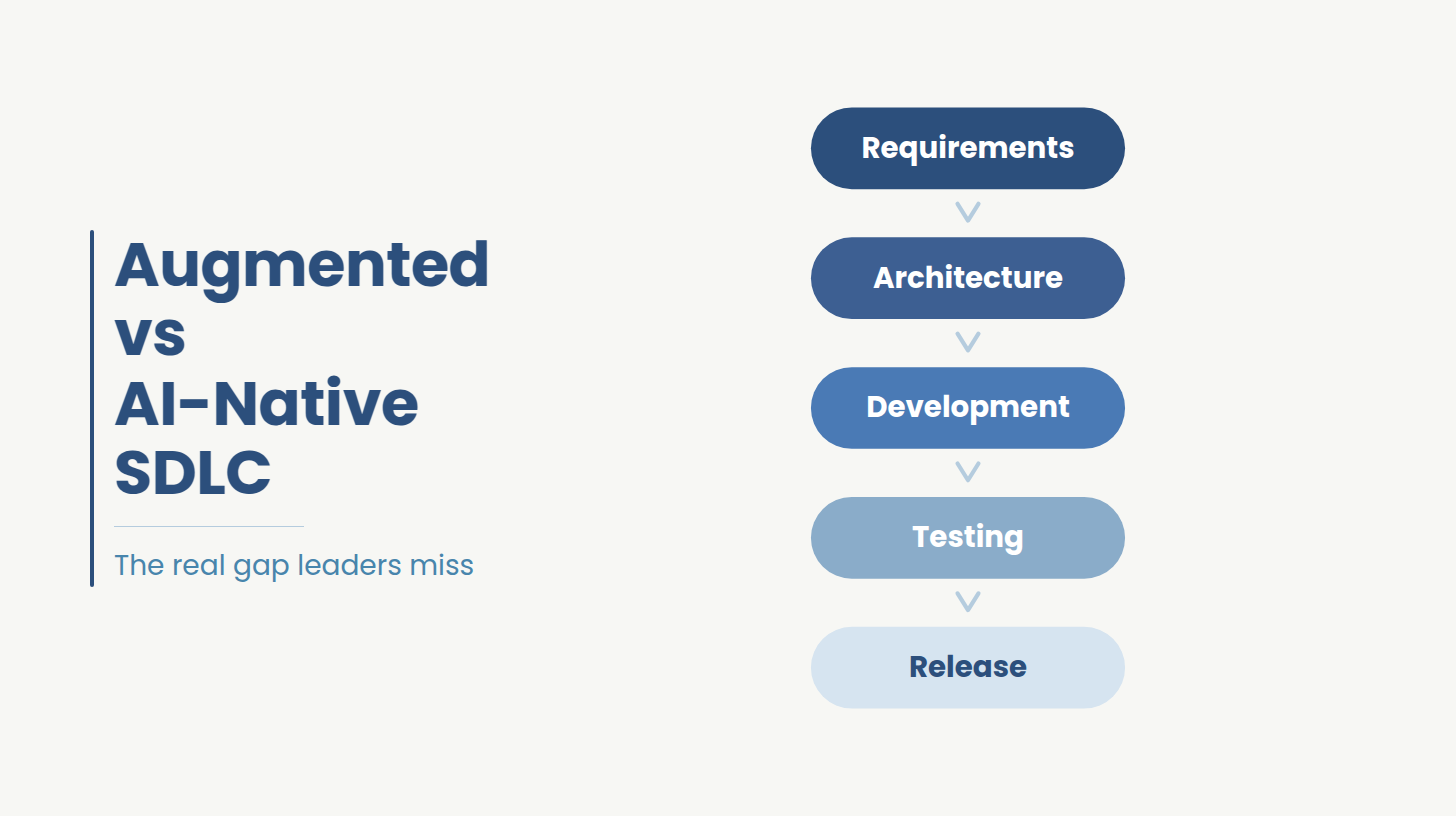
Your engineers are already using Cursor, Copilot, Claude Code, and other AI tools. But if requirements, architecture, development, testing, review, and release still operate the same way, you haven't built an AI-native SDLC. You've built an AI-augmented one.
Agentic AI in Private Equity: How to Evaluate, Prioritize, and Scale AI Usecases
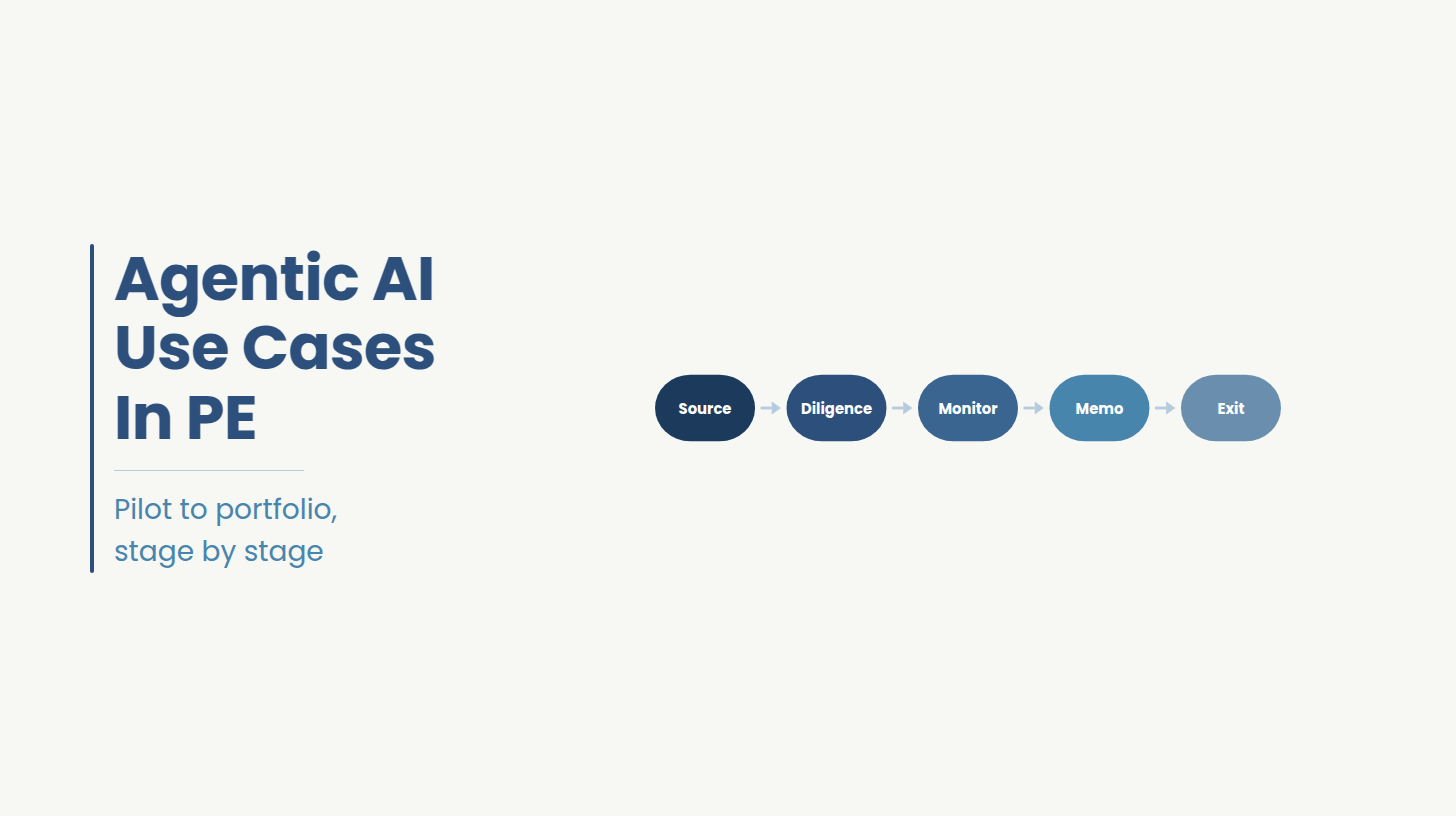
The word "agentic" gets attached to almost anything with a chat interface right now, so it's worth being precise about what it actually means before mapping it to the deal lifecycle. Three distinct levels get sold under the same word, and the difference between them is exactly where a vendor's claim tends to fall apart.
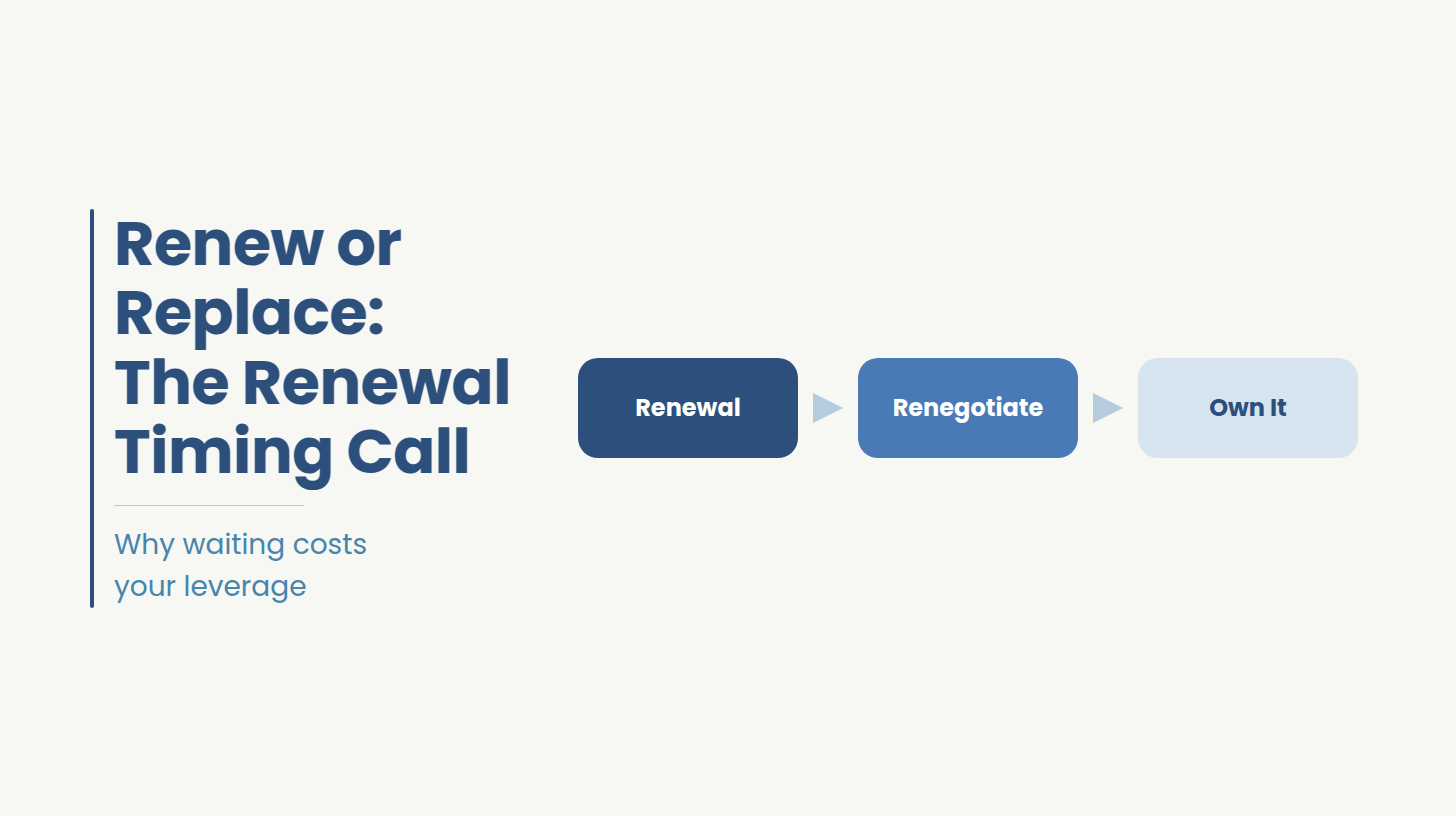
The SaaSpocalypse: How to Decide Whether to Renew, Replace, or Rebuild
If you have a SaaS renewal coming up in the next couple of quarters, you've probably seen the SaaSpocalypse headlines and wondered whether they actually apply to you, or whether it's just noise for people who trade software stocks. It applies to you. The pricing model behind your renewal is the same one that's already cracking in public.

How should private equities build an AI roadmap for their portfolio companies in 2026
An operating partner building an AI roadmap for private equity portfolio companies sits down with a fixed budget and five portfolio companies on the table. One is a healthcare services roll-up with three years of bootstrapped acquisitions and no unified reporting. One is a payments platform with a clean data stack and a product team already asking for a fraud-detection model. One just closed, and the new CTO is still mapping what exists. The mandate from the fund is the same for all five: build the AI story for the next board meeting.
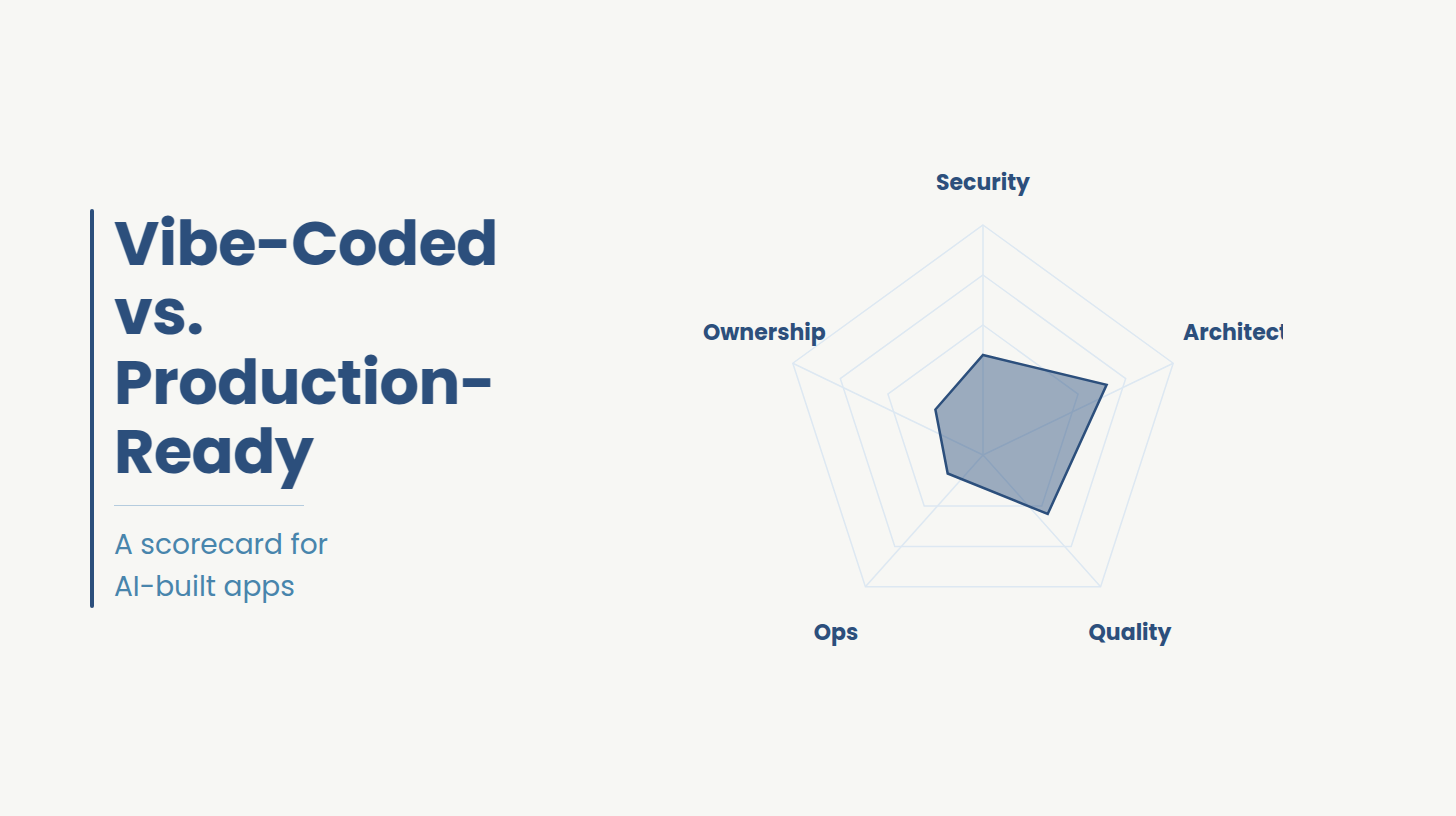
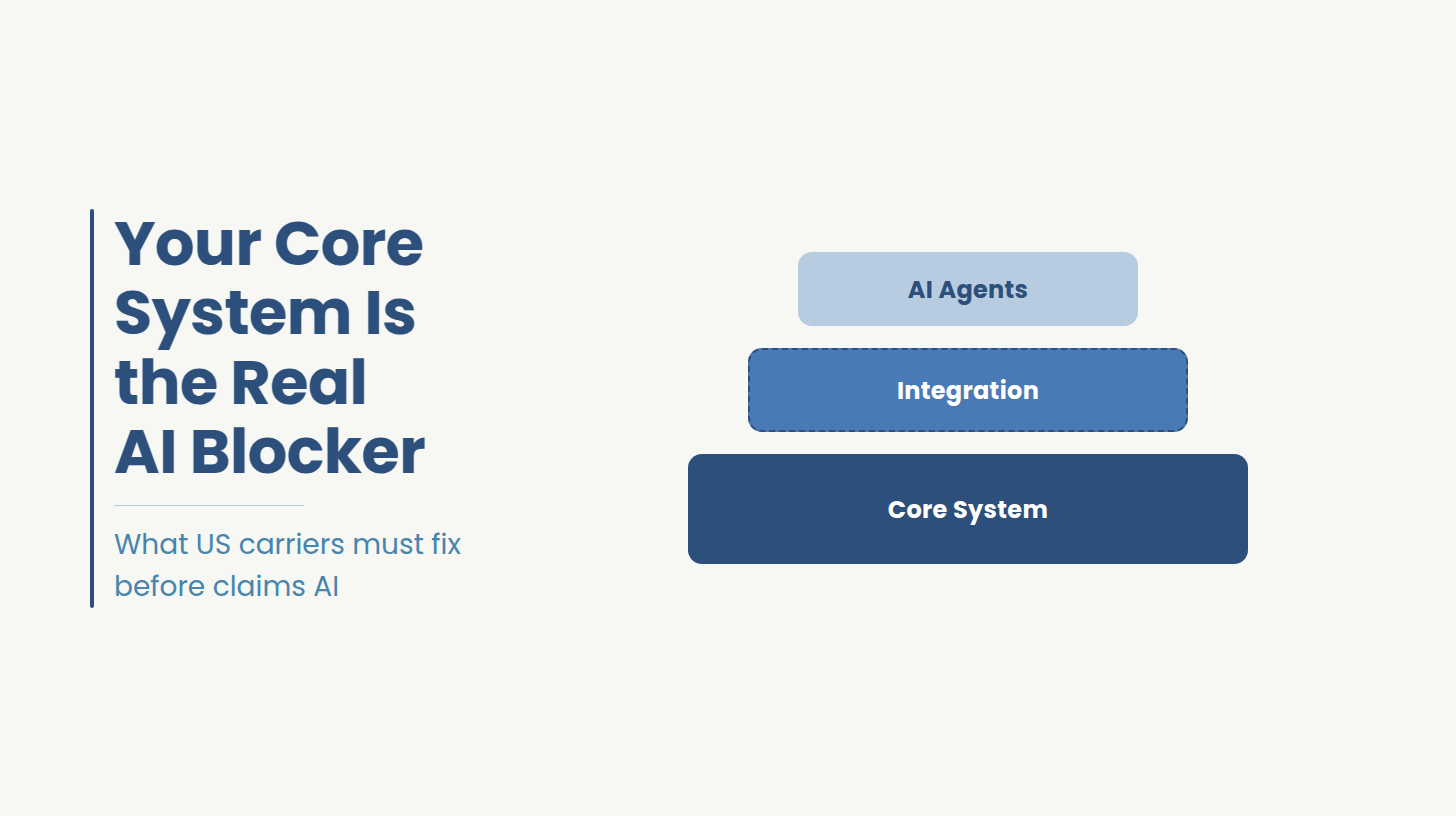
AI Agents in Insurance Claims Processing: A 2026 Implementation Guide for US Carriers
Agentic AI is not a smarter chatbot or a better rules engine. An agentic system receives a goal, breaks it into steps, takes actions across tools and systems to complete those steps, and surfaces results for human review. In a claims context, that means the system moves the claim forward autonomously until it hits a decision that requires human judgment.
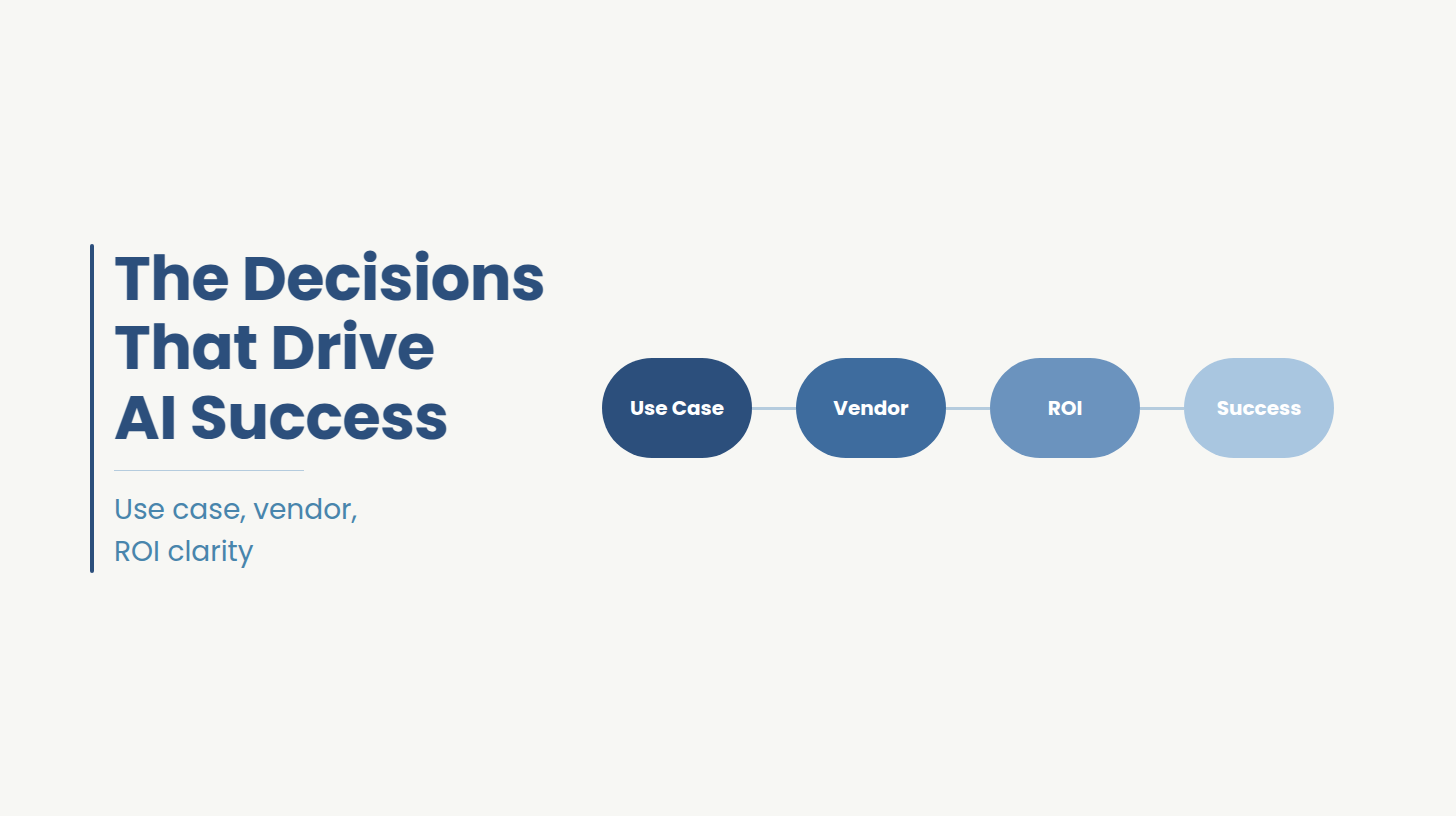
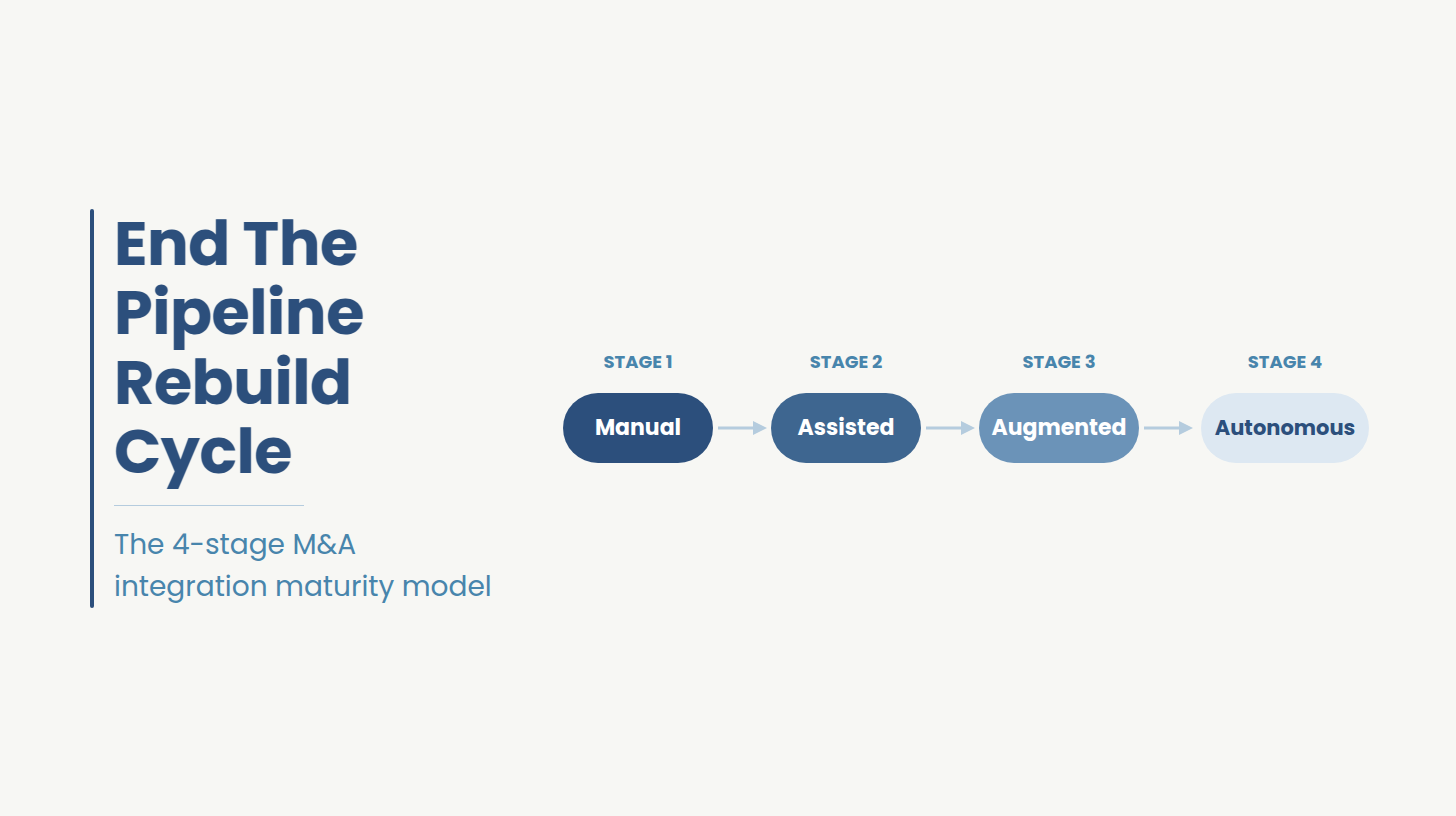
M&A Data Integration: How Agentic Ingestion Changes the Rebuild Cycle
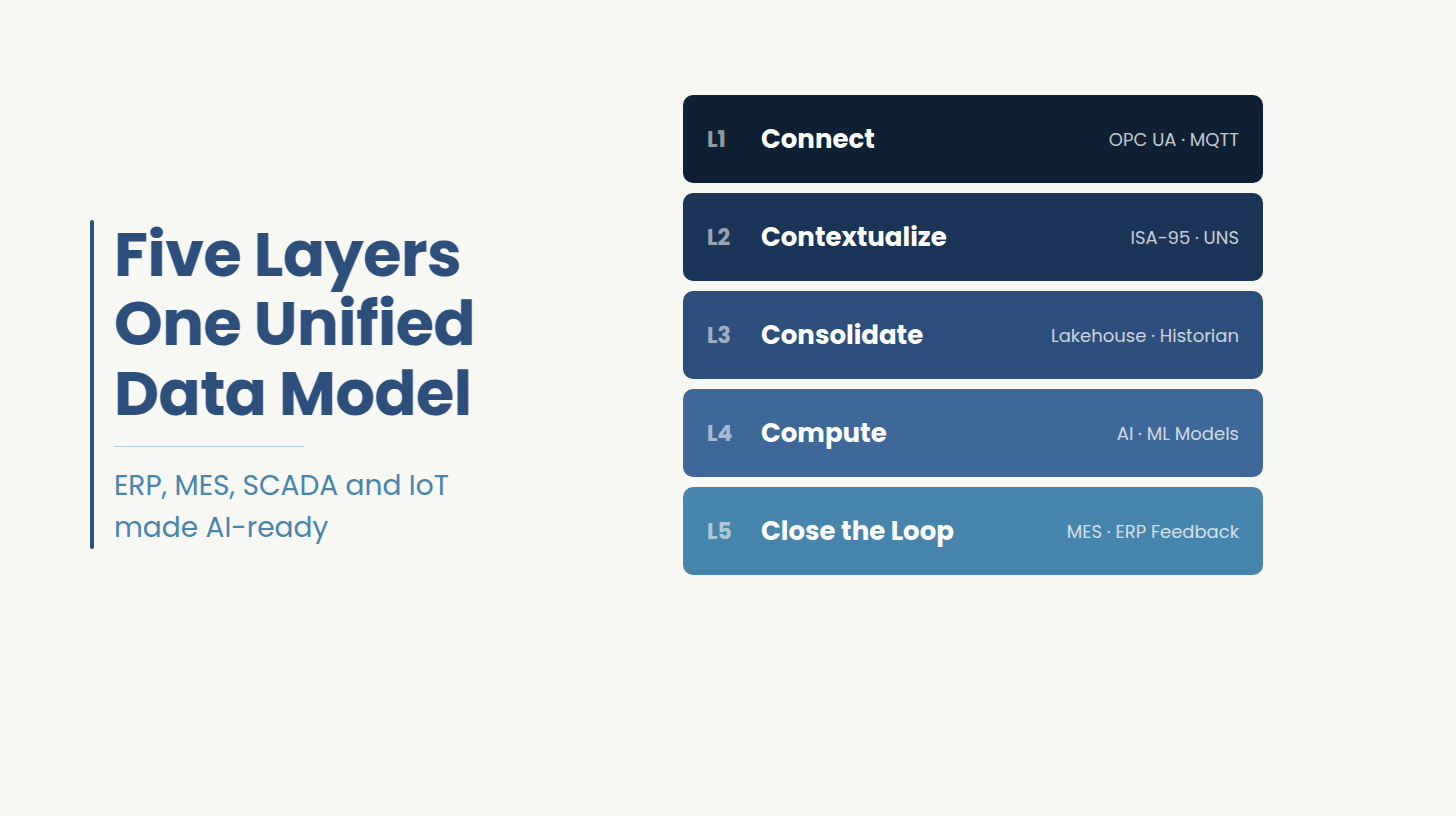
Across the data platform work we've done, a consistent pattern shows up. Organizations rarely struggle with this because they lack AI tools. They struggle because every newly onboarded entity, whether an acquisition, a partner, or a new customer running its own systems, arrives with different data structures, different governance assumptions, and different operational definitions for things that sound identical. "Active," "completed," and "owner" rarely mean the same thing twice.
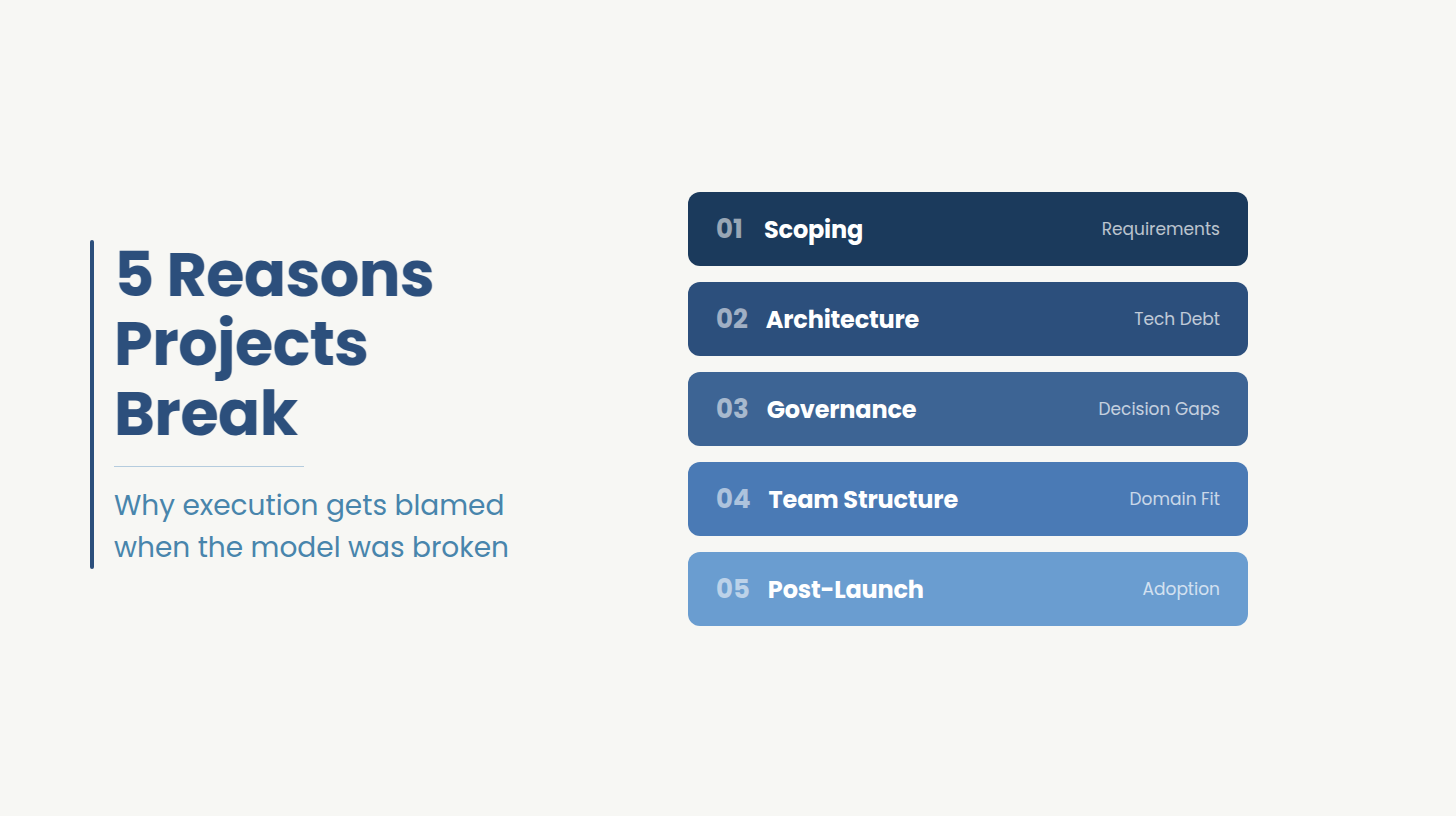
The Hidden Forces Behind Custom Software Delivery Outcomes: Looking Beyond Code, Timelines, and Budgets
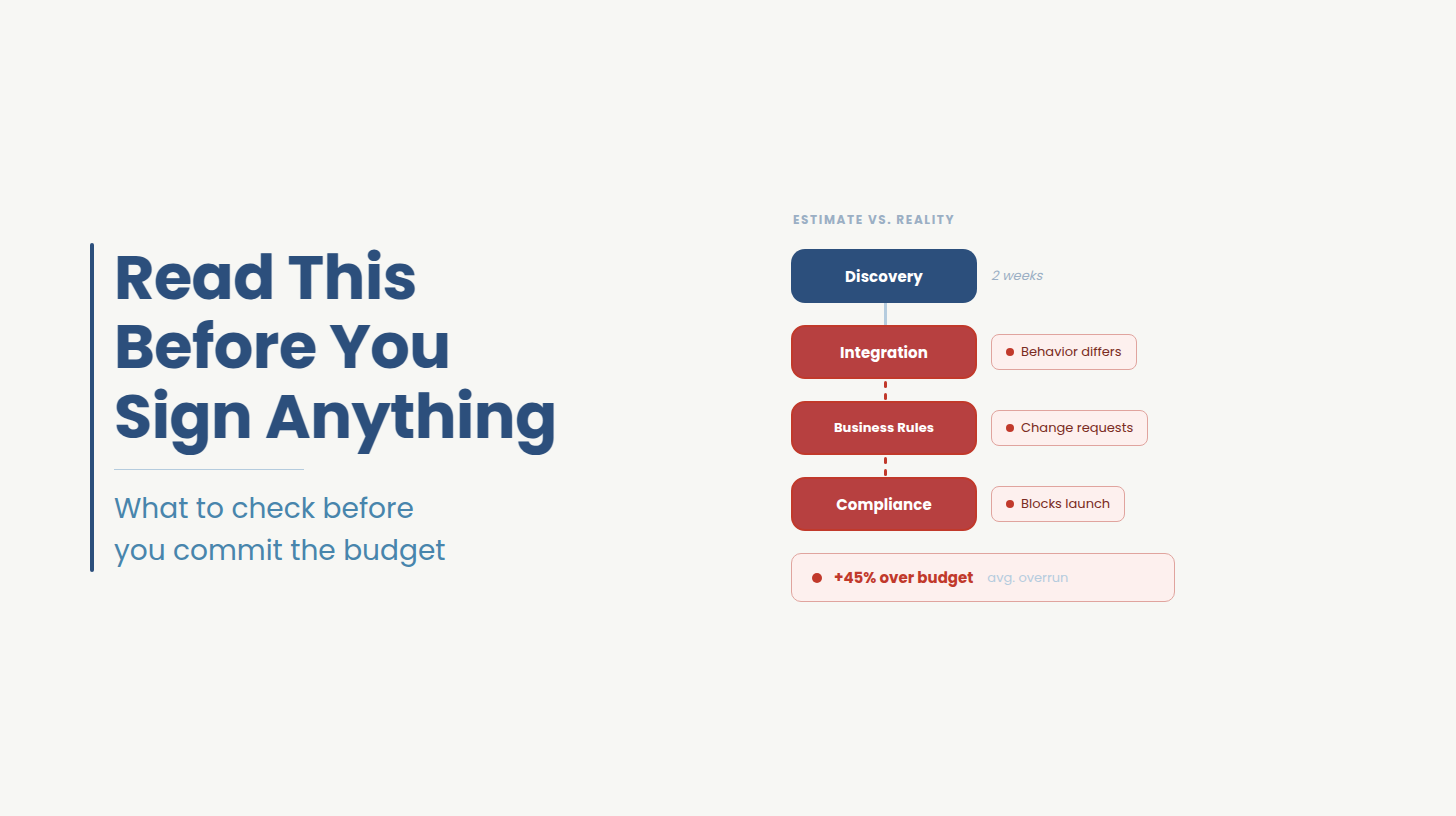
We built our first custom software platform in 2009. Since then, we have delivered across healthcare, financial services, insurance, manufacturing, logistics, and verticals that resist easy categorization. The team has grown to over 800 engineers. What has not changed is the map of how projects break.
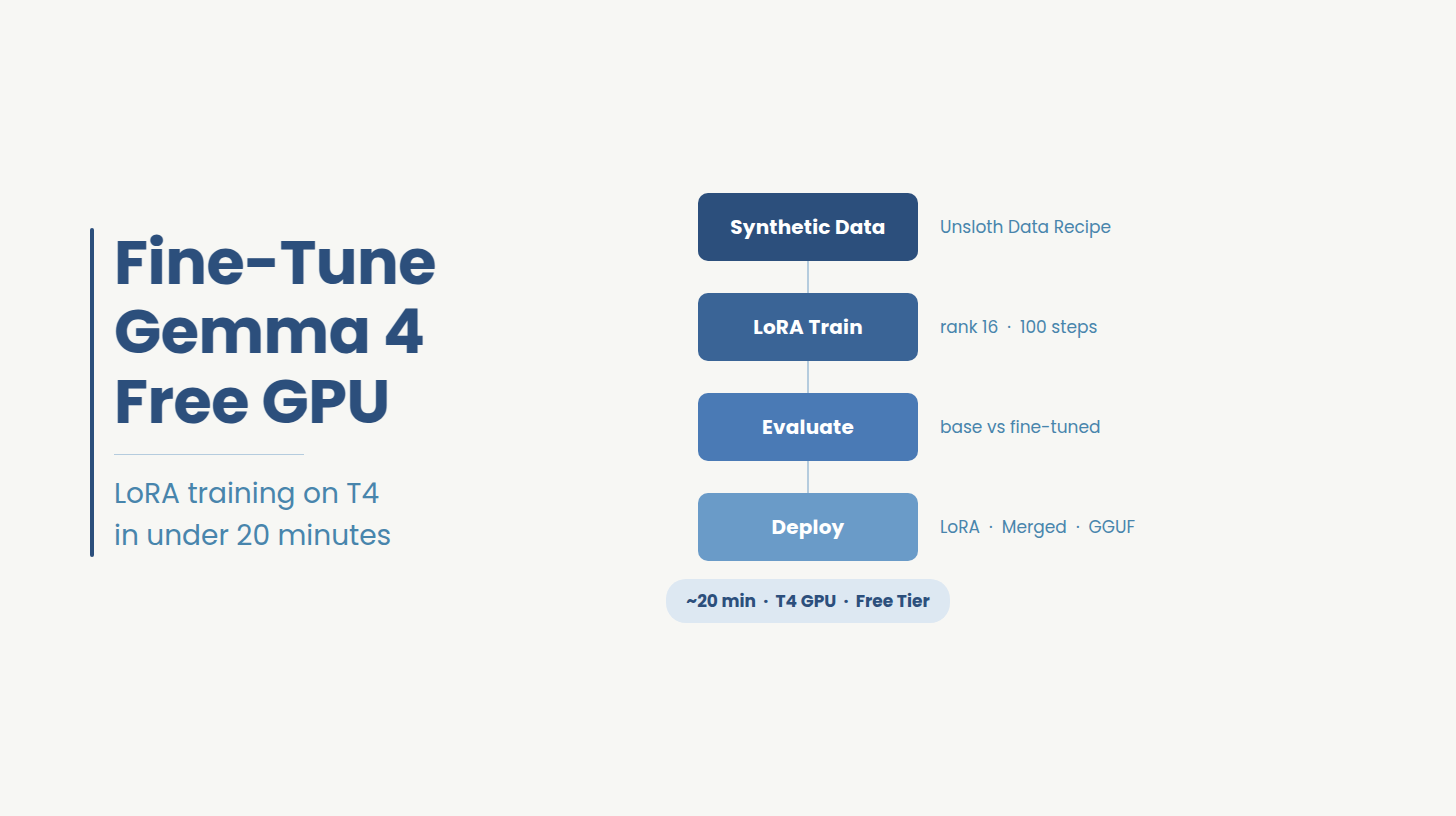
Fine-Tuning Gemma 4 E2B with Unsloth: Complete Setup Guide
Fine-tuning Gemma 4 E2B with Unsloth on a free T4 GPU takes under 20 minutes and requires no paid compute. This guide covers the exact pipeline our team used: synthetic dataset creation, LoRA training, and Hugging Face deployment in a single Colab notebook.
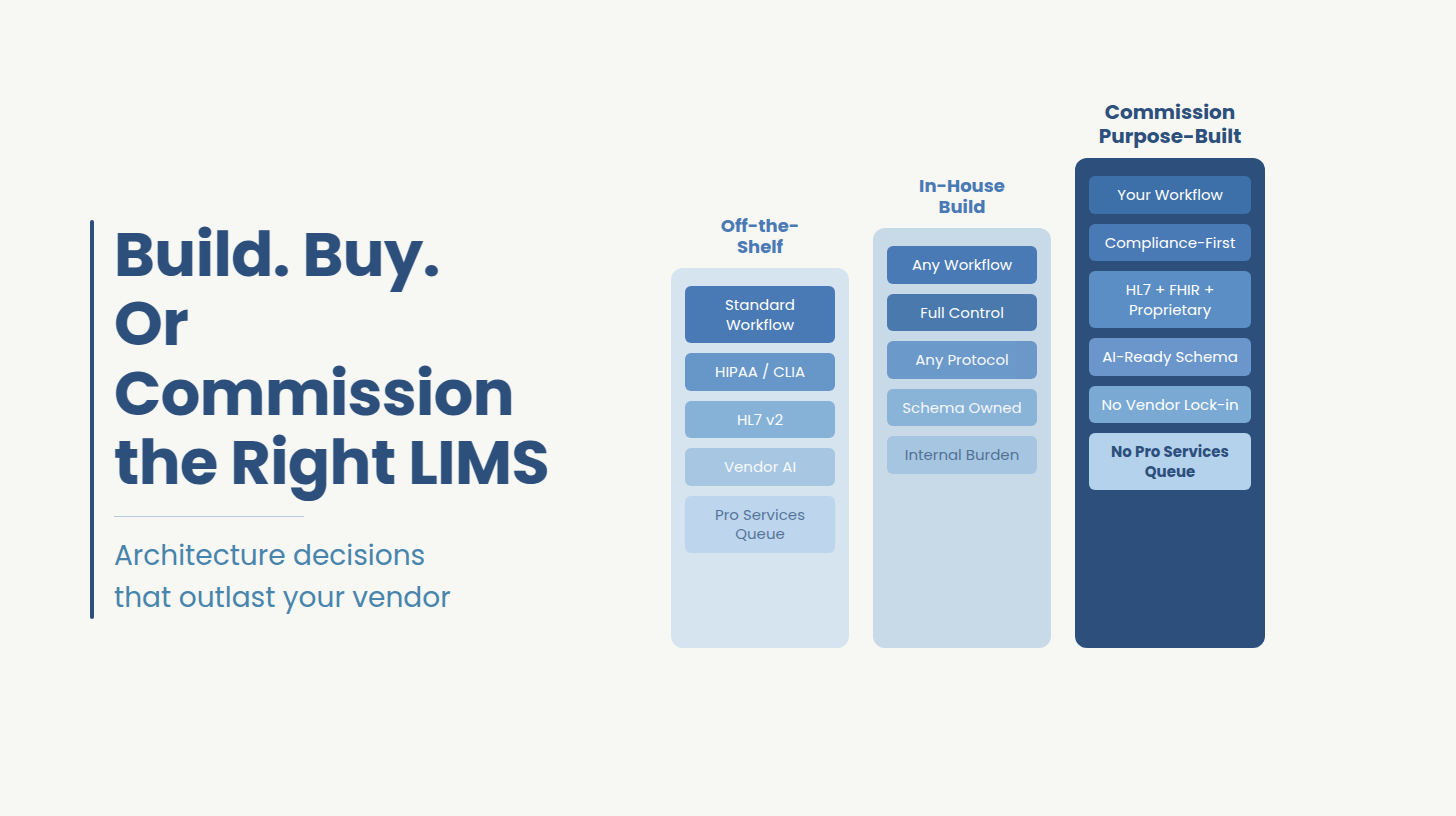
Custom LIMS Software Development: A Decision Guide to Build, Buy, or Commission
A laboratory information management system decision looks simple from the outside. Pick a platform, configure it for your workflows, go live. Most labs do exactly this. Then, 12 to 18 months later, the EHR integration still requires a manual export. A routine 21 CFR Part 11 audit returns six findings. Every workflow change goes into a professional services queue with a six-week turnaround.
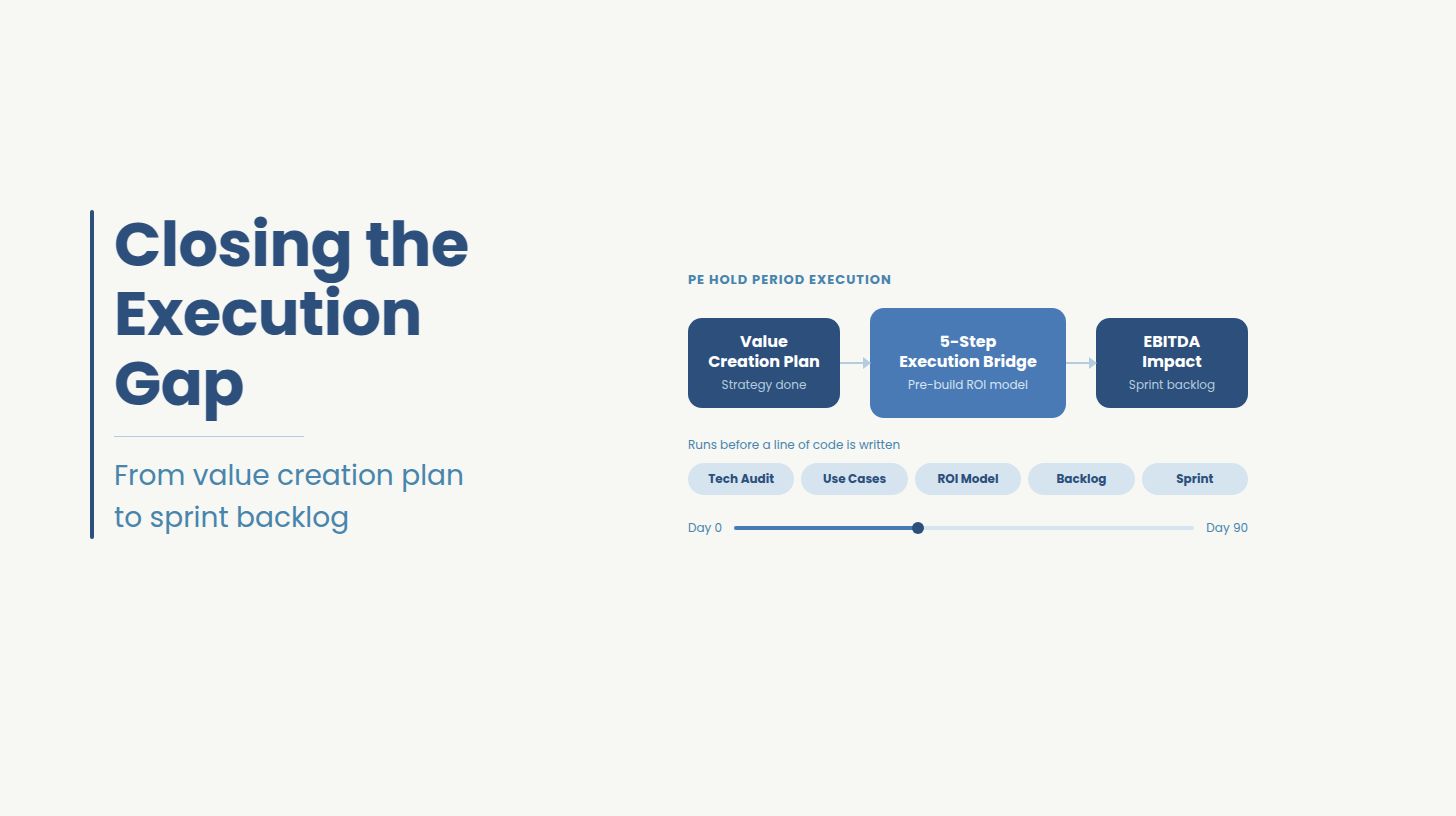
Why Ideas2IT Is the Right Technology Value Creation Partner for US Private Equity Firms
You closed the deal with a technology value creation plan tied to specific EBITDA targets. The strategy is sound, the use cases connect directly to the investment thesis, and the portco CTO has the capability to execute. But the engineering backlog is already six months longer than the hold period allows.

Why Health Systems Are Building Custom RPM Platforms to Scale Remote Care
Three months ago, the RPM program worked. At that time 50 patients were on the system with one condition pathway and one EHR site. The per-patient SaaS fee looked manageable against CMS reimbursement although the alert queue was noisy but navigable.
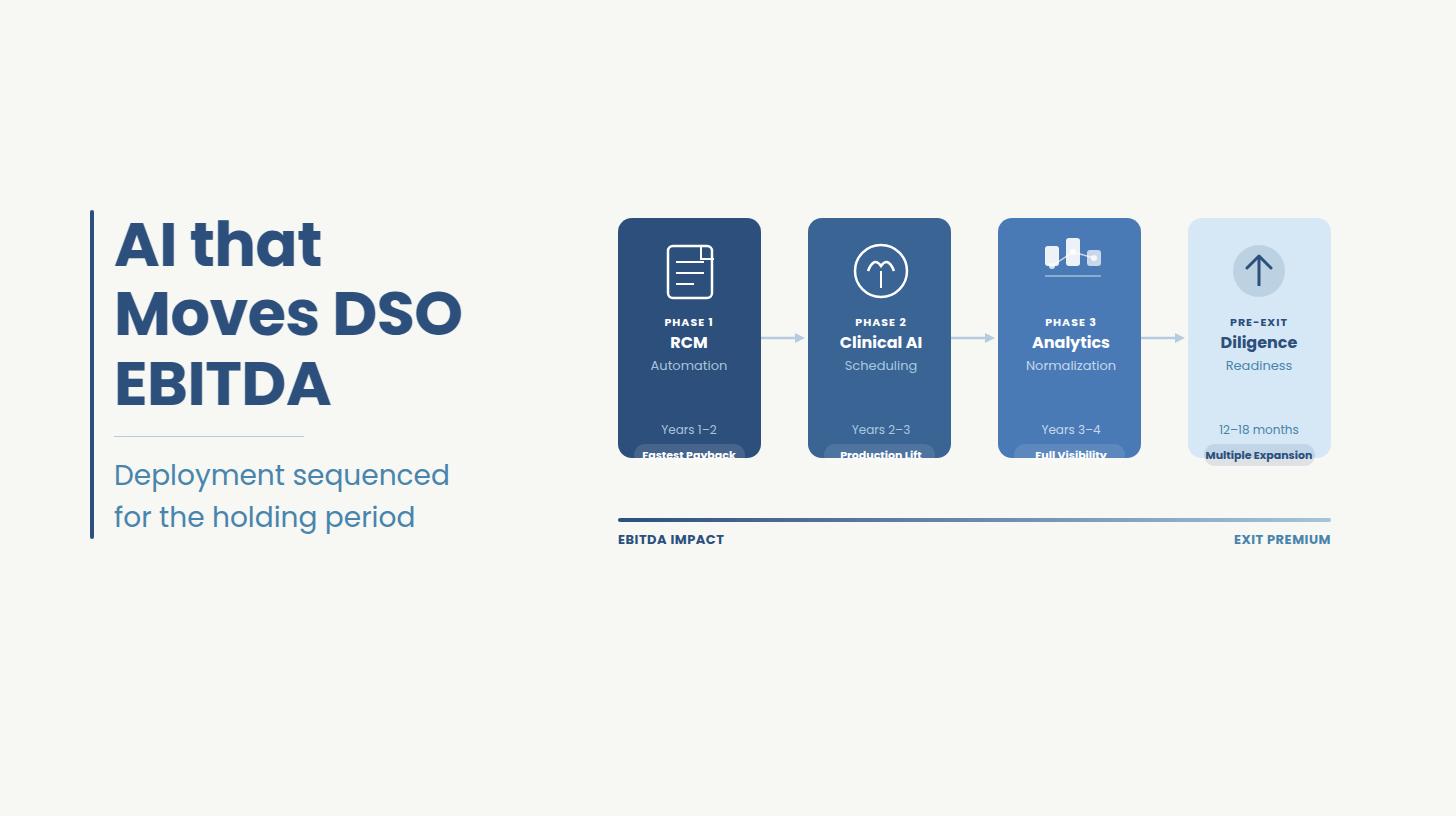
AI in Dental DSO Operations: Where PE-Backed Platforms Create Measurable EBITDA Gains
PE-backed DSOs face margin pressure that payer renegotiation and incremental cost cuts can no longer offset. AI applied across five operational verticals (revenue cycle management, clinical standardization, scheduling, enterprise visibility, and exit preparation) is where the next EBITDA gains are recoverable.
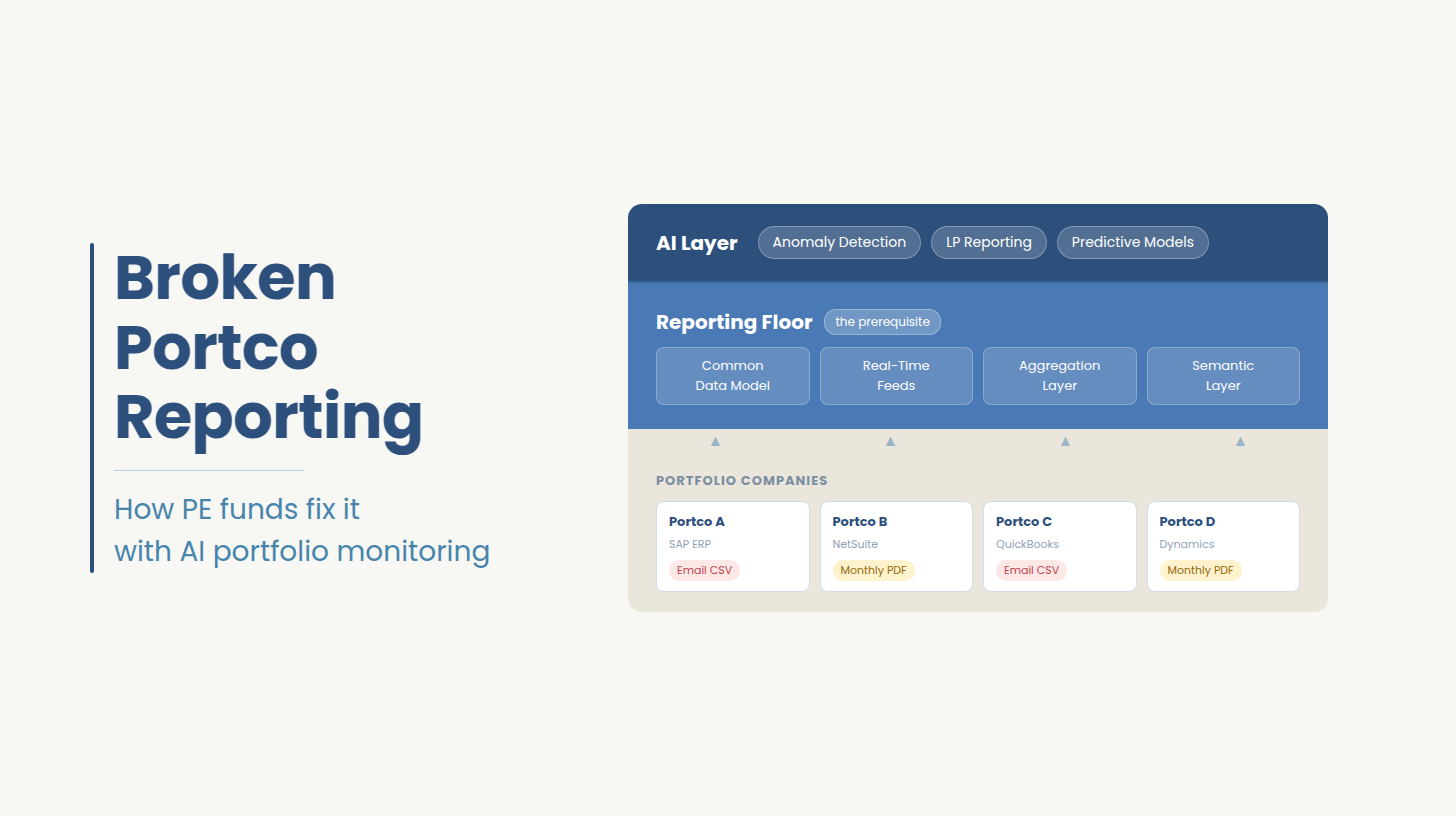
What It Takes to Operationalize AI Portfolio Monitoring Across Portfolio Companies
Ask any operating partner relying on AI in private equity portfolio monitoring for real-time performance visibility, and they will show you a dashboard. Look at the data feeding it, and you will find numbers that are six weeks old assembled from a spreadsheet the CFO emailed on the last day of the prior month, mapped by hand to a template the fund created three years ago.
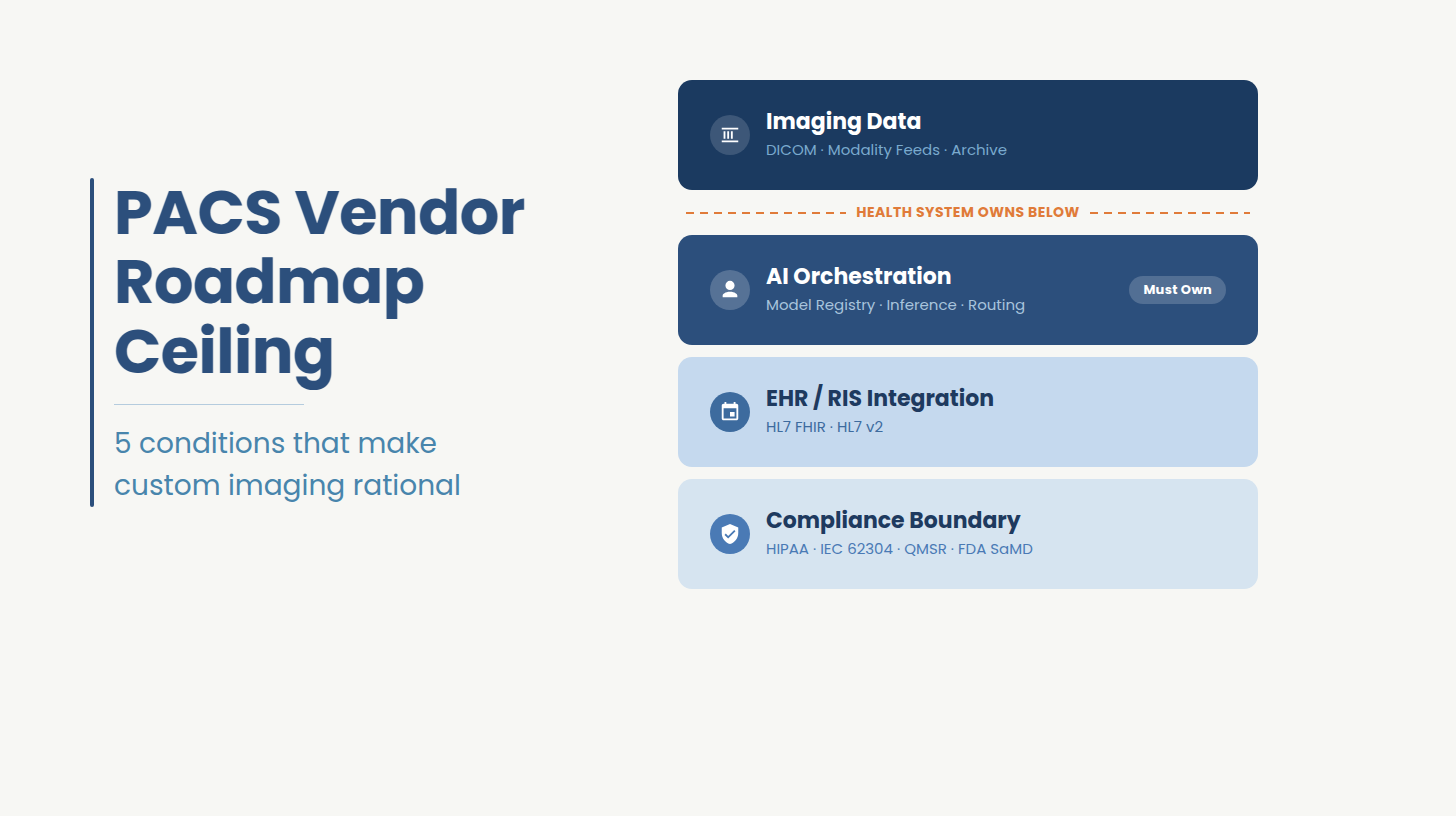
Custom Medical Imaging Software Development: The CTO's Build vs Buy Guide
Custom medical imaging software development is the process of building a health system's imaging infrastructure, AI integration layer, and clinical data architecture to its own specifications, rather than operating inside a PACS vendor's proprietary platform. The result is a system the health system owns, controls, and can extend without vendor permission.

How to Reduce Alert Override Rates in Clinical Decision Support Systems
Most CDSS implementations attribute high override rates to alert fatigue or change management failures. Both explanations are correct as symptoms and wrong as diagnoses. Alert fatigue is a signal quality problem. When 92.7% of alerts in a system are not clinically appropriate, [3] no amount of UX improvement or clinician training recovers trust.

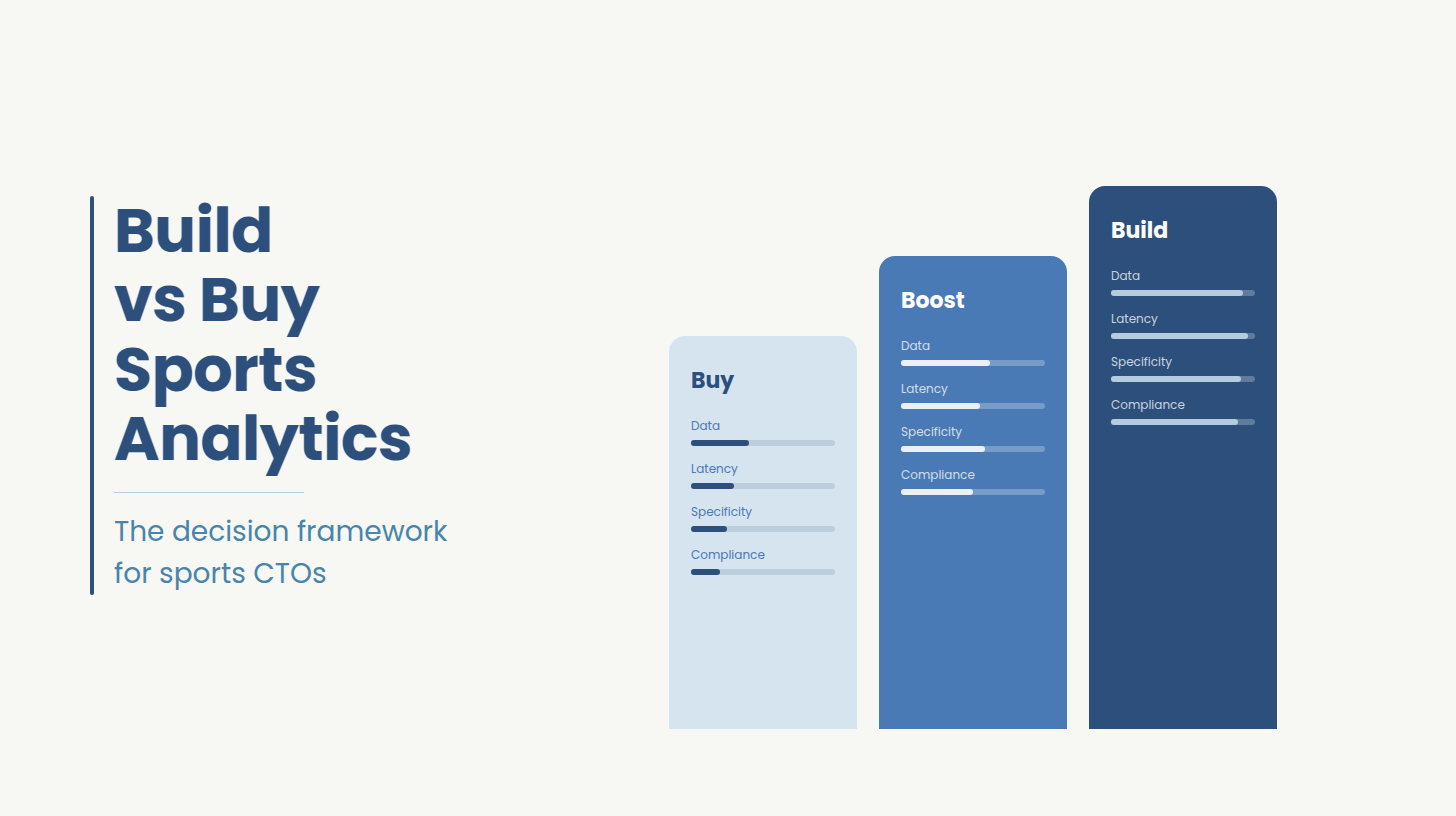
Predictive Analytics for Sports Platforms: When to Build Custom and When to Buy
Professional sports has been collecting data longer than most industries have known what to do with it. Pitch velocity, player load, possession sequences, biometric outputs from training gear, the raw material for predictive intelligence has existed in sports organizations for two decades. What did not exist was the infrastructure to act on it at speed.
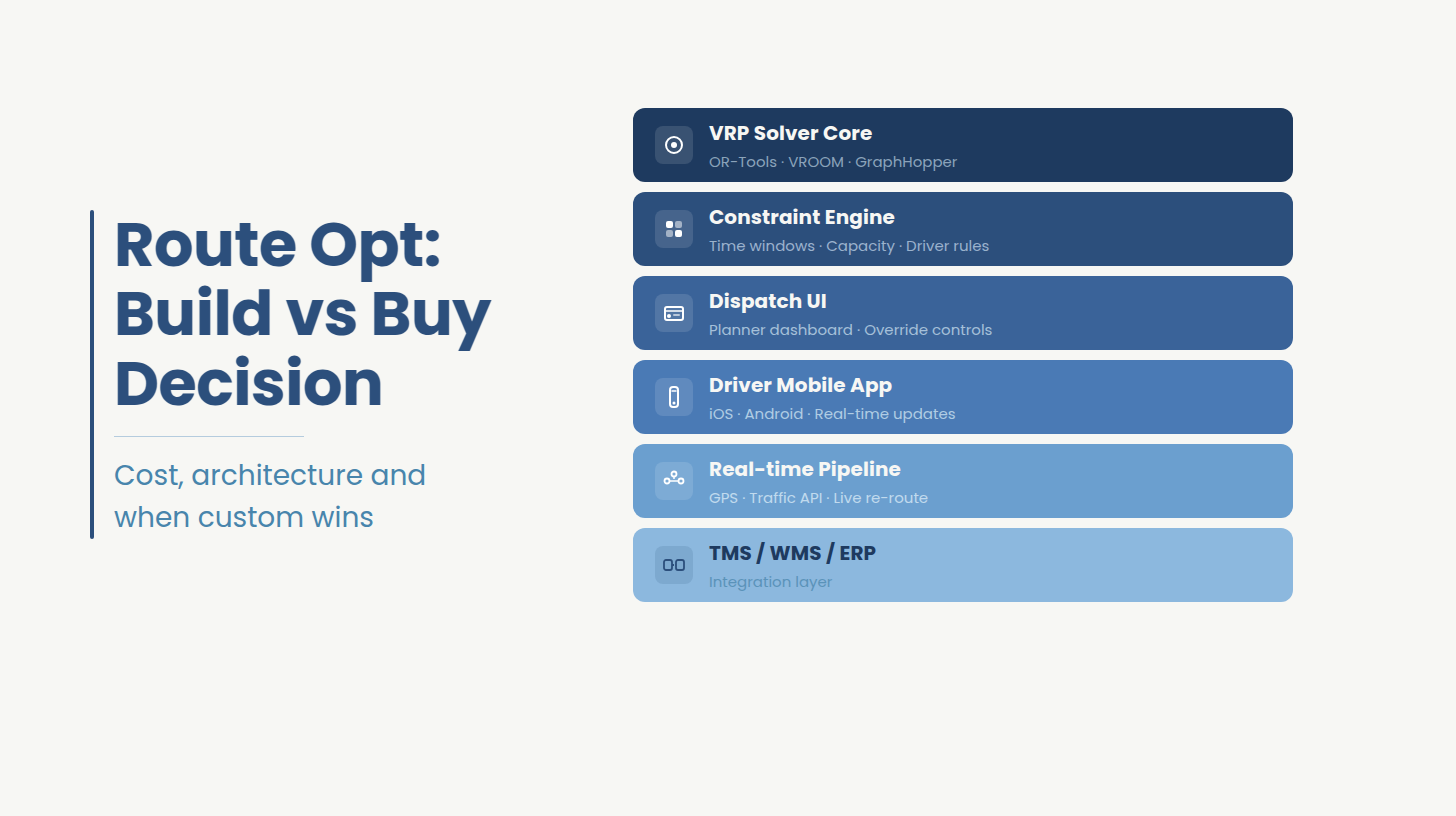
Route Optimization Software: Build Cost, Timeline, and Architecture
SaaS route optimization tools are the right answer for most fleets. If your routes are relatively stable, your constraint set is standard, and your integration requirements are shallow, a SaaS planner will outperform any custom build on time-to-value for years.
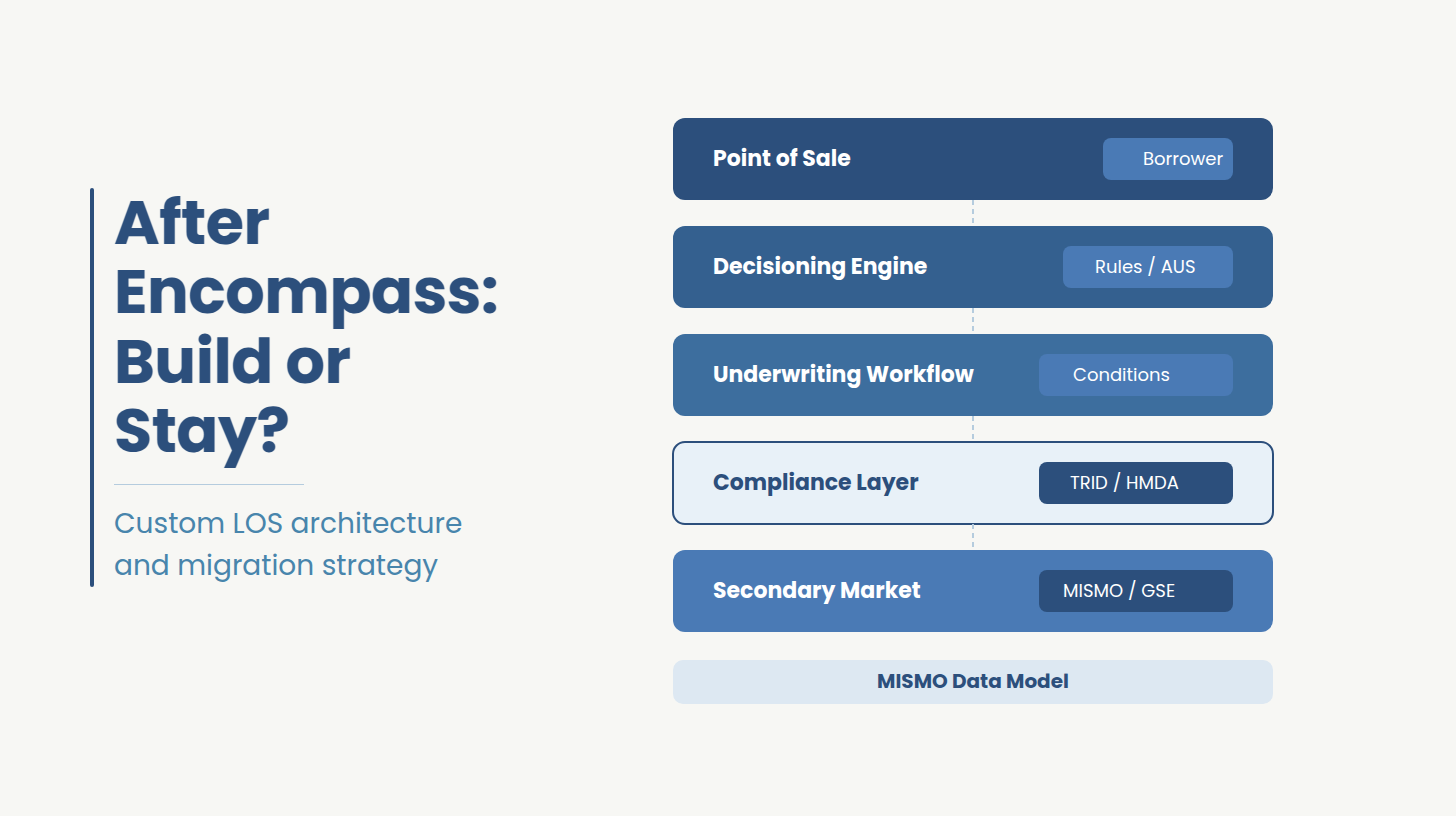
Custom LOS Development After Encompass: Architecture and Migration Strategy
Encompass's single-user-per-file limitation creates processing bottlenecks that scale badly with volume. The UI, broadly described in review platforms as a Windows 95 experience, generates consistent friction for loan officers and underwriters. Administrative configuration is deep, brittle, and expensive: lenders routinely carry high admin-to-loan-officer ratios just to maintain Encompass stability.
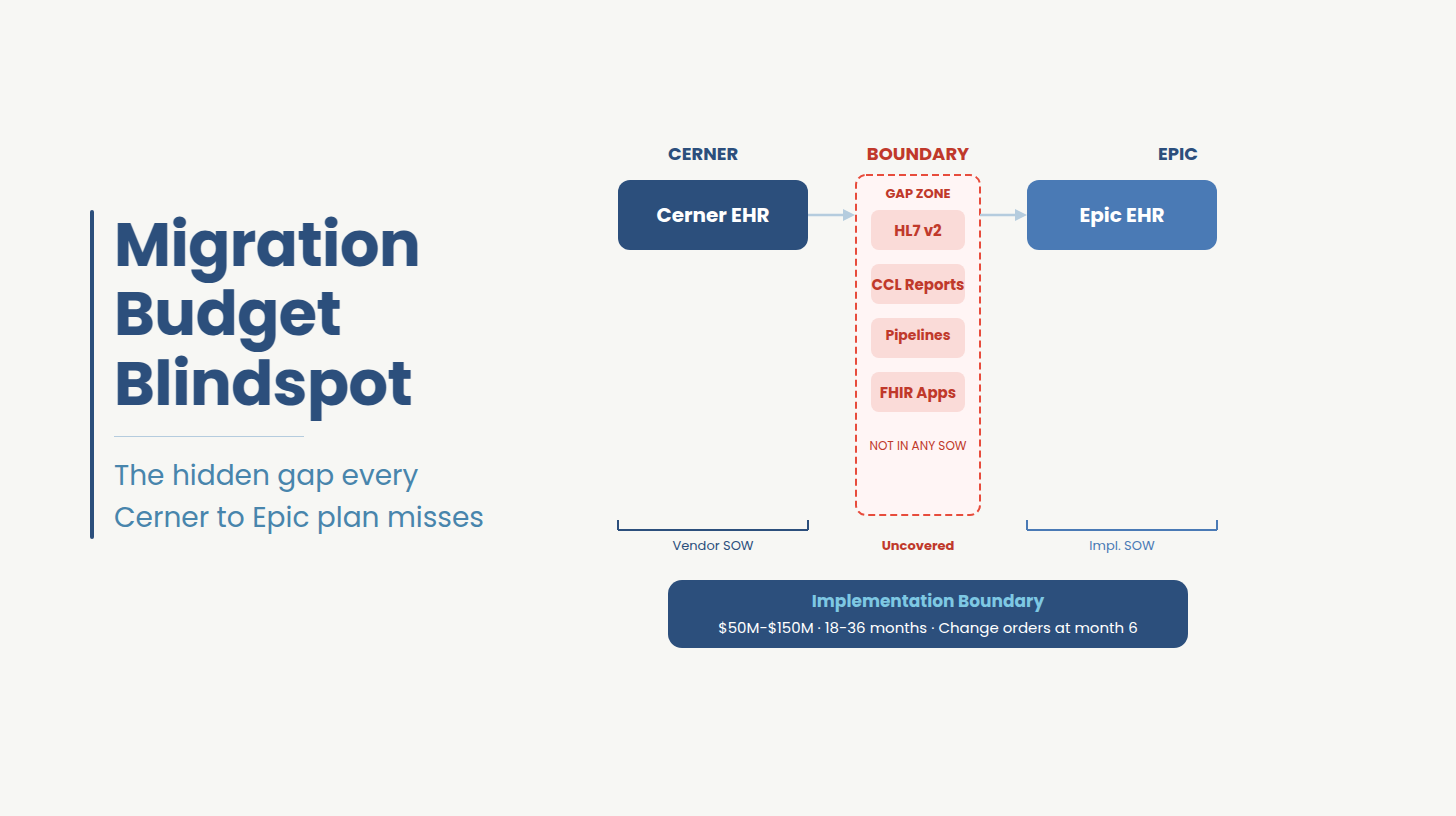
Cerner to Epic Migration: What Changed and Why It Matters Now
The Implementation Boundary is the structural gap between the EHR vendor's contract scope and the health system's custom-built data infrastructure: the HL7 integrations, CCL reports, data pipelines, and FHIR applications that neither the vendor nor the implementation consultant owns. It does not appear on the project plan.
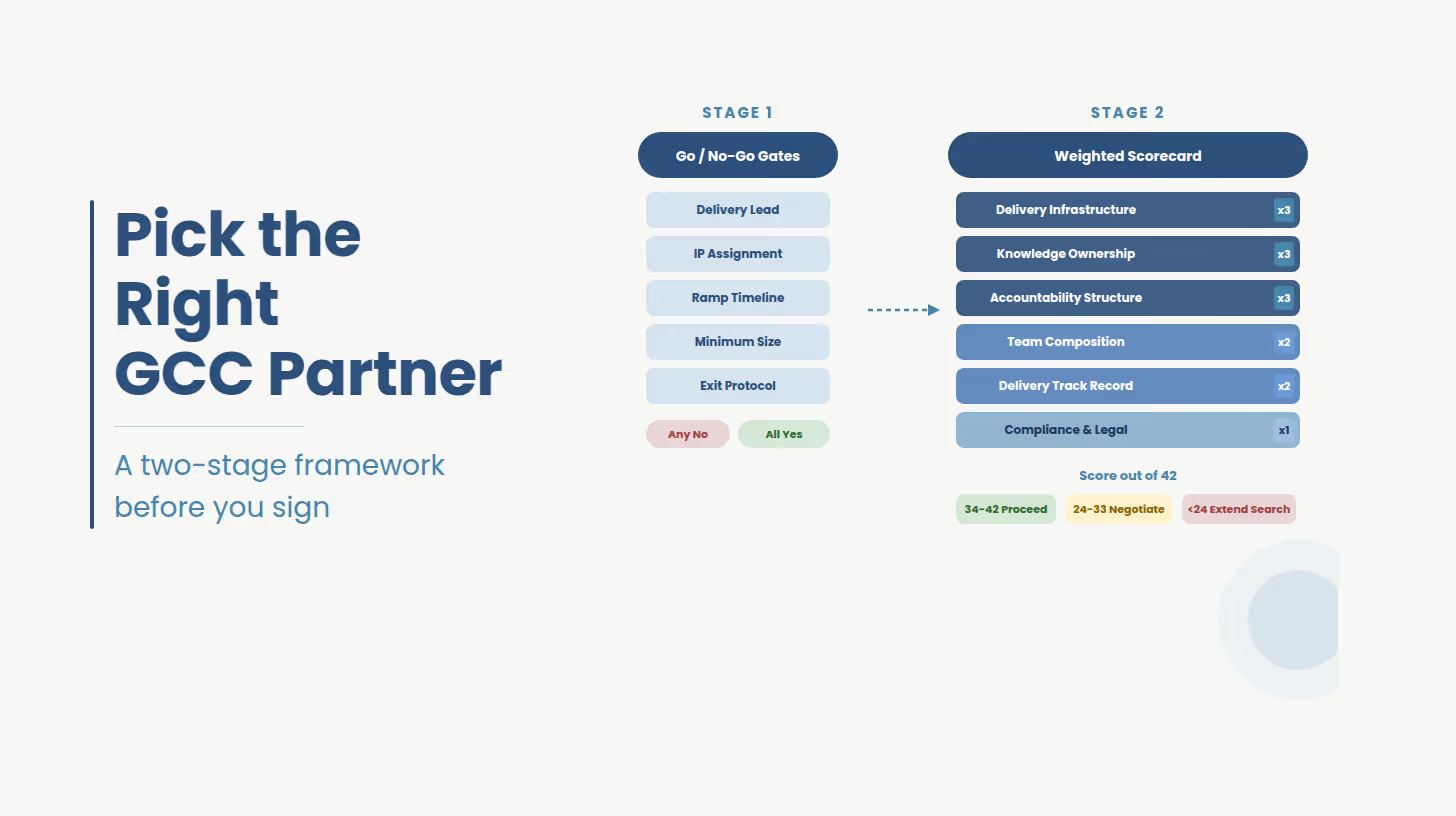
Micro GCC: How to Choose a Micro GCC Partner That Actually Delivers
A Micro GCC is a dedicated engineering team built and operated in India by a specialist partner, on behalf of a US company, under the client's brand, OKRs, and product roadmap. The model sits between outsourcing and a captive entity, and the partner you choose determines which one it actually becomes in practice.
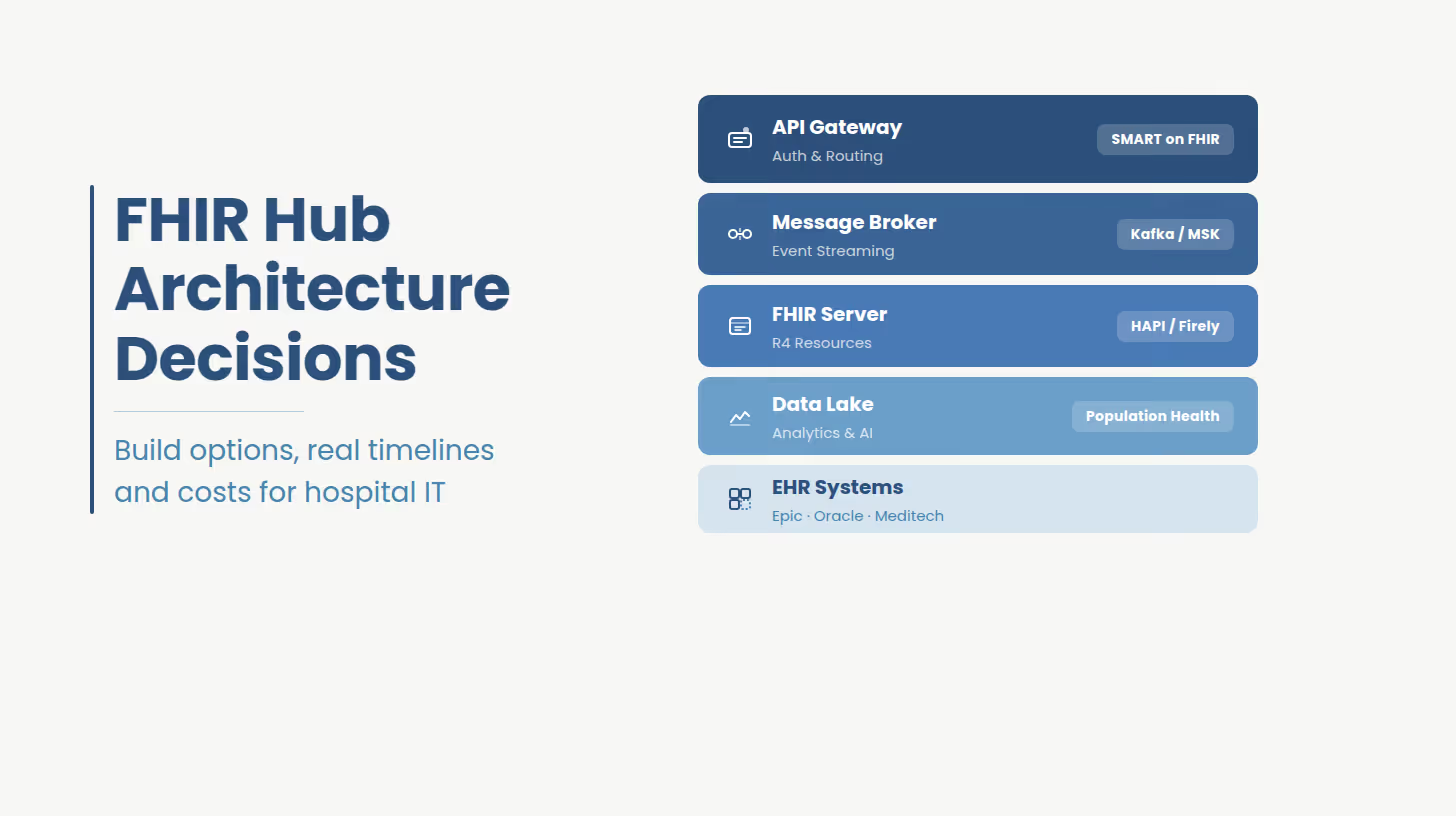
Custom FHIR Integration Hub Development for Hospitals
Every hospital FHIR integration hub is built on one of two patterns, and the choice is largely irreversible once data flows begin in production. The pattern you select in the first four weeks of a project will constrain every architectural decision that follows.
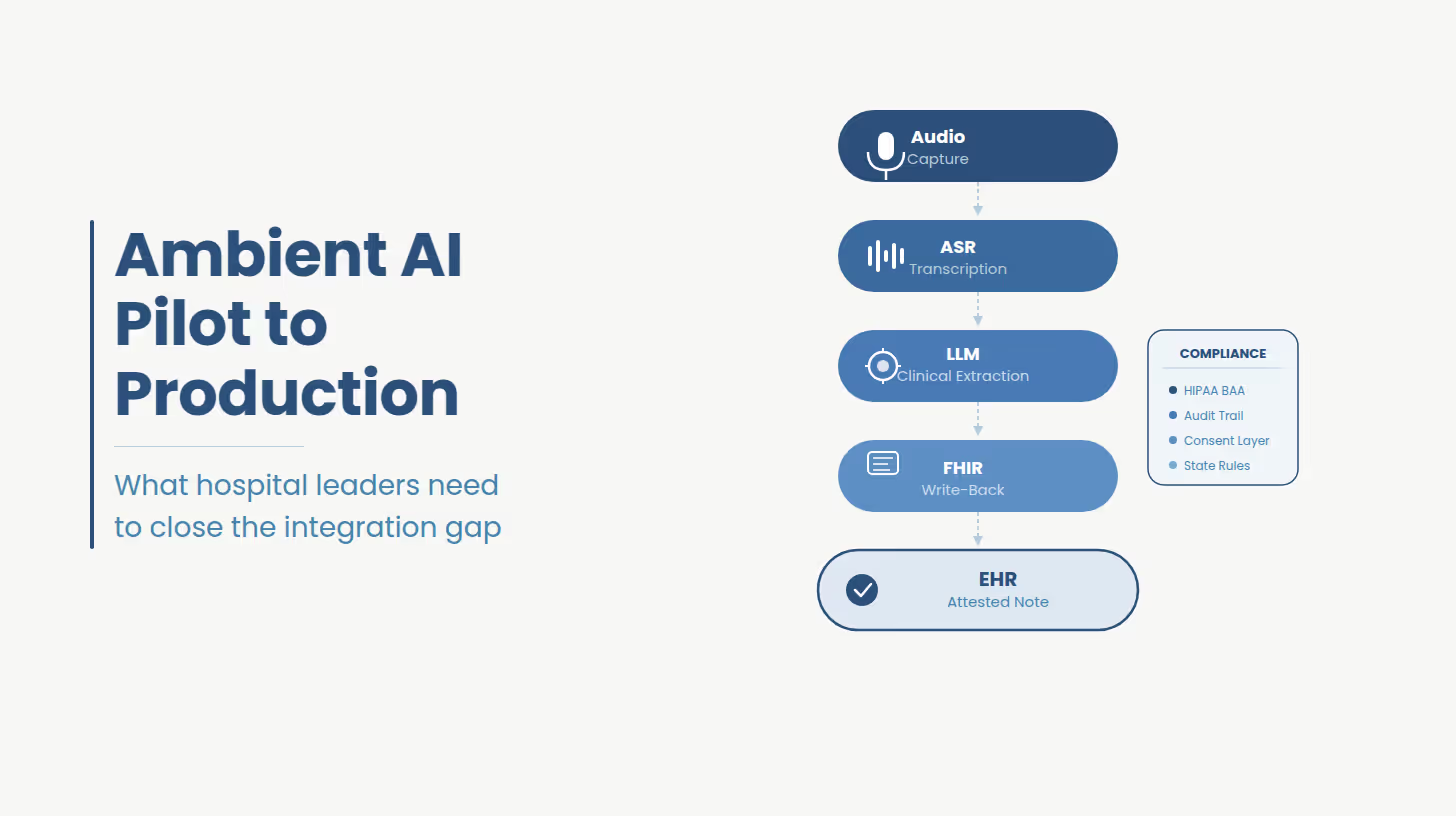
Ambient Clinical Documentation: What Hospital Leaders Need to Progress to Production
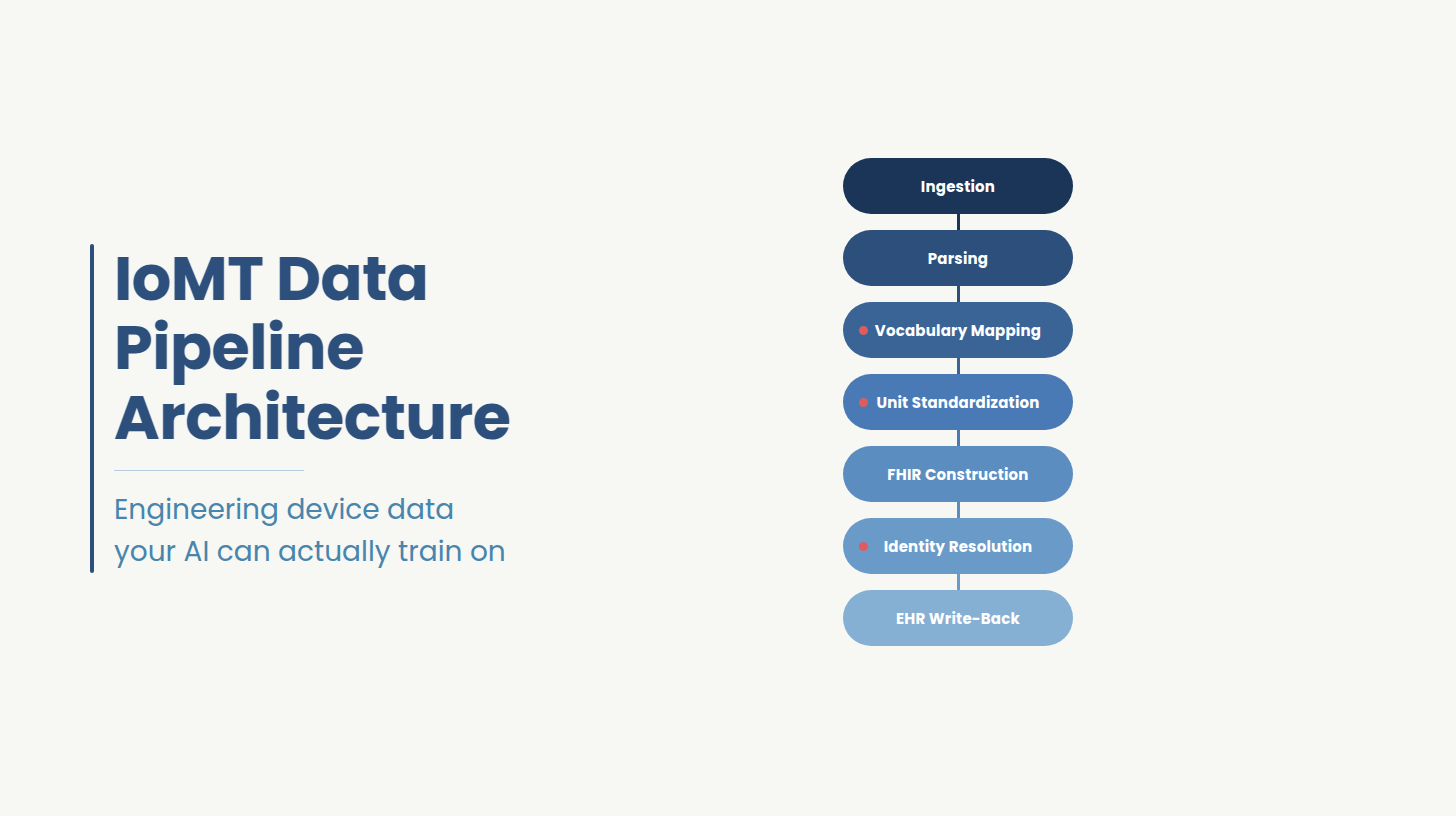
Ambient clinical documentation is a passive voice capture system that converts a clinical encounter into a structured EHR note without physician dictation or manual data entry. The pipeline moves from audio capture through ASR into an LLM that extracts clinical intent, and terminates in an EHR write-back that populates discrete structured fields. The compliance, integration, and governance architecture around that pipeline determines whether the system reaches production.
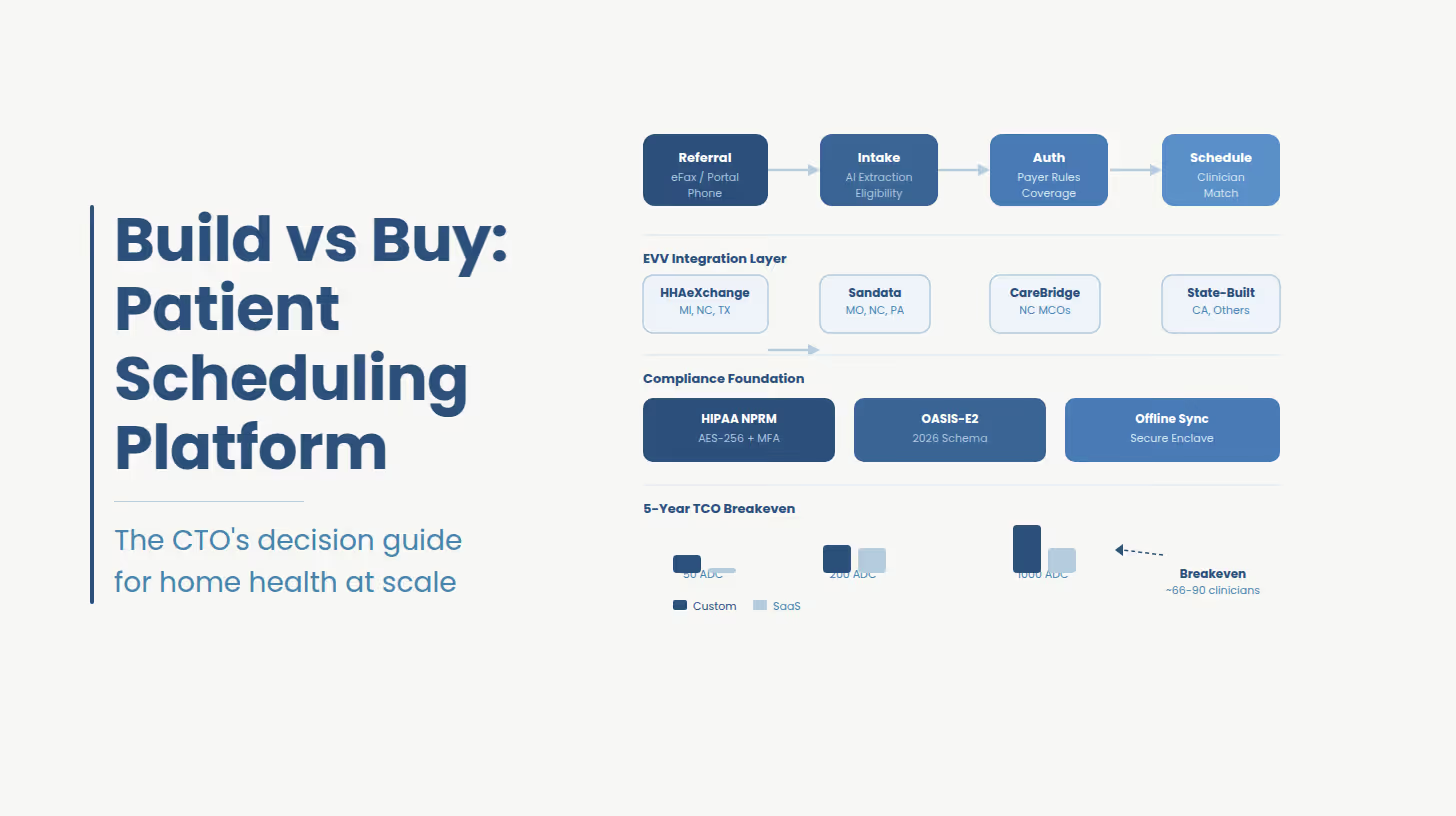
Custom Patient Intake and Scheduling Software: A CTO's Build Decision Guide
Health system CTOs managing home health operations are facing a structural inflection in 2026. The forces are not new, referral leakage, compliance fragmentation, and data sovereignty concerns have been building for years but they are converging at a point where the architectural cost of a generic licensed platform is measurably higher than the investment cost of building to spec.

Custom Claims Management System for Insurance: When to Build the AI Layer and When Your Platform Is Enough
Most carriers already have a claims platform. The problem is not the platform. It is that the platform's AI cannot see the data it needs your reserve system, your fraud vendor, your medical bill review tool. That is the integration gap a custom AI layer closes.
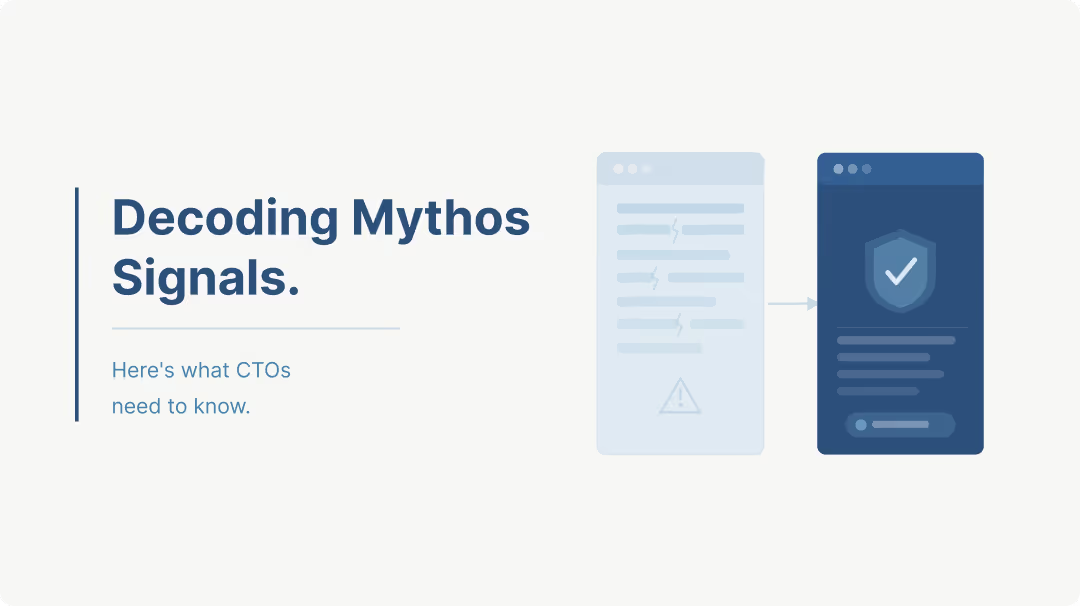
Claude Mythos and Legacy Software Security: What CTOs Need to Do Now
Here’s the short version of what happened. Anthropic trained a new frontier model called Claude Mythos Preview. It’s a general-purpose model, not built specifically for cybersecurity. But during internal testing, they discovered something that changed their release plans: Mythos could find software vulnerabilities in seconds and write working exploits autonomously, without any human guidance.
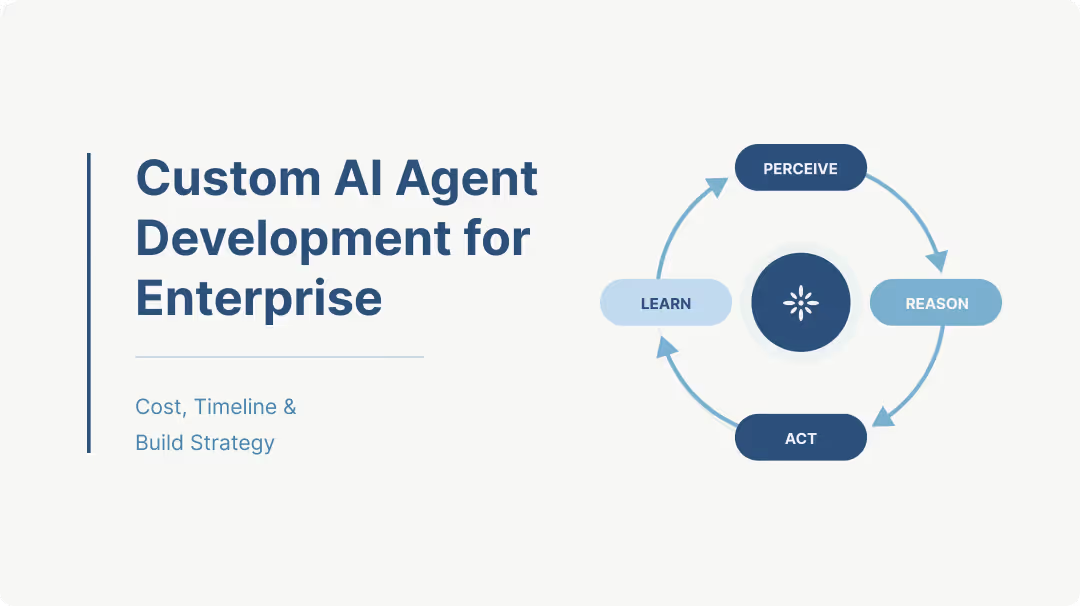
The AI-Fluent Data Engineer: What the Role Actually Looks Like in 2026
We've watched this split from the hiring side. Ideas2IT has been bringing on data engineers and data architects through this entire cycle, and the pattern is consistent the people we hire, and the people who thrive once they're here, are the ones who've already crossed over to the AI-fluent side of this line.
Healthcare Software Development Companies in Austin: What to Build and How to Choose the Right Partner in 2026
Every year, a new cohort of healthtech founders in Austin raises capital on a clinical thesis that investors find compelling. The product vision is clear: an EHR-integrated platform that closes a care gap, an AI-powered tool that reduces clinician burnout, a claims automation engine that recovers revenue leaking through manual workflows. The pitch deck earns the wire. Then the engineering begins.

Custom Supplier Portal Development: Build vs Buy for AI-Ready Procurement
Selecting a supplier portal is treated as a procurement decision. The vendor evaluations are led by procurement. The criteria are feature-based. The comparison is run against a requirements list assembled from current workflow pain points.
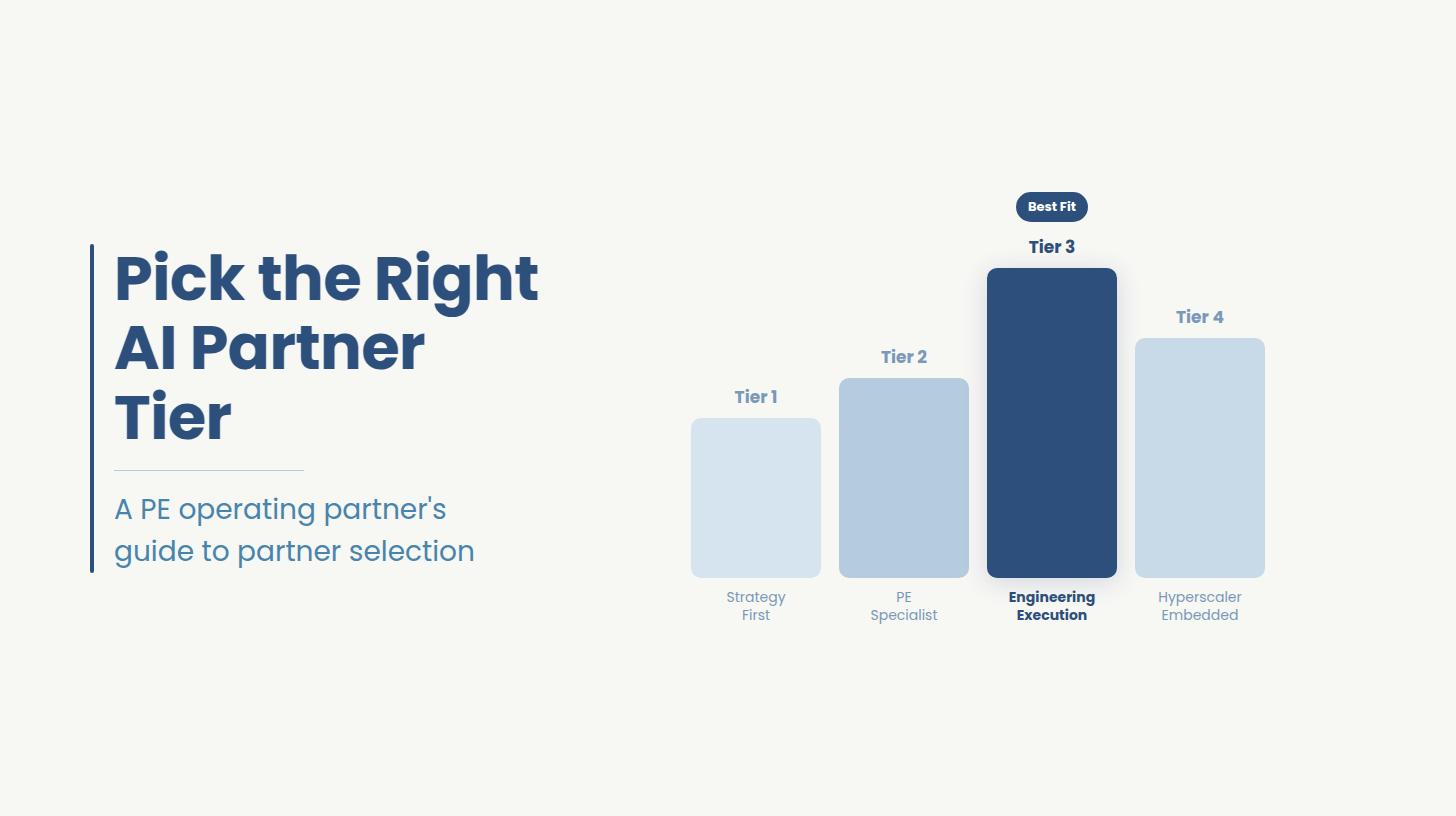
Choosing an AI Implementation Partner for PE Portfolios: What Actually Matters
An AI implementation partner for private equity is a firm that embeds engineering teams inside portfolio companies to identify, build, and maintain AI systems that drive measurable EBITDA impact and stays accountable through production and post-launch.The defining characteristic is ownership after go-live. The same team that scoped the use case owns what happens when the data breaks, the model drifts, or the integration fails.

Telehealth Platform Development: Features, Cost, Technology and How to Build One
A telehealth platform is more than video calls added to a healthcare app. It has to bring together scheduling, clinical workflows, secure messaging, payments and healthcare integrations in a system that holds up in real-world care.
Healthcare Referral Leakage: The 5 Integration Failures Costing Millions
The downstream revenue loss from referral leakage reaches $800,000 to $900,000 per physician per year. Not from billing errors. Not from denied claims. From referrals that were written and never completed. At a 100-provider multi-specialty group, that is $78 to $97 million in annual revenue that left the network silently, without a single denied claim to flag it.
Prior Authorization Automation: Closing the Gap Between Payers and Providers
Physicians complete an average of 39 prior authorization requests per week and spend 13 hours on the process (AMA Prior Authorization Survey). At a 500-bed health system, that translates to more than $250,000 in annual administrative overhead from manual processing alone based on typical PA volumes, staffing requirements (3–5 FTEs dedicated to manual PA processing), and per-transaction administrative costs before denied claims, before rework, before the staff turnover that follows sustained administrative overload.
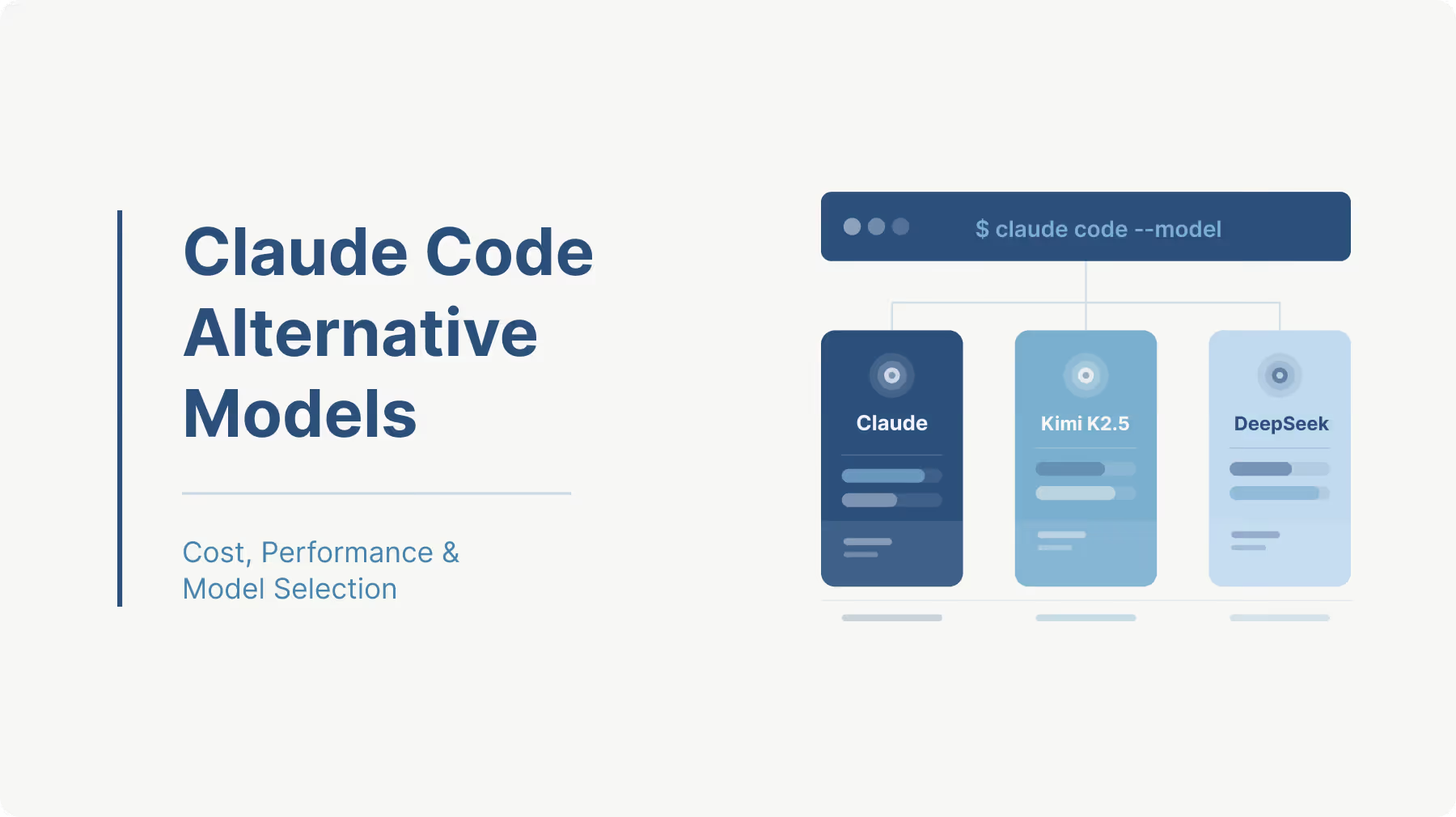
Claude Code With Kimi K2.5, DeepSeek, and Claude: A Technical Evaluation of Cost, Performance, and Model Selection
Claude Code is configurable. The model it uses for reasoning and code generation sits underneath the interface and you can swap it. Most teams using Claude Code have never tested what happens when you do.
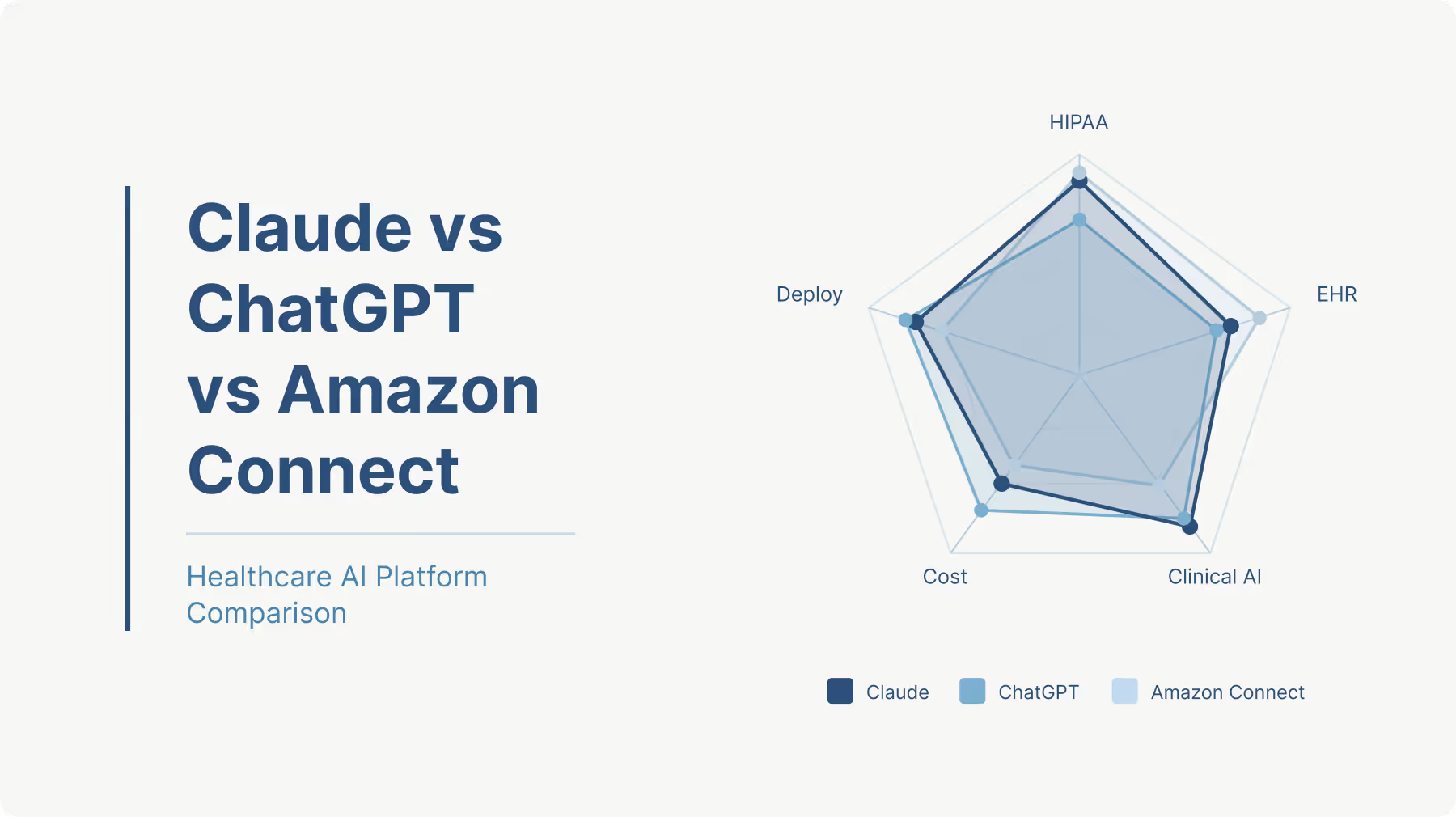
Claude vs ChatGPT vs Amazon Connect Health: Comparison for Enterprise Healthcare Organization
Between October 2025 and March 2026, Anthropic, OpenAI, and Amazon Web Services each launched a purpose-built healthcare AI platform. Not general-purpose AI with a compliance disclaimer. Purpose-built, HIPAA-aligned products targeting clinical operations, revenue cycle, life sciences, and patient access.
Why University Analytics Teams Can't Clear the Backlog and What's Actually Behind It
Ask any director of institutional research or head of analytics at a mid-size university how their backlog looks. The answer is almost always some version of the same thing: too many requests, not enough people, and a queue that has been growing longer for at least two years.
What a Senior Data Engineer Actually Costs Before and After You Hire
You already know the salary number. You've seen the Glassdoor ranges. You know that a strong senior data engineer in the US runs $135K–$170K base depending on market, stack, and experience. If you're in a high-cost metro or competing with FAANG for talent, you've seen higher.
Data Engineer Burnout: Why Your Best Engineers Are Stuck in Maintenance
It's Monday morning. Your lead data engineer opens Slack and there are already 11 messages waiting. A Prefect flow failed overnight. A dbt model broke because someone upstream changed a schema without telling anyone. There's a ticket from Finance asking why last week's revenue numbers don't match what the dashboard showed on Friday. And somewhere in the backlog, buried under 23 maintenance items is the ML initiative you announced to the board last quarter.
The AI Wrapper Trap: How to Tell If You're Building a Feature or a Defensible AI Product
Your competitor shipped an AI assistant last quarter. Your board has asked three times in the last two meetings when you're shipping yours. Your VP of Product has a roadmap that includes "AI integration" in the next sprint cycle.


Forward Deployed Engineering: From Deployment to Delivery Intelligence
Forward Deployed Engineers (FDEs) are engineers embedded directly within customer environments to build and deploy production systems against real enterprise data. The role was pioneered by Palantir and is now being adopted widely across AI companies as organizations struggle to operationalize AI inside complex enterprise architectures. What distinguishes an FDE from a traditional consultant or solutions architect is ownership: they build production systems, iterate after launch, and often feed operational insights back into the platform or delivery infrastructure.

How Generative AI Is Changing Product Design Across Creative Industries
Generative AI for product design uses domain-trained models to transform natural language prompts, sketches, and reference images into production-ready CAD files, patterns, and engineering outputs tailored to individual customer specifications. Instead of batch-producing standardized designs, AI design automation allows businesses to generate unique, manufacturing-validated outputs for each customer at the same unit cost as catalog production.

How PE Portfolio Companies Scale Technology Execution Without Adding Permanent Headcount
PE-backed portfolio companies are under constant pressure to execute technology initiatives quickly. Post-acquisition integration, reporting improvements, platform modernization, and AI initiatives are often expected to run in parallel.

A Practical Technology Playbook for PE-Backed Portfolio Companies
PE-backed portfolio companies face a unique set of technology challenges after an acquisition. They are expected to integrate systems, improve reporting, modernize platforms, and explore AI initiatives, often at the same time and with limited internal capacity.
Post-Acquisition Technology Integration and the 100-Day Execution Window in Private Equity
Post-acquisition technology integration is one of the most common sources of delayed value creation in private equity portfolios. While integration risk is widely acknowledged, execution breakdowns continue to occur within the first few months after close.
Why AI Initiatives Stall in PE Portfolio Companies After M&A
Artificial intelligence has become a stated priority across private equity portfolios. In post-acquisition plans, AI is frequently positioned as a lever for operational efficiency, revenue growth, or differentiation.Despite that intent, most AI initiatives in PE-backed portfolio companies stall after proof of concept.This is not primarily a tooling problem. It is an execution problem rooted in post-M&A operating realities that are often underestimated.
How Private Equity Firms Evaluate Technology Partners for Portfolio Value Creation
Private equity firms do not evaluate technology partners the way most vendors expect.
While diligence conversations focus on tools, platforms, credentials, and prior experience, real evaluation begins after the deal closes, when execution pressure increases and portfolio realities surface.
Technology Due Diligence Guide for PE Operating Partners
Every acquisition hides technology risk, including legacy code, brittle integrations, undocumented workflows, fragile data pipelines, and engineering practices held together by tribal knowledge. None of this appears in IMs or management decks, and none of it is quantified in the valuation.
No blogs match these filters.
Try another service or industry, or clear the search.
Clear filters